1A War That Makes No Sense
In the summer this lecture was given, the United States was at war with Iran, and the war made no sense. Not in the way people usually mean when they call a war senseless: badly planned, cynically motivated, a mistake in hindsight but still explicable. This was stranger than that. The country waging the war had almost nothing to gain from it and an enormous amount to lose, while a country with a population of about ten million, roughly that of New Jersey and small enough to be hard to find on a map of the Middle East, stood to gain a great deal and risked comparatively little. The fates of eight billion people were being shaped, on the lecture's account, by the interests of a nation that small. The argument that follows, given to a packed room in New York City by a teacher who treated his audience as a class and invited them to interrupt, is that a war like this cannot be explained the way wars are ordinarily explained, as a contest over resources, territory, or power. Read through the lens of realism, it does not add up. It has to be read as an eschatological war, one whose real function is to bring history toward a scripted ending.
That is a strange claim to make about foreign policy, and the lecturer was frank about the kind of claim it is. He was not, he told the room, working from rigorous scholarship but from game theory: from reasoning about incentives, positions, and moves, so that every step should feel intuitive, and any step that did not should be challenged on the spot. That framing is worth holding onto throughout what follows, because the argument travels from the plumbing of the global economy, which is well documented, into the motives of secret societies and religious movements, which are not, and the reader deserves to know at each stage which kind of ground the argument is standing on. It begins on the solid ground, with how the world economy actually works.
2Two Pillars and a Current
Picture the world economy in its simplest form, the lecture says, as two great pillars joined by a current of money. The first pillar is the Gulf: the states of the Gulf Cooperation Council supply the world with cheap energy. That energy flows mainly to the second pillar, East Asia, the manufacturing workshop of the world, which turns it into goods that move west to be consumed. Energy flows one way and goods the other, and underneath both runs something else: the whole arrangement is denominated in United States dollars. The Gulf sells its energy in dollars. East Asia sells its goods in dollars. And in both cases those dollars cycle back into the American economy, buying American debt, American assets, American real estate, and stakes in American funds.
Being the currency the whole system runs on sounds, from the outside, like a privilege, and for some Americans it is. Asked who actually benefits, the lecturer's answer was short: Wall Street, and the financial hierarchy built around it, which is why the arrangement survives. But for the United States as a nation, he argued, it has been closer to a disaster, and he gave three reasons. Each of them is a cost the country pays for running the world's money, and together they explain why the system was already fragile before the war began to break it.
3The Price of the Reserve Currency
The first cost is the loss of financial independence. To remain the reserve currency, the dollar has to move freely around the planet, which means that nobody, not even the government that issues it, knows how many dollars exist or where they are. This is the Eurodollar system: dollars created and held outside the United States, beyond the reach of any single regulator, in a volume no one can audit. Asked why the total cannot simply be counted, the lecturer pointed out that most money is never printed at all; it is created on computer screens, banks can create their own, and counterfeit money circulates as well. The second cost is financialization. For the system to work, the United States has to become the world's financial center, which means moving manufacturing and resource extraction to everyone else and hollowing out its own productive base. A country stops making things and starts speculating on them. Speculation pays better: a factory might return two percent a year, the stock market considerably more, and as Thomas Piketty argued in Capital in the Twenty-First Century, when returns on capital outrun the growth of the wider economy, those who own capital pull steadily away from those who work. The lecture traces three familiar symptoms to this shift: corruption, because in a financialized system the fastest way to get anything done in Washington runs through money; inequality, visible in the same city holding hundred-million-dollar mansions and, a short drive away, streets where people sleep on the pavement; and debt, because an economy built on speculation needs its citizens borrowing and spending to keep the current of money moving.
The clearest proof that the arrangement is unsustainable, in the lecture's account, is the 2008 financial crisis, when the government bailed out the banks rather than the homeowners who had defaulted. Economists call this regulatory capture, the financial elite controlling the very levers meant to restrain it, and its legacy is what the lecture calls a K-shaped economy, in which those with financial assets recover and climb while those without them fall further behind. The third cost is what an earlier generation called the Pax Americana. Free trade requires open sea lanes and safe passage for capital, someone has to guarantee them, and that someone has been the United States, at the price of a military budget the lecture puts at a trillion and a half dollars a year. Strip away the global role, it argues, and the country would hardly need such a force at all: it is protected by two oceans, and an invader would have to fight for every street corner of a heavily armed nation. Asked who profits from the spending, the lecture pointed to the suburbs of Washington, to counties like Loudoun in Virginia, among the richest in America, whose incomes rose steeply through the two decades of the war on terror. It is a strange kind of empire, one whose currency dominance forces it into a security role that drains it rather than enriches it, spending money that might have paid for health care or free college on protecting a system that hollows out the country running it.
4Decapitation Fails
That is the machine as it quietly operated for decades. What changed, in the lecture's account, is that the machine began visibly to break apart, and the break came through the war with Iran. The American strategy going in was decapitation: remove Iran's leadership, and a population assumed to be yearning for democracy and freedom would do the rest. It did not work. Iran proved far more resilient than the plan assumed, and it had countermeasures the plan had not priced in, above all its ability to threaten the Strait of Hormuz, through which so much of the Gulf's energy flows to East Asia. As the war spread, the Houthis entered it and began threatening the Bab-el-Mandeb, a second chokepoint that squeezes Saudi Arabia's own shipping through the Red Sea. Hezbollah and Israel went to war, Iraq became a combatant in its own right, and, as the lecture described it, a new regional defense alliance formed among Saudi Arabia, Turkey, and Pakistan, with Saudi Arabia, the lecture predicted, likely to move against the Houthis as an existential threat, probably with Israeli support.
What Iran had assembled, on this reading, was a four-point chokehold: Hezbollah threatening Israel directly, the Houthis closing the Bab-el-Mandeb, Iran itself at Hormuz, and drones able to reach not only tankers but the pipelines the Gulf states had begun proposing as an alternative. Those pipelines would cost billions, take years to build, and be at least as vulnerable to drones as ships are once they were finished, and proposing them at all was, to the lecture, an admission that the Gulf states did not know what to do. Meanwhile, Russia could keep supplying Iran across the Caspian Sea whatever happened elsewhere, and China could supply it by rail along its Belt and Road routes. A war with no natural ceiling, the lecture concluded, has to expand, and it predicted that this one would eventually link up with the war in Ukraine, since, on its account, Ukraine had already struck at Iranian shipping on the Caspian and the fronts grow harder to separate as more actors are drawn in and the stakes climb.
5The Yen Beneath Wall Street
That expansion threatens something far from any battlefield: the mechanism quietly propping up American markets. Japan holds around a trillion dollars in United States Treasury debt, and its central role in the world economy, the lecture explained, is to supply liquidity through what is called the yen carry trade. Japanese banks lend to Japanese companies at close to zero percent interest, ostensibly to fight deflation at home. Those companies, and investors around the world, take that nearly free money and buy assets such as American Treasuries yielding around five percent, pocketing the difference. Multiplied across the system, the lecture estimated, the arrangement feeds something like four trillion dollars of liquidity into the world, much of it eventually into the United States.
But Japan gets most of its energy from the Middle East, so a war that destabilizes Gulf exports puts pressure on the yen itself. If the yen weakens far enough, the Bank of Japan may have to pull that liquidity home to defend its currency, draining trillions from global markets at exactly the moment the American economy most depends on them, since, on the lecture's figures, something like half of recent American growth has been concentrated in spending on artificial-intelligence data centers, a boom that needs a steady flow of cheap money to keep going. A war fought over Middle Eastern shipping lanes turns out to run, by a chain of financial plumbing most people never see, straight through the foundations of the American stock market. As the Gulf, Japan, and China are each forced by the war to look after themselves first, the liquidity dries up, and on the lecture's reading there is no way around the consequence: an American crash.
6Two Simple Things
There is, the lecture says, an obvious way to end the war and save the American economy at the same stroke, and its implausibility is precisely the point. The model is the Plaza Accord of 1985. Japan was then the dominant manufacturing power, with a currency kept weak enough that it absorbed liquidity from the rest of the world, and at the Plaza Hotel in New York the five leading industrial nations agreed to let the yen rise. The deal let Japan buy foreign assets cheaply and turned it from a sponge for global liquidity into a source of it, and while it was very bad for Japan, which entered decades of stagnation, it was very good for the United States. Do the same for Iran, the lecture proposes: hand it something on the order of two trillion dollars, let it rebuild with American companies doing the work, and watch those dollars cycle straight back into the American economy. Then take the second step: contain Israel, end its weapons supply, and sanction it until it stops starting wars. Do both, and peace arrives and the world economy is saved.
We know, the lecturer said flatly, that neither of these things is going to happen. And the gap between a solution that is cheap and available and a refusal to take it, a refusal that costs trillions and threatens the whole system, is the real puzzle. Why would the most powerful country in the world fail to protect its own interests in order to advance the interests of a far smaller one? The only explanation that closes the gap, the lecture argues, is that the war is not being fought for realist reasons at all. It is meant to bring on the end of days: the coming of the Messiah for those Jews who read events that way, and the return of Jesus for those Christians who read them that way. Understood as ordinary geopolitics, none of it holds together; understood as eschatology, all of it does. A member of the audience objected at once that Iran has its own eschatology, Twelver Shiism's expectation of the hidden Imam's return, and the lecturer agreed that Shia martyrdom is a powerful force inside Iran. But it is held, he said, by a minority. Most of Tehran's intellectuals and officials are secular, just as a large share of Israelis are, and the strangest feature of the present moment is that history in Iran, in Israel, and in the United States alike is being driven by small, intensely committed minorities rather than by the populations at large.
7Three Accidents
To explain how the world arrived at this point, the lecture steps back several centuries and asks where the whole system came from, and its first answer is that capitalism was never designed. It is a convergence of historical accidents, a series of unrelated crises each solved locally, which, stacked one on another, produced the world now taken for granted as simply the way economies work. The first accident is Calvinism, and specifically the doctrine of double predestination: the belief that God decided, at the beginning of time, who would be saved and who damned, and that no human act or institution could change the decision. The doctrine was partly a weapon against the Catholic Church, whose power rested on its claimed authority to decide, through confession and indulgences, who was bound for heaven. But it created a new anxiety in place of the old one, the question of how anyone could know which way his fate had been sealed, and Calvinism's answer was wealth, read as a sign of God's favor. It came with a second, stranger instruction: you had to build wealth but not spend it on yourself, your family, or your community, the way wealth had always been turned into status throughout human history. Wealth had to be saved, which in practice meant invested, and that single counterintuitive rule, make money but do not enjoy it, is the seed of capitalism. Out of it grew the Dutch Republic, which pooled private savings into ventures that spanned the globe, above all the Dutch East India Company's spice monopoly, and in its Golden Age became the richest region on earth, with something close to the first middle class in history.
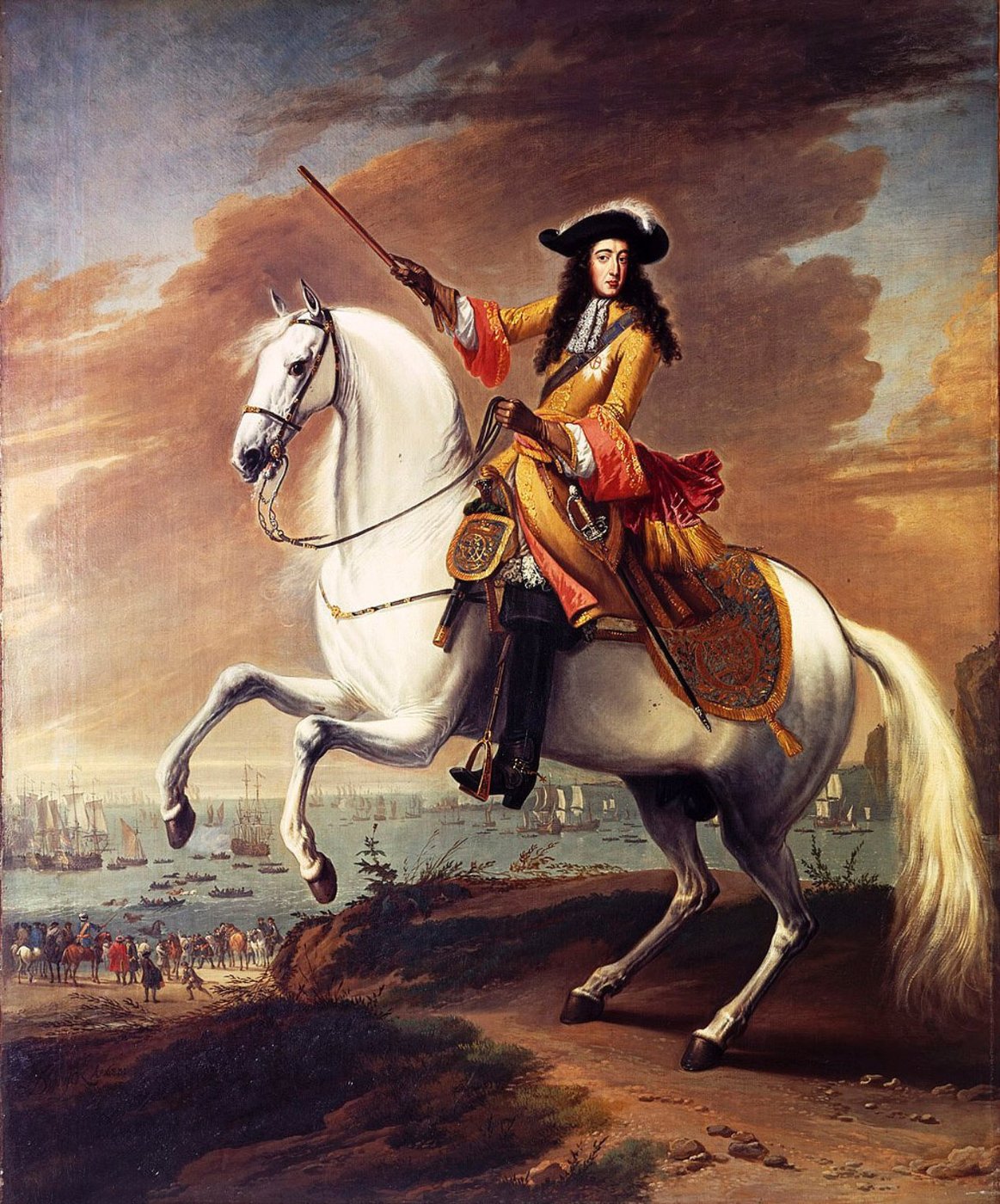
Wealth that visible, in a territory that had once belonged to the Habsburgs, made the Dutch a target, and protecting it led to the second accident, the Glorious Revolution of 1688, when the Dutch prince William of Orange took the English throne in what amounted to a merger of Europe's two great Protestant powers. Dutch capital followed him to England, because an island guarded by an unbeatable navy was the safest vault in Europe. The third accident followed: the founding of the Bank of England in 1694. Merchants who financed kings had always faced the same risk, that the king might lose his war, die, or simply refuse to pay, since he was, after all, the king. The Bank of England solved this by lending to the government on the security of taxes voted by Parliament, so that the debt was owed, in effect, by the English nation itself; as long as one Englishman remained, the lecture put it, the debt was owed. A private bank whose loans were guaranteed by an entire people was the ancestor of the modern financial system, and the Federal Reserve would later be built on the same model. What it bought was something close to infinite financing. In the Napoleonic Wars, coalition after coalition that Britain paid for collapsed on the battlefield, and Britain simply paid for the next, until Napoleon was beaten; the Bank of England was the engine beneath the British Empire, and the same architecture, carried across the Atlantic, became the engine beneath the American one.
None of this, the lecture insists, was planned. Asked what made each event an accident, the lecturer answered that none was strategic: each was a response to a particular problem at a particular moment. And asked why lending at interest, condemned by nearly every religion for most of history as a force that tears societies apart, came to be encouraged, he answered that this was exactly the change these accidents made, noting that Jewish law had forbidden lending at interest only between Jews, which in a Christian Europe that forbade it outright pushed Jewish communities into a role the rest of society both depended on and resented.
8Reason Against Emotion
Once those accidents were locked in place, they needed something no accident provides: an explanation. A society organized around capital needs a story about why its organization is natural, and building that story meant smoothing over contradictions at the center of the system. The first is the pairing of democracy and private property, which the lecture argues do not obviously belong together. Democracy means rule by the people, which implies that a majority that votes to redistribute wealth should be able to; private property is treated as a right granted by something prior to any vote, which no majority may touch. The contradiction mirrors the Bank of England itself, a private institution guaranteed by the public, and it is resolved by telling people that in a democracy they choose to respect one another's property. The second contradiction is subtler and, to the lecture, more important: a sharp division between reason and emotion, presented as though it had always been obvious, when almost every earlier civilization understood the two as inseparable. Greek thought and Chinese thought alike located reasoning inside feeling rather than against it; in Chinese, the lecturer noted, the heart and the mind are the same word, and modern neuroscience, which finds memory and emotion tightly bound together, tends to agree.
What made the new division useful was what each side was quietly made to stand for. Reason came to mean capital: the free, frictionless movement of goods, people, and ideas across borders. Emotion came to mean everything that obstructed that movement: family, tradition, nation, community, faith. Anything that stood in capital's way could now be dismissed not as a rival interest but as mere sentiment, a failure of reason. Three philosophical schools did the public work of presenting this arrangement as timeless truth: empiricism, skepticism, and utilitarianism, carried by thinkers such as Locke, Hume, and Bentham. That was the public layer. The lecture also claims a private one, and here the argument moves onto far less certain ground. Freemasonry, it says, functioned as the religion of reason, and it points to Masonic writers such as Albert Pike, whose Morals and Dogma speaks openly of reason in near-sacred terms, and Manly P. Hall, reading their language of a holy empire of reason as describing, in effect, a holy empire of capital. Whatever one makes of that reading, the lecture's illustration of the change in human habits is easy to recognize. For most of history, meeting a stranger, you would ask where he came from, which community he belonged to, which god he worshipped, and who his father was. In a society organized around capital, the first question, spoken or not, is how much money he has.
9The March of Reason
Asked whether religious institutions resisted this order, the lecture answered with game theory. Of course there were opponents: monarchy, organized religion, the Catholic Church, the bonds of community. The problem is that the system is set up so that whoever aligns with capital tends to win and whoever opposes it tends to lose, and over two or three centuries the opponents have steadily withered. Read this way, the march of the last three hundred years is the triumph of transnational capital wearing different costumes. The Enlightenment demanded the free movement of ideas, people, and goods, and it led to the French Revolution. Even communism, the lecture argues, fits the pattern, because it too exalted reason over emotion, demanding that people put the public good above family, community, love, and nation. And the vast migrations of recent decades, which so many people experience as a political crisis, are on this account simply capital doing what it does, demanding the free movement of people and treating anyone who tries to stop it as an enemy.
The lecture's point is not that any of this was planned in a room. It is that transnational capital became the most powerful force in the world, and that a force that powerful rewards those who serve it and punishes those who stand in its way so consistently that the result looks like design. That distinction, between convergence and conspiracy, matters even more in the part of the argument that comes next, and it is the distinction a careful reader should hold the lecture to.
10Information, Infiltration, Coordination
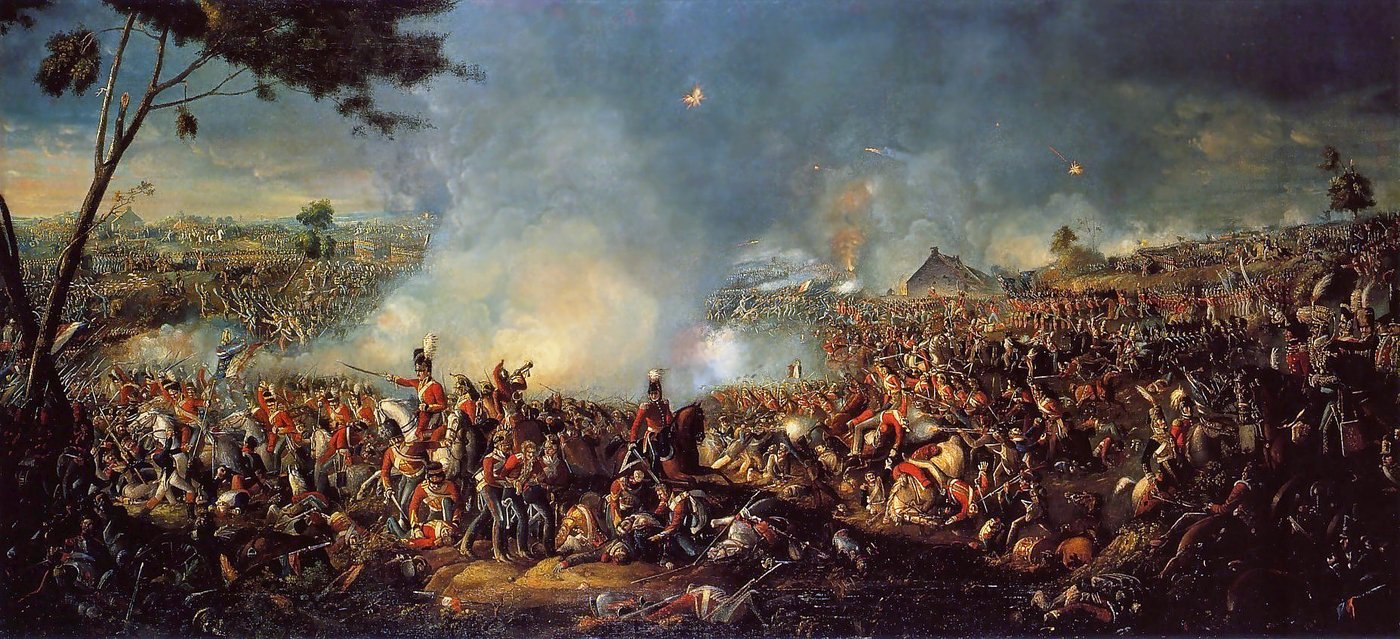
Moving capital across many kingdoms, rather than within one, creates three practical problems that any transnational actor must solve: getting information faster than everyone else, placing people inside institutions to reach sensitive information, and coordinating action across jurisdictions that answer to no common authority. The lecture illustrates them with the most famous financial story of the nineteenth century, the Rothschilds and the Battle of Waterloo, telling it in the form in which it is usually told: a Rothschild agent watched the battle, raced across the Channel on a fast ship, and brought the news to London days before the public, while false rumors of a British defeat swept the market. Here the historical record needs to be set beside the lecture. Nathan Rothschild probably did receive word of Wellington's victory slightly ahead of the government, through the family's courier network, a genuine example of the information advantage the lecture describes. But the dramatic version, of a fortune made by deliberately panicking the market, was popularized by an 1846 French pamphlet written to attack the Rothschilds as Jews, and historians of the family have found no evidence for it; the family's own finances suggest, if anything, that Waterloo's sudden ending cost them money.
The lecture then makes its most speculative claim. In the Europe of that era, it says, there were three forces able to operate across borders in this way: the Freemasons, the Jesuits, and the Jewish diaspora, and the advantages of information, infiltration, and coordination tended to draw such networks together into what history came to call the Illuminati. The lecturer was explicit that he was not describing a plan or a literal alliance, and that most people in any of these groups belonged to no secret society at all. His claim was about convergence and incentives: a government official who belongs to such a network is promoted faster, offered investments sooner, and sees his children admitted to better universities than one who does not, so joining is simply the rational move in a system built around the free movement of capital. That claim should be read with the greatest caution. The historical Illuminati were a small Bavarian society of Enlightenment rationalists, founded in 1776 and suppressed within a decade, and stories of Jews, Jesuits, and Freemasons secretly steering the world have a long and ugly history, from anti-Masonic panics to the forged Protocols of the Elders of Zion, that has repeatedly been used to justify persecution. Nothing in the lecture's evidence establishes such a convergence, and this essay reports the claim as the lecture's own, not as a finding. What survives scrutiny is the narrower, almost banal point beneath it: in any system, networks that move information quickly and look after their members gain an advantage over isolated individuals.
11Why Scripts Outlast Founders
Secret societies, the lecture continues, rise and fall constantly. It rejects the popular idea of a single unbroken line running from the Knights Templar through the Freemasons to the present, arguing instead that such societies are a natural by-product of transnational capital, forming again and again because forming them is how the game is won. Most cluster around one charismatic figure, and most do not survive him: the founder dies, the children who inherit the organization grow arrogant, and it dissolves into whatever comes next, the way any club built on a single personality tends to fade once that personality is gone. The ones that last across centuries, the lecture argues, share one trait. They are eschatological rather than merely social or financial.
An eschatological society offers three things a purely transactional one cannot. It provides a script, a plan that can be carried out patiently across generations rather than depending on any one leader's lifetime. It scales, because a shared sense of taking part in history's ending recruits far more effectively than a shared interest in getting rich. And it energizes its members as ordinary ambition never could, because believing you are helping to bring paradise moves people more completely than believing you are helping a business succeed; it turns a career into a holy struggle. Among eschatological traditions, the lecture argues, those organized around the Kabbalah have tended to prove the most powerful, and it notes that Masonic writing itself treats Kabbalistic symbolism as belonging to its highest degrees, above the Pythagorean and Egyptian material of the lower ones.
12The Will to Receive
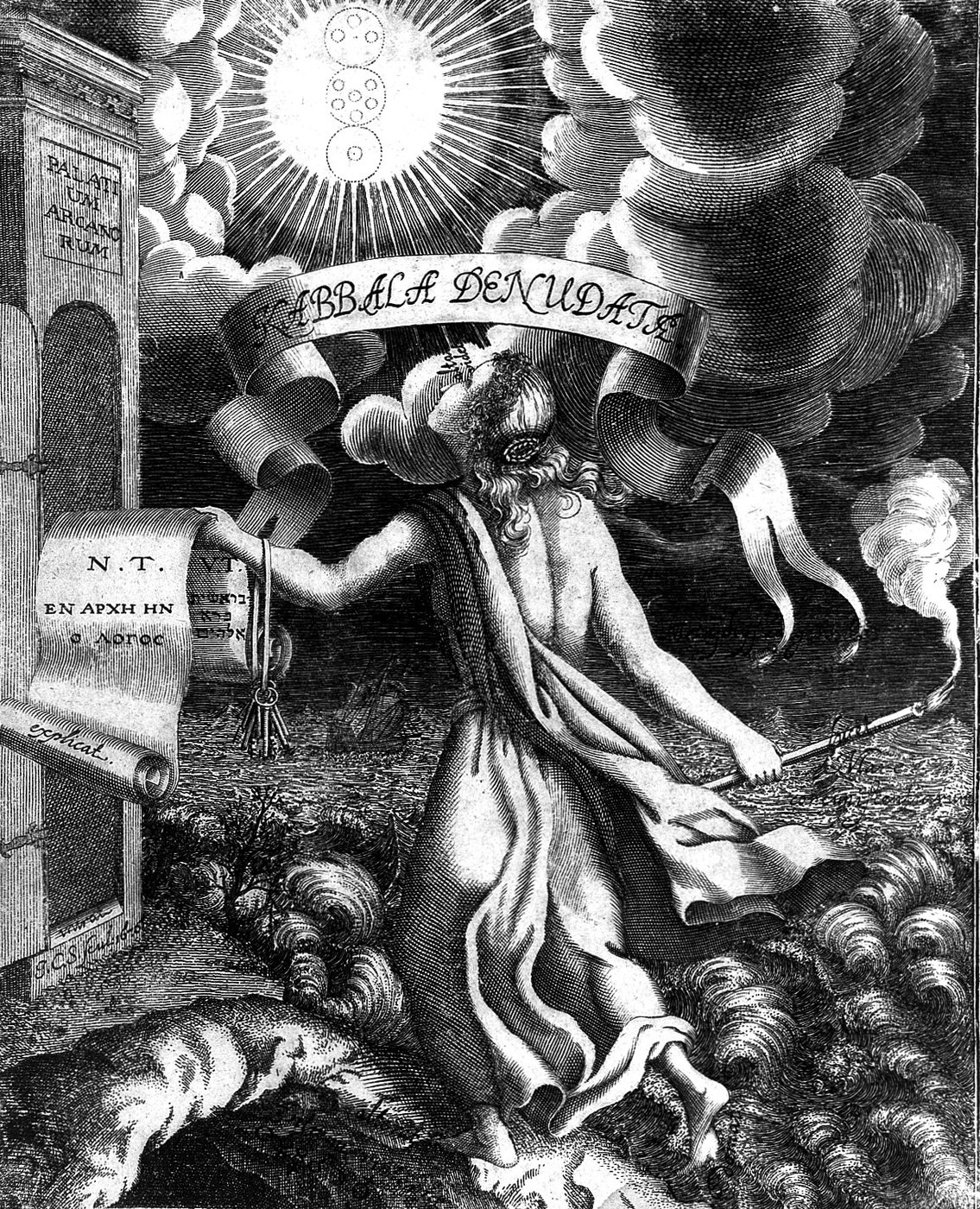
The Kabbalah, at its core, is an account of why the universe exists at all. In the version the lecture presents, close to the teaching of the twentieth-century Kabbalist Yehuda Ashlag, God is the will to bestow: a being of pure generosity who wishes to share himself but has no one to share with. To complete that giving, God brings forth Adam Kadmon, the primordial cosmic man, as the will to receive. But a will that only receives experiences everything from a purely self-centered vantage point, unable to understand why anything is being given to it at all, and so it rejects the gift, and the rejection shatters the universe into its present broken state, with humanity separated from God. The purpose of existence, on this reading, is to close the gap: to become capable of receiving what was always on offer, a transformation some traditions call spiritual alchemy.
That is the Kabbalah in general terms, a mystical tradition followed by many people in many ways, overwhelmingly peaceful ones. But the lecture describes a radical, literalist reading that takes this cosmology and treats the Bible as a script to be enacted rather than a text to be studied. On that reading, the Jewish people must return to the land of Israel to fulfill the covenant; a Third Temple must be built as a dwelling for God; and that act begins the war of Gog and Magog foretold in Ezekiel, at the height of which, when the need is most desperate, God intervenes to save His people and the world. Read this way, catastrophe is not a sign that the plan has failed. It is the plan working, because only at the moment of greatest crisis does divine intervention arrive and the world turn back to God.
13The Script and the Fanatic
This is the frame through which the lecture reads the war in Gaza, and the exact shape of the claim matters, because it is not the widespread political criticism of Israel's conduct there, which needs no esoteric frame to make. The lecture's claim is narrower and far stranger: that for a messianic minority operating inside this literalist reading, visible catastrophe is not something to minimize but a step in the script, one that its most committed adherents may even court, on the theory that global outrage, rising hostility to Jews, and mounting crisis are themselves the mechanism that forces the reckoning the prophecy requires. It is a deeply uncomfortable claim, impossible to verify from outside, and the lecture is explicit that it concerns a minority, not most Israelis and not most religious Jews. A student in the room pushed back directly: how could anyone believe that killing brings a person closer to God, when it is about as far from love as it is possible to get? The lecturer did not defend the theology. He made a separate point about how the world works: it is not run by whoever happens to be right, but by whoever is willing to sacrifice the most to get what they want, and a small, singularly motivated bloc can reliably defeat a much larger but indifferent majority.
As an illustration of that principle, the lecture pointed to American politics, where single-issue spending on Israel policy has been used, on its account, to target even the rare member of Congress who breaks with a hard pro-Israel consensus, citing the campaigns against Kentucky's Thomas Massie as an example of tens of millions of dollars spent against a single dissenting incumbent. The lesson the lecture draws is not about any one lobby or legislator. It is that intensity of commitment, not popularity or correctness, decides these fights, and that the people most willing to sacrifice usually get what they want. It adds one more observation about why messianic conviction burns so hot: in the Kabbalistic frame, reunion with God is imagined in something close to the language of love between bodies, a return to a lost wholeness rather than a mere agreement, and that emotional charge, wherever this reading takes hold, makes such belief more consuming and more durable than any ordinary political or financial motive.
14Why Capital Loves Ruins
If all of this sounds like bad news for capital, the kind of religious fervor a rational financial system would want no part of, the lecture's next move is to argue the opposite: capital and messianic fervor are, in practice, allies. Capital, on its account, has no value sitting still. It is a tool for extracting energy, attention, and consciousness from people, and it works only as long as people remain under pressure to keep producing. Imagine a city so wealthy that every family has a million dollars and the next generation does not need to work. From capital's point of view, that society has stopped functioning. So capital, following its own logic and not any plan, must create wealth and periodically destroy it, and the most efficient known way to destroy accumulated wealth is war and revolution. The lecturer made the point with an example from his trip to the city: the New York subway, aging and decaying, would cost a fortune and take decades to modernize piece by piece. Burn it down, and rebuilding from nothing would be cheaper and faster, which is a monstrous thing to say out loud, and which is, he argued, exactly how the logic of capital reasons about the world.
Applied to the present, this becomes an account of where capital is moving. The United States, in this telling, has accumulated so much debt, corruption, inequality, and moral and political decay that it no longer offers real returns; pouring money into data centers is less a growth strategy than a placeholder for the absence of one. A region on the edge of destruction, by contrast, is the best investment available, because destruction is the precondition for the next cycle of rebuilding, and the lecture claims that capital is already flowing toward what a postwar Middle East could become, as well as to other places treated as open ground, Argentina, Australia, Ukraine, and the wider Mediterranean. When capital leaves a country, the country falls into crisis; crisis breeds unrest; and unrest clears the way for capital to return, a decade or two later, and rebuild on the ruins it helped create. The system, the lecture concludes, cannot function without a recurring cycle of destruction, revolution, and war built into it, whatever the cost to the people who live through any one turn of the wheel. The war in Iran, on this account, may never truly end, because it is at bottom a conflict between capital and religion that neither can win outright, and for a trillionaire, as distinct from a mere millionaire, that is not a problem but an opportunity.
15Rival Endings
This is where the eschatological reading of capitalism collides with a rival eschatology, one that names capitalism itself as the enemy. The alternative to the order of capital, the lecture argues, is a return of religious nationalism, represented by states such as Iran and Russia, and its most articulate theorist is the Russian philosopher Alexander Dugin, whose thought this series has examined in earlier volumes. Dugin casts capitalism as the system of the Antichrist, the beast that negates everything genuinely human, family, community, love, and casts Russia, in the tradition of Moscow as the Third Rome, as the katechon, the restraining power that Saint Paul's second letter to the Thessalonians says holds back the coming of lawlessness. A Christian Zionist eschatology inverts the same cast: it reads Russia and Persia not as restrainers but as Gog and Magog, the very powers whose defeat is meant to trigger the end. Two eschatologies, reading the same nations as opposite roles in the same drama, both held as literal truth by their adherents, and both shaping real policy. The struggle between them, the lecture predicts, will define the next fifty years.
Asked about Peter Thiel, whose lectures on the Antichrist have drawn wide attention, the lecturer offered a guess rather than a reading: that Thiel stands in the tradition of the religion of reason, for which the Antichrist is whatever force stops human reason from reaching its full potential. If collective human reason, embodied in artificial intelligence, is on its way to becoming something like God, then whatever slows that advance is, in this view, set against God. It is a striking inversion of Dugin, who sees the triumph of that same reason as the Antichrist's reign, and it shows how completely the language of the end of the world has migrated into arguments that present themselves as purely about technology and markets.
16China Outside the Script
China, in the lecture's account, stands outside this whole drama, for structural rather than cultural reasons. Where the West organizes coordination through transnational networks and societies, China organizes it through the family, a tighter and more trusted unit than any civic association, but one that by its nature stays bounded within ethnic and national lines. China has its secret societies too, the lecture notes, the triads among them, criminal organizations that sometimes grow into legitimate power, but they are family-based, confined to one ethnic network, and political rather than eschatological. China therefore lacks the mechanism the transnational eschatology depends on. That has not protected it from capital's other effects. Foreign capital went into China in the 1980s and 1990s to build factories that drew on the energy of its vast young workforce, and after 2008 a wave of debt-financed infrastructure building, highways and skyscrapers and whole new cities, let China buy resources from Australia and South America while leaving it, the lecture argues, with the same symptoms that mark every advanced stage of the system: corruption, inequality, and debt. The United States and China, on this reading, are both empires in decline, which is why the restless capital of the world is looking elsewhere.
The lecture's forecast for China is bleak. Pressed by its neighbors and cut off from parts of the world economy, it expects China to withdraw into itself, as it did when it was embargoed after 1949. But that would expose a contradiction. China's urban population has grown used to a modern lifestyle that depends on global food supply chains, and if food runs short, the cities of Beijing and Shanghai will insist on keeping what they have, and the shortage will fall on the countryside, as it did in the famine that followed the Great Leap Forward between 1959 and 1961. The lecturer acknowledged that this sounded alarming and said simply that he was not optimistic.
17The Holy Empire of Reason
Artificial intelligence, in this framework, is not a new force in the world but the logical fulfillment of an old one. If reason was redefined centuries ago as capital, the free movement of goods, people, and ideas, then the last remaining obstacle to that movement is the human being: human emotion, bias, and attachment, which in the language of the religion of reason are mere prejudice. A technology explicitly built to rationalize and synchronize human cognition is capital's oldest project reaching its final stage. Imagine, the lecture says, a chip implanted in the brain that always tells you the right thing to believe; if all human consciousness could be synchronized, every bias and negative emotion would be wiped away, and to those who think this way, that would be paradise. The lecture calls this the holy empire of reason, closing in on the last resistance it has left.
The same logic shapes the lecture's account of the coming financial crisis. Asked how an AI bubble could burst at the same time as runaway inflation, it answered that the dollar is drifting toward worthlessness as a fiat currency while the credit bubble around AI will pop once the foreign liquidity that sustained it is withdrawn. And it added a characteristically cynical twist: bubbles of this size, it argued, are engineered, and the fact that the press keeps announcing the coming burst suggests that someone wants it to burst. The likeliest beneficiaries, on its account, are the largest AI companies themselves. If one of them failed, the government would have no choice but to step in and nationalize the data centers, socializing the losses while privatizing the gains, and once data centers became, in effect, national-security installations, eminent domain would sweep aside the local communities that now resist them.
18Interconnection Is Not Resilience
The lecture's closing turn steps back from any single mechanism, whether petrodollar plumbing or Kabbalistic prophecy, and asks what all of it adds up to for the eight billion people living through it. The common mistake, it argues, is assuming that a highly interconnected world is automatically a resilient one. Interconnection looks like strength right up until it is not. A system in which every part depends on every other part transmits a single failure across the whole network almost instantly, rather than absorbing it locally the way a looser system would. Roughly eight billion people depend, directly or indirectly, on cheap energy from the Middle East. Remove it, and the consequences cascade: the loss of fertilizer that keeps industrial farming productive, the real possibility of famine in parts of Africa, and pressure toward upheaval in Europe as people begin moving toward wherever food and stability remain.
That, in the lecture's reading, is how a civilization actually collapses, as the interconnected world of the Late Bronze Age did around 1177 BCE: not through one dramatic catastrophe but through an accumulation of ordinary people doing what desperate people have always done, migrating, then banding together for protection, and eventually fighting. It would not be another Great Depression followed by another recovery; it would be the end of an entire civilizational arrangement. The lecture connects this to talk of a future national draft in the United States, arguing that such a draft would be less a conventional call to arms than a jobs program born of economic collapse: when the stock market and private credit seize up, and a generation that assumed its parents' wealth was a permanent cushion discovers it was not, working for the state in some capacity becomes the only alternative to destitution, much as the desperation of the 1930s funneled a generation toward total war.
19Attention
Faced with a diagnosis this bleak, the lecture offers no policy proposal. It circles back to a word that runs through the whole series of which it is a part: attention. Real wealth, on its account, was never capital in the first place. It is imagination and attention, the very things modern platforms have become remarkably efficient at capturing for free, in a system where a service that appears to cost nothing is in fact charging exactly the currency that matters most. Capital, after all, was described at the outset as a tool for extracting energy, attention, and consciousness from people, and the platforms are simply the most refined version of that tool yet built.
Reclaiming attention, in this telling, does not mean logging off in protest. It means redirecting it toward the people physically nearest to you: your neighbors, your family, the ordinary and unglamorous work of actually knowing the person three doors down, rather than merely being aware, at a distance, that someone famous lives in your city. When the audience's questions began, they kept pulling the argument in exactly that direction, away from what a country should do and toward what a person should do with the years, the classroom, or the family in front of them.
20The Prophet and the Reader
One student asked how anyone can trust their own imagination, if imagination is where real wealth lives: how do you know a flash of inspiration comes from something worth trusting and not from something worse? The lecturer's answer located it in a single source. Imagination, properly understood, cannot be evil, he argued, because it flows from what he calls the monad, a universal consciousness behind individual minds rather than a private faculty each person owns. A poet, on this account, is not inventing so much as receiving, and genuine beauty in art is evidence of contact with something beyond the self, closer to what earlier ages meant by divine inspiration than to the modern idea of creativity as personal ingenuity. Asked what an artist's role is in a time like this one, he answered plainly: to be a prophet, someone who reveals what is actually happening and offers people a picture of what else is possible, a role he believes every culture recognized in its artists until quite recently.
Asked which books do that work, he pointed first to the Russian novelists, Tolstoy's Anna Karenina, which he called close to the best novel ever written, and Dostoevsky throughout, Crime and Punishment and The Brothers Karamazov above all, and among more recent writers to Raymond Carver's story collection Cathedral, for its power to make a reader feel something rather than merely follow a plot. Pressed for a longer list, he stayed modest: the titles matter less than the habit, an hour a day spent reading something you genuinely enjoy, kept up long enough that it becomes automatic rather than an assignment. The same instinct, that real learning has to feel alive, shapes his advice to teachers. Asked what he would tell another teacher, particularly one whose students do not yet have a wide vocabulary, he offered a single practice: say out loud, in front of your students, regularly, "I am wrong." A student who watches a teacher admit error learns that being wrong is survivable, which is the precondition for daring to ask a real question at all. Asked how he would redesign high school, he gave an answer of a piece with the rest of the lecture: less material aimed at producing a materialist worldview, more of the great books, Homer and Dante by name, and enough of what he calls the occult, the Kabbalah among it, that students meet the intellectual tradition the lecture itself draws on instead of being kept carefully away from it.
21Out of the Cave
The same conviction shapes how he speaks about his own son. When the boy was born, the lecturer says, he assumed that years in education had taught him how to raise a child; he has since concluded almost the opposite, that a child is not the parent's project but a person who arrives with a purpose of his own, which a parent can support but should not try to steer. His son does not speak English, he notes, not because no one has tried to teach him but because he has never asked to learn, and he treats that as the boy's choice to respect rather than a gap to fill. Asked where to build a home and raise a family, given everything the lecture had described, he declined to treat location as the real question: have the family, love the children once they exist, and trust that the rest follows. Pressed by a young man worried about starting a family while facing the possibility of the kind of economic draft the lecture had described, he offered his own history instead of a plan. He had no job and no prospects when his first child was born; he wrote a book afterward that gave him one; and he has come to see having a family less as a decision weighed by costs and benefits than as an act of faith that rearranges the rest of a life around it once it is made.
He closed by turning briefly to his own life, less as biography than as evidence for the lecture's final claim. He grew up poor, the child of immigrants in Toronto, and describes years of depression that followed him through an Ivy League education and into real professional success, including six months working for the United Nations in Afghanistan, a well-paid and prestigious job that kept him awake at night, because he had come to believe the occupation he was drawing a salary from was doing more harm than good to the people it claimed to help. He left it and chose years of financial hardship rather than continue, and only later, he says, understood that suffering as the price of the clarity he now teaches from. Waking up, in his account, is not comfortable. It resembles Plato's prisoner dragged out of the cave: blinding, disorienting, closer to grief than to relief. But once it happens there is no going back to the world as it looked before, and what replaces the comfort of not knowing is something sturdier than comfort ever was. Whether or not a reader accepts the theology beneath it, that is the shape of the argument: a world economy built on accidents nobody planned, explained by a philosophy designed to make an arbitrary arrangement look inevitable, and driven, on this account, by whichever actors are willing to read their own moment as the end of one story and the beginning of another. Realism cannot explain a war fought against a nation's own interest. Eschatology, true or not, at least closes the gap.