1The Menu
Ask what a civilization is offering its own young people, and the answer doubles as a diagnosis. Gender change. Pop music. More immigrants. Drugs. A rotating stock of new technological devices. Individually, none of it reads as catastrophe: pop music, so the argument goes, isn't "so, so bad." Together, Dugin's claim runs deeper: the menu adds up to a liberation from the self, from society, from family, from community, from gender, and, in the furthest extension of the idea, from species itself, an individual free, in principle, to exist as man, as woman, as cat, as furry, as artificial intelligence. He does not call this liberation. He calls it dehumanization, and stakes the rest of the conversation on that word.
2Two Cities, One Table
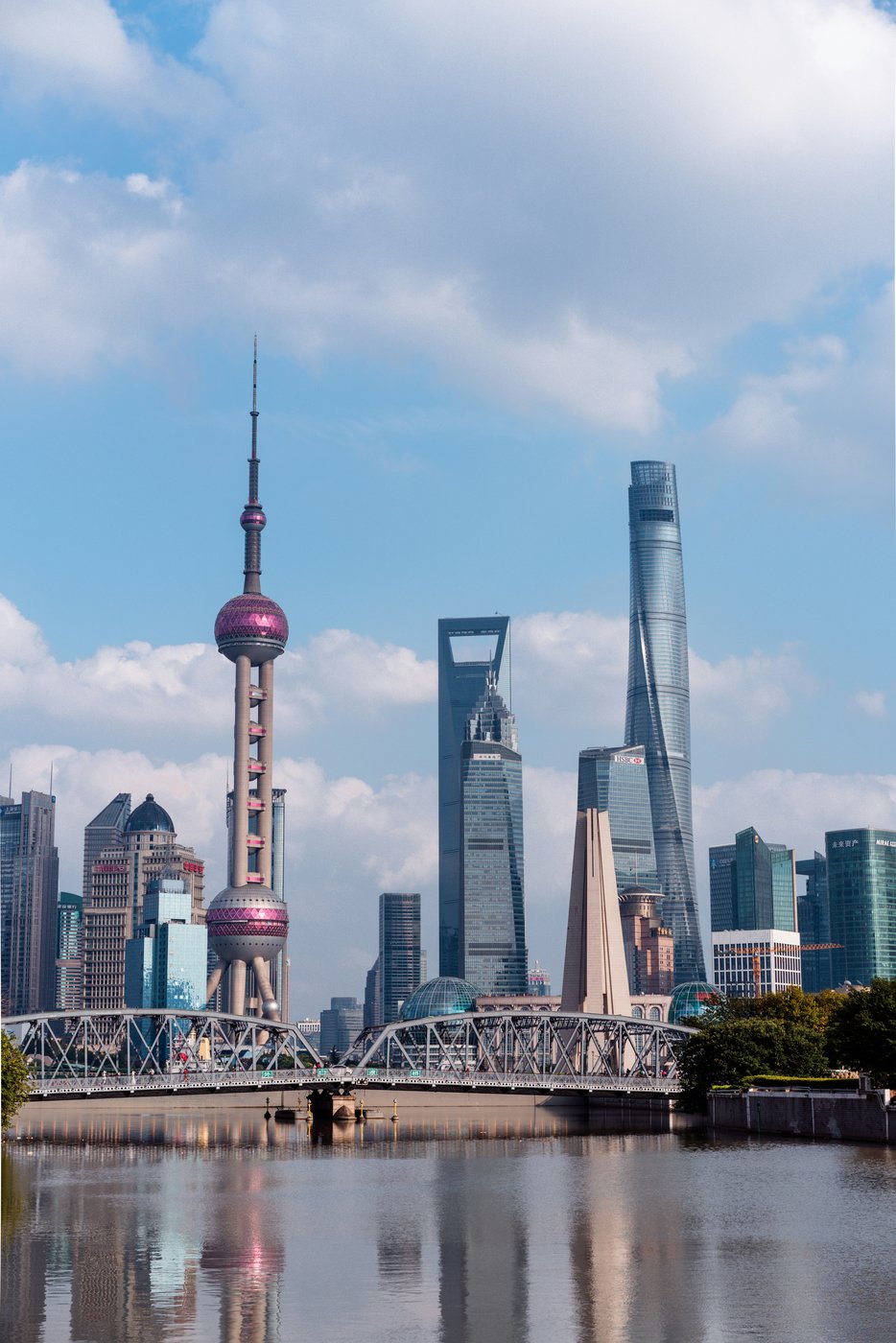
The interview opens in Shanghai, at a university where his host has taught for a decade, and the first question is really about range: how does a Russian philosopher end up in rooms with Steve Bannon and Tucker Carlson on one continent and with Chinese scholars on another, when so many Western traditionalists, by reputation, can barely sit across a table from a Chinese counterpart?
His answer refuses the premise. The dividing line, Dugin argues, was never civilizational. It runs instead through depth and competence, through whether a person is actually inside a current of thought, a spiritual or intellectual concern, regardless of which civilization produced them. He offers a case that soured on him in real time: a debate in Amsterdam, organized by a liberal think tank, against a prominent French public intellectual he'd approached expecting philosophy. That is also where he first crossed paths with the scholar now interviewing him in Shanghai. The Amsterdam debate itself he calls a disaster, not because the disagreement was sharp, but because his opponent declined to defend his own published arguments and instead produced what Dugin frames as journalism dressed as philosophy: accusation in place of engagement. The lesson he draws is narrow and, notably, not anti-Western: he can speak with a liberal philosopher. He cannot speak with a liberal performing outrage.
3The Return of Civilizations
From that starting point the conversation turns to the idea doing the most work across the whole hour: multipolarity, and civilizations as its operative unit. He points to real institutional efforts already underway: forums in Moscow and St. Petersburg, a thinkers' forum in China, a well-regarded Indian foundation, all aimed at the same project, pulling people together not just across civilizations but across geopolitical blocs entirely.
Dugin's larger historical claim is that civilizations organized as political actors are not new; what's new is their return. Before Western colonization, the world was arranged this way as a matter of course: a caliphate, a Persian empire, a Chinese empire, an Indian political order, Russian and European empires, the Inca in the pre-Columbian Americas. Colonization erased that arrangement conceptually, and only after the Cold War did it start coming back, with China, Russia, and India as the clearest present-day examples of what he calls the civilizational state: a vast space unified by history, culture, language, religion, geopolitics, and economics all at once.
4A Civilization at War With Itself
Pressed on where the United States fits a story mostly told in centuries, Dugin turns the question back on the West itself. The West, in this account, is a civilization too, but a singular one: the only civilization to have staged a full revolt against its own traditional roots and called the revolt progress. There was a traditional West (Catholic, Christian, organized around a religious-political order) and then a second West, built in radical opposition to the first, arriving not as continuation but as reversal. That second West is what he means by modernity.
Modernity, on his telling, has now reached a terminal stage: postmodernity. He's careful to specify what that word does not mean. Postmodernity is not a replacement for modernity, arriving with its own content. It is modernity's collapse, laid bare, the moment its own nihilistic foundations become visible to itself. If the West hesitates to think of itself any longer as a civilization, this is the argument he offers for why: what's collapsing is a civilization built on nihilism about its own foundations, and a collapsing thing struggles to also picture itself as one.
5The Decaying Corpse
That collapse gives the volume its title and its most vivid image. Citing Samuel Huntington's old formulation of "the West and the rest," Dugin argues the rest of the world's civilizations were, comparatively, spared: not untouched by modernity, but not consumed by it the way the West was, keeping their traditions and cultural cores mostly intact. The West was killed by the virus of its own modernity, and what's proposed now, provisionally and in his own words with real hesitation, is something like quarantine: not permanent exclusion from any future alliance of civilizations, but distance for a time, the way an ancient Etruscan punishment is said to have bound a living person to a corpse until the decay took both. Postmodern Western civilization is now that decaying body, and inclusion without distance risks the same fate for whoever it's tied to.
He does not extend the metaphor to individuals. In the same breath, he separates the civilization from the people inside it who sense that something has gone wrong and are looking, in his description, for a new philosophical foundation rather than a revival of old slogans, a distinction his framing keeps returning to and never entirely resolves: a civilization he calls terminal, populated in part by people he still wants to reach.
6Liberalism Without a Name
Told that European ideology, by his own father's account, has gone missing since the twentieth century, Dugin disagrees sharply. Liberalism hasn't disappeared. It has won so completely that it stopped being visible as an ideology at all, because total victory is what makes an ideology disappear into the furniture. Liberalism could be perceived clearly only while it was still fighting nationalism and communism for the position it now holds alone; with no rival left inside the West to define itself against, it has stopped functioning as one idea among several and started functioning as the water everyone in the West swims in, not just believed, but built into "the things themselves," as he puts it, into policy and culture and infrastructure rather than argument.
7From One to Zero
This is where the menu from the opening returns, and where Dugin supplies its mechanism. Liberalism is the ideology of liberating the individual from every form of collective identity, but "the individual," in his framing, is itself only a concept, no more real on its own terms than "class" is in Marxism or "nation" and "race" are in the ideologies built around them. Carried to its logical end rather than some deviation from it, the project of stripping away every collective tie doesn't arrive at a free person. It arrives, in his phrase, at zero: an individual with all ties cut is not liberated, but empty, and what used to disguise that emptiness in humanitarian language now stands exposed as what he calls naked nothing.
Framed that way, gender change, immigration, drugs, and new technology aren't separate trends. They are one project reaching its terminus, a passage from something to nothing that he presents not as liberalism's betrayal of itself but as liberalism keeping its promise all the way through.
8Sovereignists
Against that zero, Dugin identifies a countervailing force already forming: people trying to rebuild something, or at minimum hold the line, out of what liberalism has hollowed out. In the West this force is usually called conservative; in Russia and Serbia, he says, the preferred word is traditionalist; a third label he offers is sovereignist, the sovereignty of the people, reclaimed from a colonial globalism that has taken power from both peoples and states. China isn't easily filed under "traditionalist" by name, but functions, on his account, in much the same register.
He does not treat this as a clean fight between a healthy rest-of-the-world and a poisoned West. Western influence, he concedes, has reached deep even into the civilizations he holds up as intact, China included, and the difference he draws is one of discipline rather than immunity: an ancient civilization has to actively monitor how much of that influence it absorbs. China, in his estimate, does this better than anyone, taking selected elements from the West and recombining them into something new, in service of its own civilizational sovereignty, with Russia following a comparable path and India moving the same direction. The instruction for civilizations outside the West isn't rejection. It's careful metabolism.
9The MAGA Window
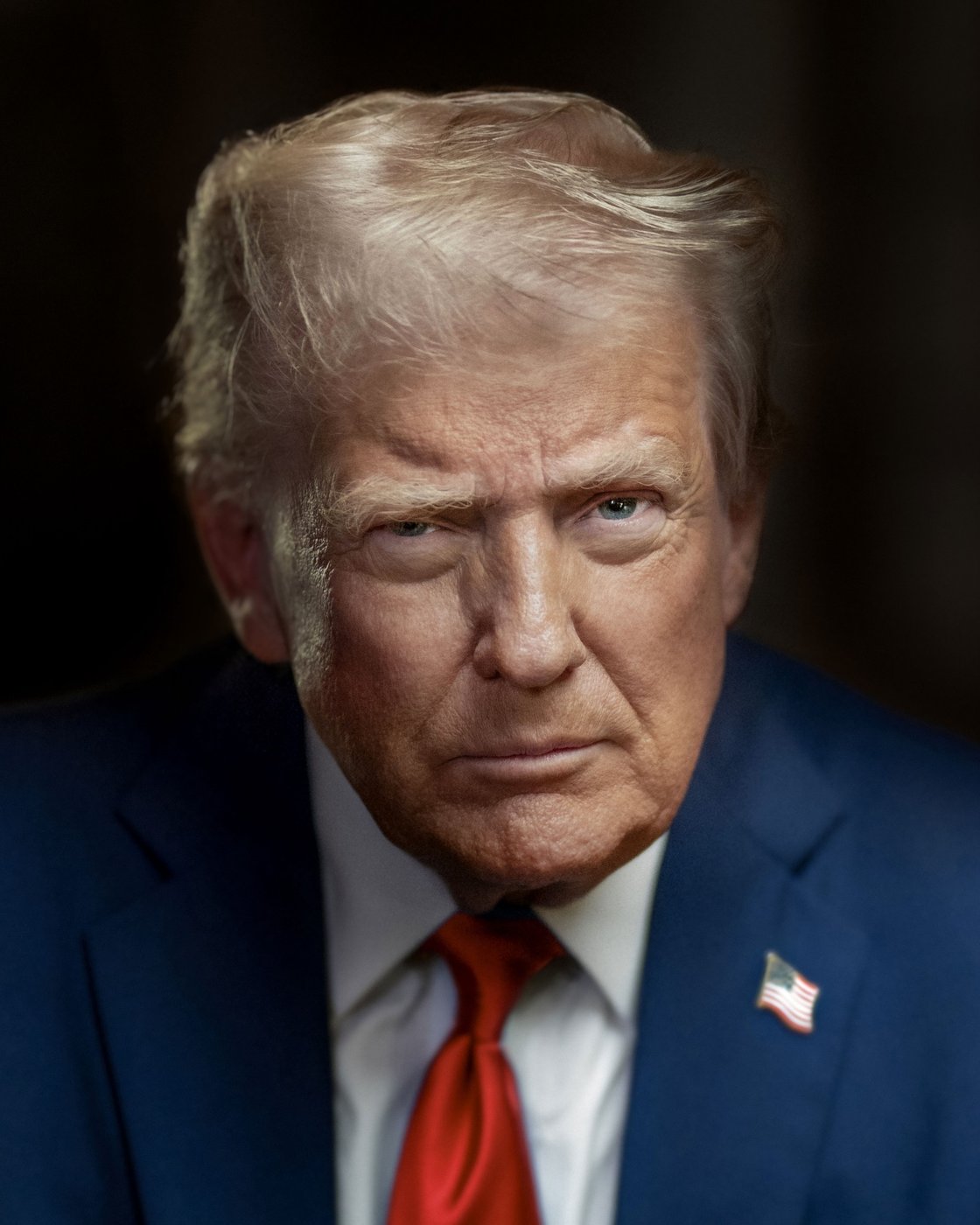
Turning to the sharpest near-term flashpoint, a trade war between the United States and China, Dugin locates a missed opportunity rather than an inevitability. Trump's second term, riding MAGA and its "America First" instinct, briefly opened what he calls a real historic chance to manage the shift from a one-superpower world to a multipolar one without a great-power collision, because the doctrine itself called for turning inward: fixing domestic problems, confronting the deep state, ending foreign interventions. He credits MAGA's own strategists with understanding this, and says Trump appointed some of them to key posts.
But the follow-through, on his telling, didn't hold. Neoconservative influence, which he treats as ideologically committed to unipolar dominance and interventionism almost as a doctrine in its own right, pulled Trump back toward the confrontational posture MAGA was supposed to retire, discrediting the MAGA structure from within, in his phrase, rather than being defeated by it from outside. He treats the drift toward confrontation with China, layered on a war already underway in Ukraine, as the visible cost of that reversal, without forecasting a specific date or trigger for where it leads next.
10A World Pregnant With War
Asked to picture the aftermath of the war in Ukraine, Dugin declines the premise a second time, on the grounds that no one can responsibly describe an "after" for a war still underway whose outcome isn't settled. His phrase for the moment is the one that gives this volume its epigraph: a world pregnant with a new order that has not yet been born. He does not rule out the war widening to include Europe directly, or even the United States, and names the possibility of nuclear use in a wider conflict without qualification. This is the single claim in the interview staked at the highest register available, and it is reported here, per this essay's own house rule, as his stated position, not as a forecast this essay is making on its own account.
He extends the same fragility to the United States domestically, describing recent frictions, the designation of Antifa-linked networks as a terrorist matter, and confrontations around immigration enforcement, as something close to the opening moves of a civil conflict, a claim offered here as his observation, not as advocacy for it. Set against that fragility, he locates one source of guarded hope: a visible split between the United States and the European Union, breaking what he calls a previously uniform, fully globalist, fully interventionist Western bloc. It's not, in his assessment, as promising as the early MAGA moment looked. But he calls it better than the alternative, adding, unprompted, that Trump himself can no longer be relied on to steer it: a MAGA figure in name, in his phrase, but "not anymore" in practice, and drifting, on his description, into an increasingly erratic and self-focused final stretch.
11Illiberal Machines
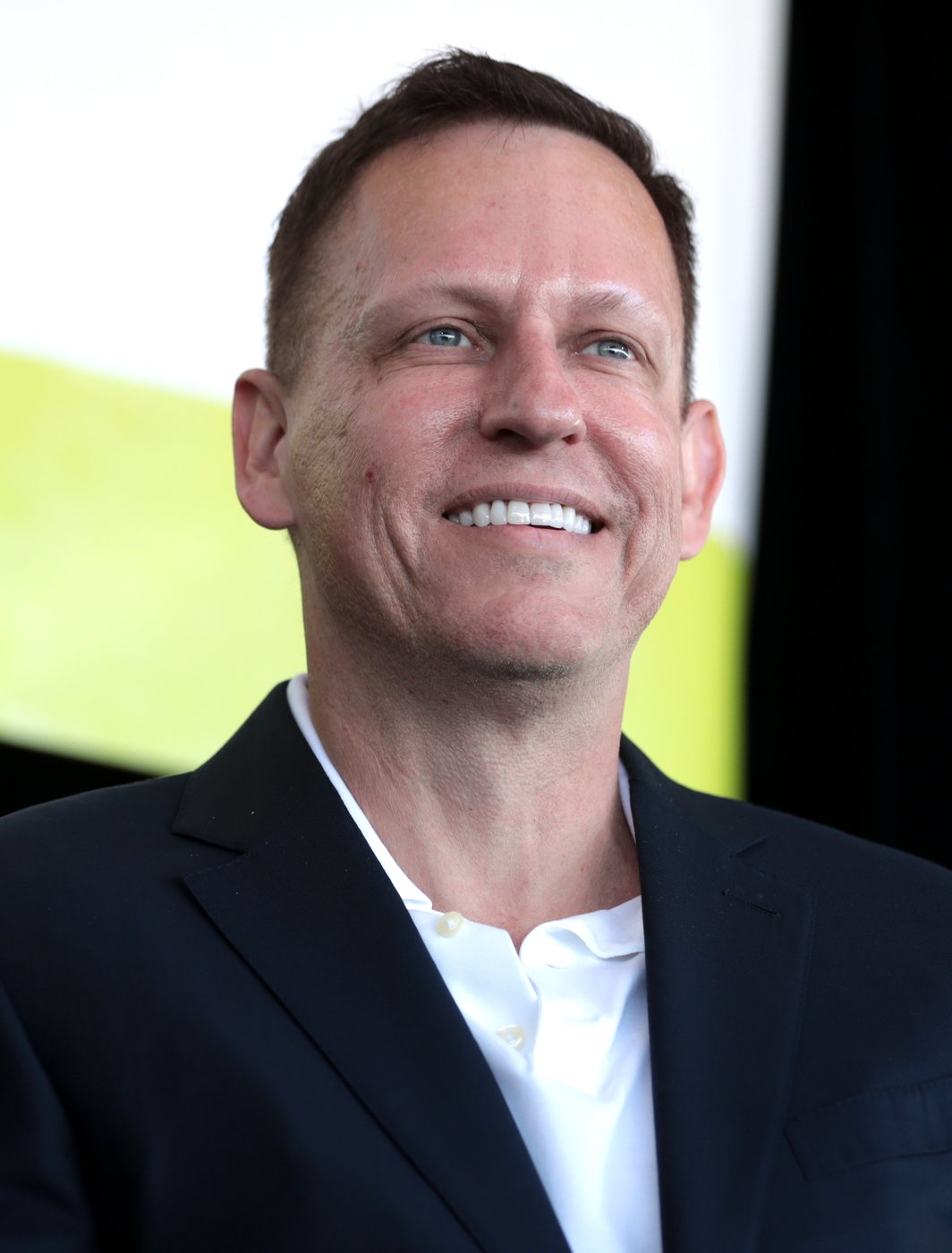
The conversation's clearest pivot away from geopolitics runs through technology, and specifically through Peter Thiel, whom Dugin names as the leading theorist of a distinct claim: that liberalism and technological progress have been wrongly treated as the same thing. Technological development, on this reading, has occurred under total opposites, libertarian societies and totalitarian ones alike, the Soviet Union and Nazi Germany included, which means, if the premise holds, that progress can in principle be separated from liberal ideology entirely. Strip liberalism away, on Thiel's argument as Dugin presents it, and what's left over (a fixation on inclusion, or on identity categories, is offered as the example) isn't a precondition for technological progress. It's an obstacle to it. He places Elon Musk inside the same current, and names Curtis Yarvin and Nick Land as figures working a version of the same idea from its more explicitly illiberal edge, treating it as a genuinely distinct current within MAGA rather than incidental to it, one he contrasts with Europe, where he argues technocracy remains fused to liberal ideology in a way it no longer is, in his account, in parts of Silicon Valley.
China, in his framing, is the strongest existing proof that the separation is real: imitating and adapting Western technology while remaining, in his description, a fully sovereign and different civilization, which he offers as evidence that technological progress and Western liberal ideology were never actually the same thing to begin with, a case, on his telling, of technology being put to good use once separated from its liberal casing.
He doesn't end the section on optimism about the illiberal-tech project itself. He raises, and leaves open, a harder question about technology's own nature, not a neutral tool but, in his framing, something metaphysical, carrying meaning that has to be interpreted rather than simply managed, a concern he traces to Oswald Spengler's account of the Faustian character of Western culture. His closing caution is aimed squarely at the illiberal technologists he's just described with some sympathy: they may believe they're steering clear of a metaphysical catastrophe bound up with technique itself. He leaves open the possibility, without resolving it, that they are closer to it than anyone.
12Apocalypse Is Now
Pressed again, later, on Ukraine specifically, Dugin repeats and sharpens the same refusal to forecast: this is not a moment for after-war planning, because, in his words, the apocalypse is now, and the perspective available from inside an eschatological moment isn't clear enough to plan through. He raises, as one flashpoint, a proposal to send long-range weapons to Ukraine, which he characterizes as a step his side would read as approaching nuclear war. Again, this is reported here as his stated position on the record, not as this essay's own assessment of the weapon or the policy.
He is unsparing about the American president's steadiness on this point specifically, describing an abrupt reversal in tone toward Ukraine's leadership as characteristic of a man he calls erratic, aging, and increasingly influenced by pressures around him, including multiple threats on his life and, separately, the killing of the American commentator Charlie Kirk. He closes the thread on what he frames as Trump's core contradiction: MAGA's founding promise was to stop intervening abroad and let that alone resolve the conflicts the United States had itself provoked, and Trump, in this account, has not kept that promise, pointing to the unresolved Gaza and Hamas situation as a case where continued involvement, not restraint, defines the actual record.
13Deep Decolonization
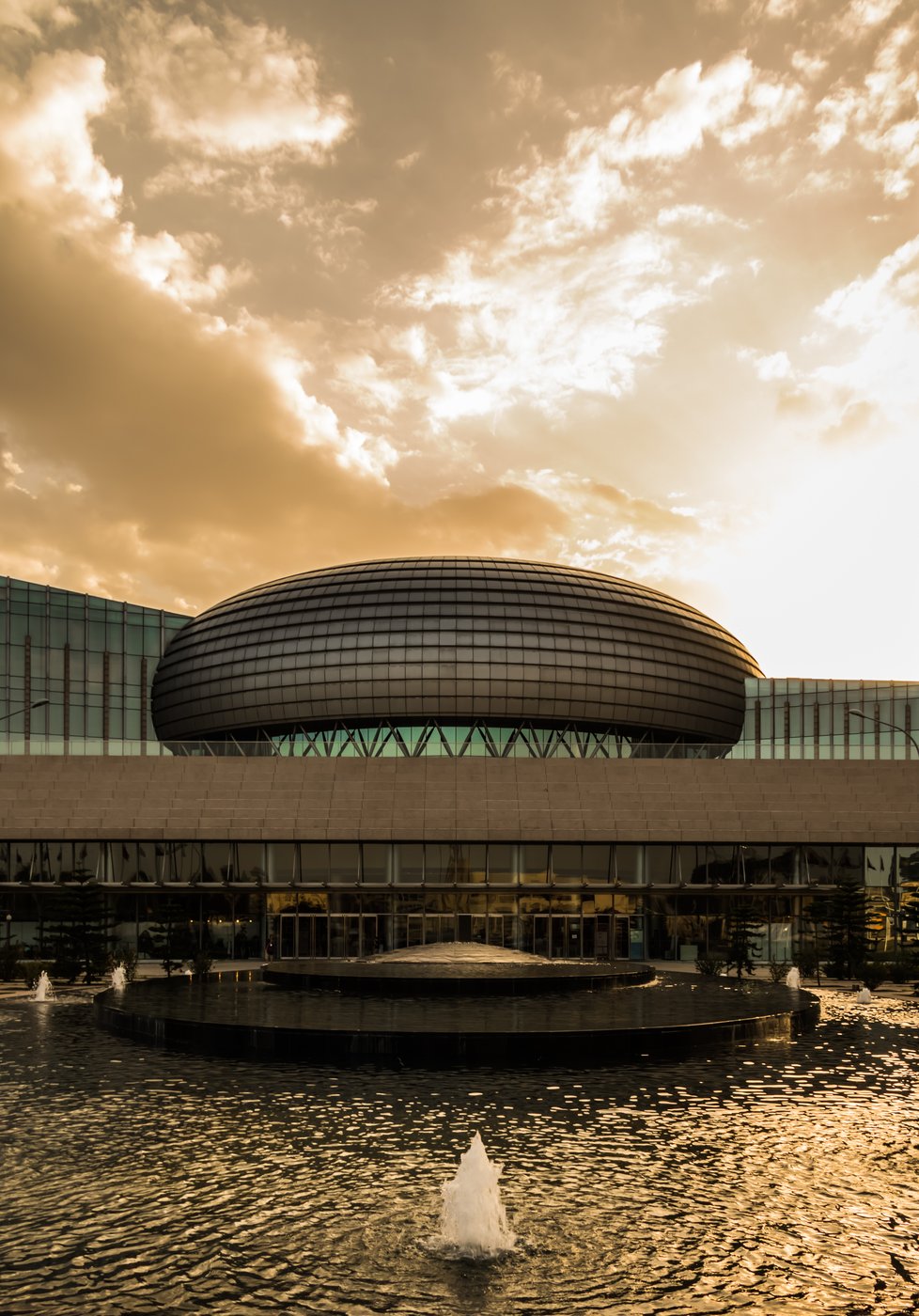
Turned to Africa, Dugin's register shifts from geopolitical fragility to what he frames as an available future. Formal political decolonization, a century old on his telling, has not yet reached the deeper layer he cares about (economy, education, thought), and he names the unfinished task deep decolonization, borrowing Hegel's account of the master-slave relationship to argue that a colonized mind can outlast a colonizer's formal departure, and that real liberation requires reclaiming that inherited consciousness, not simply removing the colonizer's flag.
Practically, he ties this to unification: Africa is present in BRICS today only through Ethiopia and South Africa, and a fuller, sovereign role requires something closer to a genuine African Union, with pan-Africanism as the only framework he considers adequate to it, the nation-states drawn on the continent by colonizers being, in his description, tools for keeping people manageable even after formal slavery and colonization ended. Asked directly how outside powers can help Africa without becoming colonizers themselves, he grounds the answer in a stated first principle rather than a specific mechanism: multipolarity, in his formulation, is built from the ground up on anti-racism and anti-colonialism, on accepting difference rather than projecting one's own identity onto it, and colonization itself is not a permanent Western trait but a specifically modern one. The West, on his telling, turned colonial only when it broke from its own older tradition, which reframes colonization as a symptom of the same rupture the essay has already traced through the rest of the conversation, rather than as an eternal feature of the West as such.
14Three Islams and a Corpse in Gaza
The interview's final turn is Gaza, and it's where Dugin's language is least hedged. He calls the ceasefire fragile, contingent on two men he describes as erratic: Trump, and Israel's prime minister Benjamin Netanyahu, whom he accuses directly of organizing mass killing of the Palestinian population and describes as driven by an eschatological vision of his own that treats any peace as an unwanted final outcome. This grave charge is reported here as his stated accusation, made on the record, not as a finding this essay is independently making.
Asked why responsibility for the outcome rests so heavily on two individuals, his answer turns inward, toward the Islamic world's own fragmentation. He divides it into three layers that he says are frequently at odds with one another: a peaceful, culturally rooted, traditional Islam of scholars and ordinary families; a diaspora Islam that turns more radical precisely because it has been severed from its home tradition without being offered any replacement by the societies receiving it; and a political Islam split along national and elite lines. The failure to unite those three into one coherent pole of the multipolar world he wants is, on his account, the deeper reason Gaza's fate now rests on the temperament of two unpredictable men rather than on any organized counterweight, a conclusion he delivers not as triumph but, in his own closing words, as something to be learned from.
The interview ends where it began, with thanks exchanged and a wish for a good stay in Shanghai, a small, almost domestic close to an hour that opened with dehumanization and ended in an unresolved war.