1The Reversal
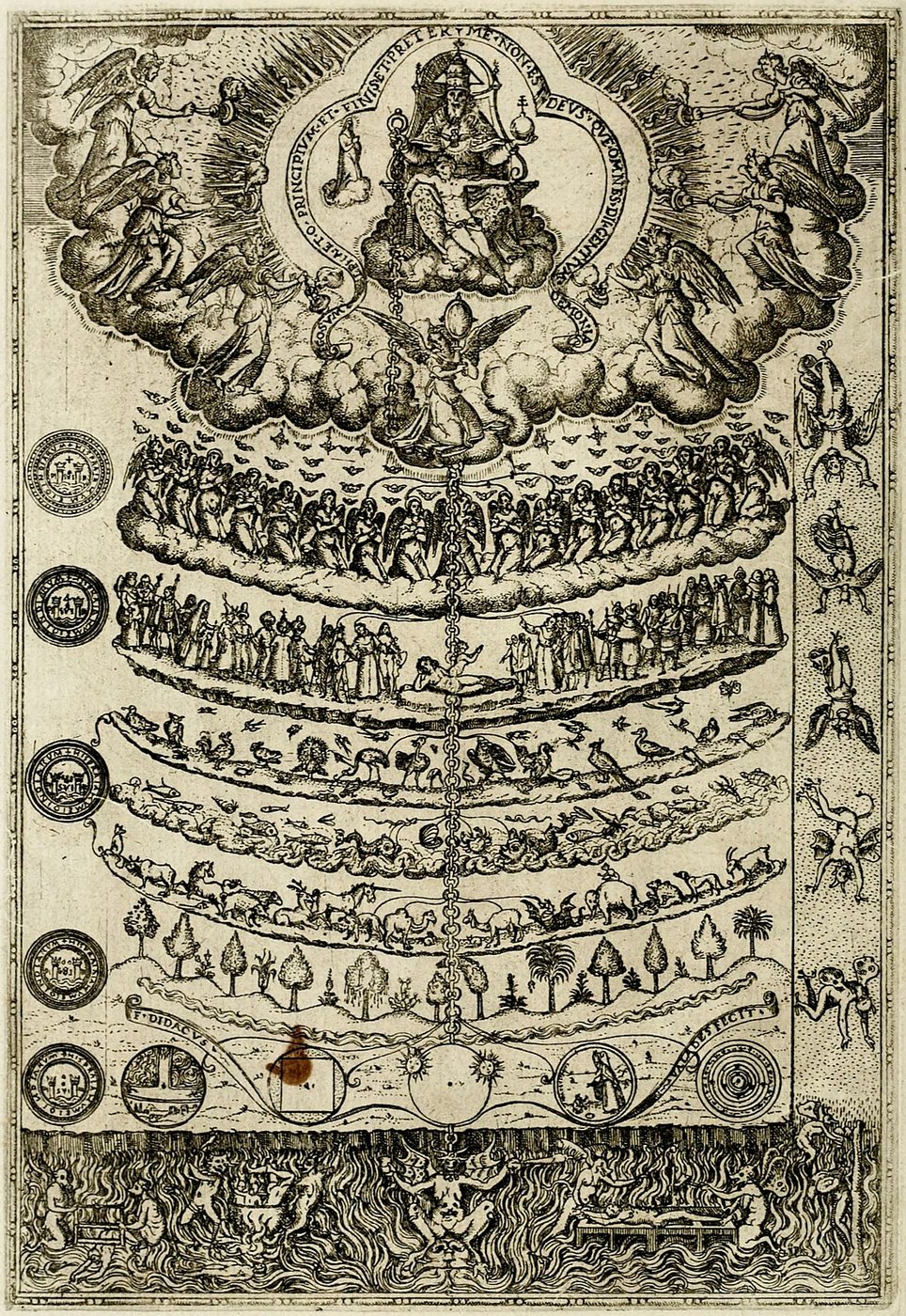
The rot in modern Western thought traces, on Dugin's account, to a single hinge: the Enlightenment. Before it, the order of being ran from the top down, a hierarchy descending from the sacred, the patriarchal, "God as light," down to the earth beneath, the way sunlight travels from its highest point outward rather than the reverse. The Enlightenment inverted that order completely. The body, the material, "the man" (previously the least important term in the hierarchy) was promoted to first importance. Dugin traces the lineage to the traditionalist authorities he claims as his own, René Guénon and Julius Evola, and names the Anglo-Saxon Protestant world as the tradition that carried the reversal furthest.
2The Equation
The mechanism behind that reversal is a specific "metaphysical equation": liberalism collapses the concept of "man" into the narrower concept of "the individual," treating a later abstraction as if it were the whole of human nature, when the older idea of the person was always something larger than one isolated unit. Every modern ideology rests on this same premise: that the individual comes first. Marxism gets a qualified exception: it tried to resist individualism through the concept of class, and even though that project collapsed, Dugin calls Marxism, on this one point, "more traditional, more sacred" than liberalism, part of why it ultimately lost to it.
3Units
This individualism connects to a broader "quantification," Guénon's idea of the individual reduced to a numerical unit. The same mechanistic logic that reduces a person to a unit also reduces nature, the body, even the cell, to mechanism, a scientific worldview Dugin treats as inherent to modernity itself. The United States, as the state most thoroughly captured by a liberal political elite, sits at the front of this process, not as fate, but as a moral choice. Modernity, in this account, could always be refused; liberals have chosen instead to embrace and extend it.
4Metaphysical Satanists
That choice earns Dugin's sharpest label of the conversation: liberalism is philosophical Satanism, defined not by iconography but by function, the deliberate overturning of a natural, spiritual hierarchy. He is careful, unprompted, to wall the claim off from race or heritage, insisting it concerns ideas, not blood, and that he would oppose the same idea "if it were invented by Russians." A symmetry makes the point concrete: Anglo-Saxon dissidents who reject modernity belong, in his framing, on the Russian side of the line, while Russian liberals who embrace it belong on the American one. Every tradition keeps a minority pulling the other way; the line runs through conviction, not nationality.
5A Nation of Liberals Calling Itself Conservative
Turning to the United States specifically, Dugin rejects the idea that American "conservatism" occupies the traditionalist position it claims. Laissez-faire economics, treated in American political culture as the conservative position, is simply Enlightenment liberalism, because North America was founded as a laboratory of modernity, a Protestant and Enlightenment invention from the outset, which makes American "traditionalism" internally modernist by construction. He calls this a real tragedy, and cites as evidence the American writers he considers most serious on the point, Ezra Pound and Edgar Allan Poe among them, who concluded that America was something to be finished with, because they understood it was not possible to hold the traditionalist position and remain American at the same time.
6Simulacra
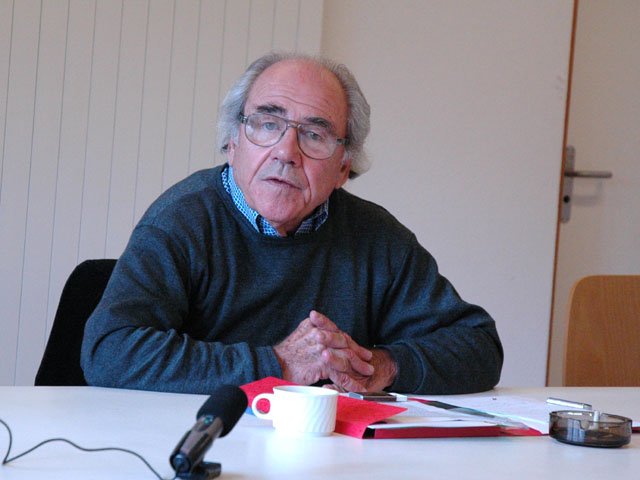
Dugin extends the diagnosis through Jean Baudrillard, whose account of America as a kind of "anti-civilization" he endorses with a striking formulation: American religiosity has become a pure simulacrum, and its innocence, paradoxically, makes it worse than an openly irreligious "moral majority" would be. The televangelist he calls "Pastor Dollar," a figure consumed by money and performance, becomes the symbol of the country as a whole, and, in his estimate, most Americans resemble this figure to some degree. This image is offered, in the interview, as diagnosis rather than as a claim this essay independently verifies.
7The Engine
America, on this reading, is the test bed for a liberal New World Order that then spreads outward through institutions like NATO, the Brookings Institution, and the Carnegie Endowment, with a twist: Americans themselves are the process's first casualty, not its beneficiaries, a point Dugin makes by citing Patrick Buchanan's line that America gained the world and lost itself. He inverts the Cold War's usual moral geography, arguing the real Orwellian society is not the historical Soviet Union but the present-day United States, and casts Donald Trump, flaws and all, as "the last moment of American normality," a comparatively ordinary figure surrounded by an elite he considers genuinely deranged. He forecasts, without fixing a date, an approaching end of American primacy, adding unprompted that he does not expect Russia to simply gain from it: the fallout would strike Russia hard as well.
8The Reformation, Twice
Was the Protestant Reformation the spiritual counterpart to the Enlightenment's anti-metaphysical turn? Dugin complicates the premise rather than simply confirming it. Luther himself was shaped by German mystical writers, Meister Eckhart and Johannes Tauler among them, and a "second Reformation" carried forward by Jakob Böhme kept a genuine, if now marginal, mystical current alive inside Protestantism. The real break runs instead through the Anglo-Dutch and Scottish Calvinist strand, Cromwell's Puritanism above all, which Dugin calls the worst version of the reversal, a "pseudo-Christianity" that, whatever Catholic Rome's own weaknesses, became one more instrument of globalization and liberalism rather than a genuine alternative to them.
9The Dissidents
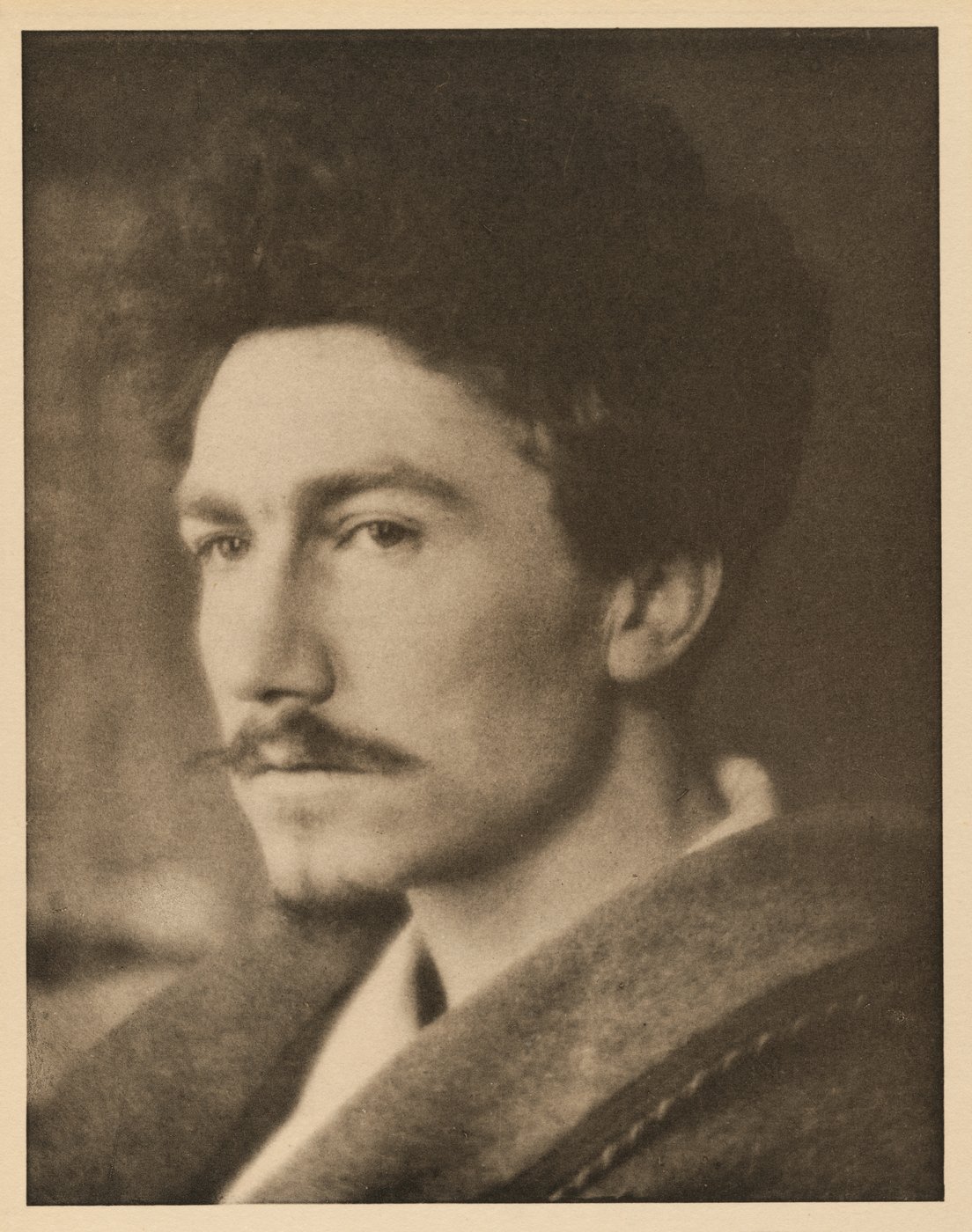
Dugin extends real respect to the line of American writers who reached traditionalist conclusions and paid for it, singling out Francis Parker Yockey's Imperium and its debt to Spengler's account of civilizations moving through organic birth and mechanical death. He locates his own authority to make this argument in his biography: a dissident against Soviet conformity before its collapse, not for it, the reason he says he can recognize and respect American dissidents against their own society's premises. One asymmetry stands out: dissidents from the right, on his account, are crushed by the prevailing culture both in life and after death, in a way dissidents from the left, who draw support from another wing of modernity itself, are not.
10From Organism to Mechanism
Spengler supplies the essay's central image for civilizational decline: a passage from organism to mechanism, from what Dugin calls "the organic way of love" to "the mechanic way of death," the shift, in Spengler's own vocabulary, from culture to civilization. Modernity and globalism represent the terminal stage of that mechanization, and Dugin frames the stakes in explicitly theological terms: something living can be killed, but only God can create life, which makes the modern, globalist order a kind of counterfeit creation, mechanically assembled and, in his words, "dead inside."
11Negative Liberty
This connects to atomized individualism through a distinction Dugin treats as load-bearing: individual liberty is a purely negative concept, freedom from every collective tie, to church, nation, family, gender, while positive freedom would require some notion of what that liberty is actually for. He cites John Stuart Mill as the classical liberal source of the same distinction, and argues that liberalism, to remain consistently liberal, can only ever speak in the negative register, since any positive content would itself become a limit on liberty. From that premise he draws a direct line to family breakdown, the legal recognition of same-sex marriage, and transhumanism, which he characterizes not as deviations from liberalism but as its necessary, logically consistent next steps.
12Logical Madness
How can a philosophy Dugin calls nihilistic still produce a coherent internal logic? He distinguishes intellect, which he treats as holistic and partly beyond reason, from calculative logic, which he says becomes more "infrarational" the more narrowly it is applied to material things. He illustrates the point with a postmodern project of liberating the body's individual parts from the body as a whole, because any integrated whole is now treated with suspicion, an image he renders, startlingly and in his own words rather than this essay's, by comparing the intact body itself to a concentration camp. The wider claim is that even the positions he considers most deranged, including the political push around gender and sexuality he describes in the interview, follow their own internal logic once the premise of radical individualism is accepted, a point he supports by invoking Carl Jung's observation that even a deeply disordered mind operates by some coherent logic of its own.
13The Last Philosopher
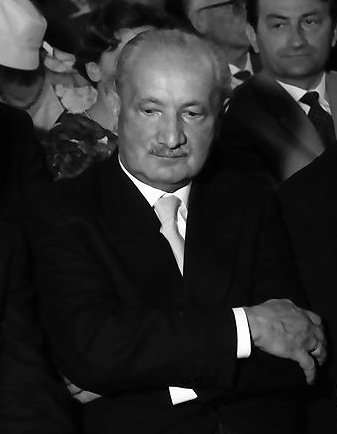
Dugin reserves his highest praise for Martin Heidegger, the summary of the European logos in his own words: not the last philosopher, a title he assigns instead to Nietzsche, but the thinker who came after the last philosopher and opened what Dugin calls an eschatological "new beginning." Understanding Heidegger, on this account, is close to a precondition for any European understanding themselves at all, since Heidegger's readings of Aristotle and Plato, in Dugin's estimate, surpass those of Aristotle's and Plato's own direct followers. He treats Heidegger less as an academic reference than as a messenger, a figure who expresses a civilization's destiny inside a single body of work.
14Land and Sea
Dugin frames the familiar land-power-versus-sea-power distinction, Eurasianist land against Atlanticist sea, as something older and more metaphysical than a modern strategic doctrine. He traces the same structure back to the Neoplatonist Proclus's reading of Plato's Atlantis myth, and updates the sea's character with sociologist Zygmunt Bauman's phrase "liquid society," set against land as fixed and rooted. The same split runs into Christianity itself: Orthodox and Protestant Christianity (same origin, same church, same core claims) nonetheless diverge in spirit and style along the identical land-and-sea axis, with geopolitics doing real work inside the theological difference rather than sitting apart from it.
15The Third Totalitarianism
The interview's closing turn supplies its title and its sharpest claim: Soviet totalitarianism, Nazi totalitarianism, and now, on Dugin's account, a third, liberal totalitarianism, defined by the absence of any right to be illiberal. A specific curdling explains how, in his telling: political correctness, which began as an ordinary social norm against gratuitous cruelty, has become its own inverted racism, one that excludes anyone who states a non-conforming position rather than merely discouraging bad behavior. From there comes his most severe claim of the conversation, offered here strictly as his stated position, not this essay's own finding: that Anglo-Saxon liberal culture is more deeply racist than Nazism was, because its exclusion operates on spiritual and cultural grounds rather than biological ones, and, further, that the biological racism of National Socialism was itself an import from Anglo-Saxon authors and colonial precedent, which he calls its weakest and most regrettable feature, stating plainly that he holds no sympathy for that part of it.
The interview closes on that claim, with thanks exchanged and a reference to Dugin's own body of work, The Fourth Political Theory among it, as the place to follow the argument further.