1A Deal Nobody in Tehran Trusted
When Seyed Mohammad Marandi sat down with Glenn Diesen in the summer of 2026, the United States was back at war with Iran, and the war looked set to escalate beyond the targeting of the earlier round. Yemen was joining the fight, which meant the Red Sea could be closed; Saudi Arabia had become far more vulnerable; and Iran was concentrating its strikes on Bahrain and Kuwait. Only weeks earlier the two countries had signed a memorandum of understanding meant to end the fighting. Marandi, a professor of English literature at the University of Tehran who had advised Iran's nuclear negotiators and served as a young soldier in the war against Iraq in the 1980s, began by explaining how Iran had read that deal from the first day: nobody in Tehran ever believed the United States would keep its side of it. That was simply never counted on.
What Iran did instead, on his account, was use the brief window during which the memorandum remained partly credible. Iranian oil had been piling up on tankers in the Persian Gulf, unable to leave because of the American siege, and the moment the memorandum was signed, tens of millions of barrels were sent to Asian markets. Iran then emptied whatever it held on shore and brought in ships carrying critical supplies, because its ports had been blocked for two months. That, Marandi says, was the most important thing the memorandum gave Iran: time to sell oil and to restock. The United States, for its part, wanted oil moving out of the strait to ease a global energy crisis, and for a while the crisis did ease. But the shortage that had accumulated, day after day, over months of closure was enormous, and it was not only oil and liquefied gas that had stopped moving but everything else as well, and the other goods the world economy depends on lagged far behind the tankers.
2Article Five
Then the Americans began violating the deal, Marandi says, exactly as expected, and he lists the breaches one by one. They refused to hand over Iranian assets he describes as stolen. They refused to make Israel withdraw from Lebanon. They refused to stop threatening Iran, which was part of the deal. They expanded sanctions, and then reversed the lifting of sanctions on Iranian oil exports. The only commitment they honored was lifting the siege, because they wanted the oil to flow while denying Iran the benefits of the agreement. And then they opened a shipping corridor of their own through the strait, which on his account violated the memorandum's fifth article, the provision recognizing Iran's authority over that trade. For two weeks, Iran warned tankers not to use the American corridor, but the Gulf states that had helped the United States in the war, Saudi Arabia, Qatar, and the Emirates, kept sending their ships through it, in effect working with Washington to undermine Iran. After repeated warnings, Iran struck several tankers. The United States bombed Iran in response, and then closed the strait itself with a siege.
So every element of the memorandum, in Marandi's telling, was undermined by the American side, and he offers a reason. The United States had lost what Iranians call the Ramadan war, the forty-day war fought earlier that year; it had lost the siege; and it had lost at the negotiating table. What Trump attempted afterward was to win by other means, avoiding his obligations while seizing control of the Strait of Hormuz, which he had been unable to do by force. Iran refused, saying it would never allow the Americans to control the strait, and the war that followed is, in Marandi's phrase, a war over the Strait of Hormuz.
3A War Over Hormuz
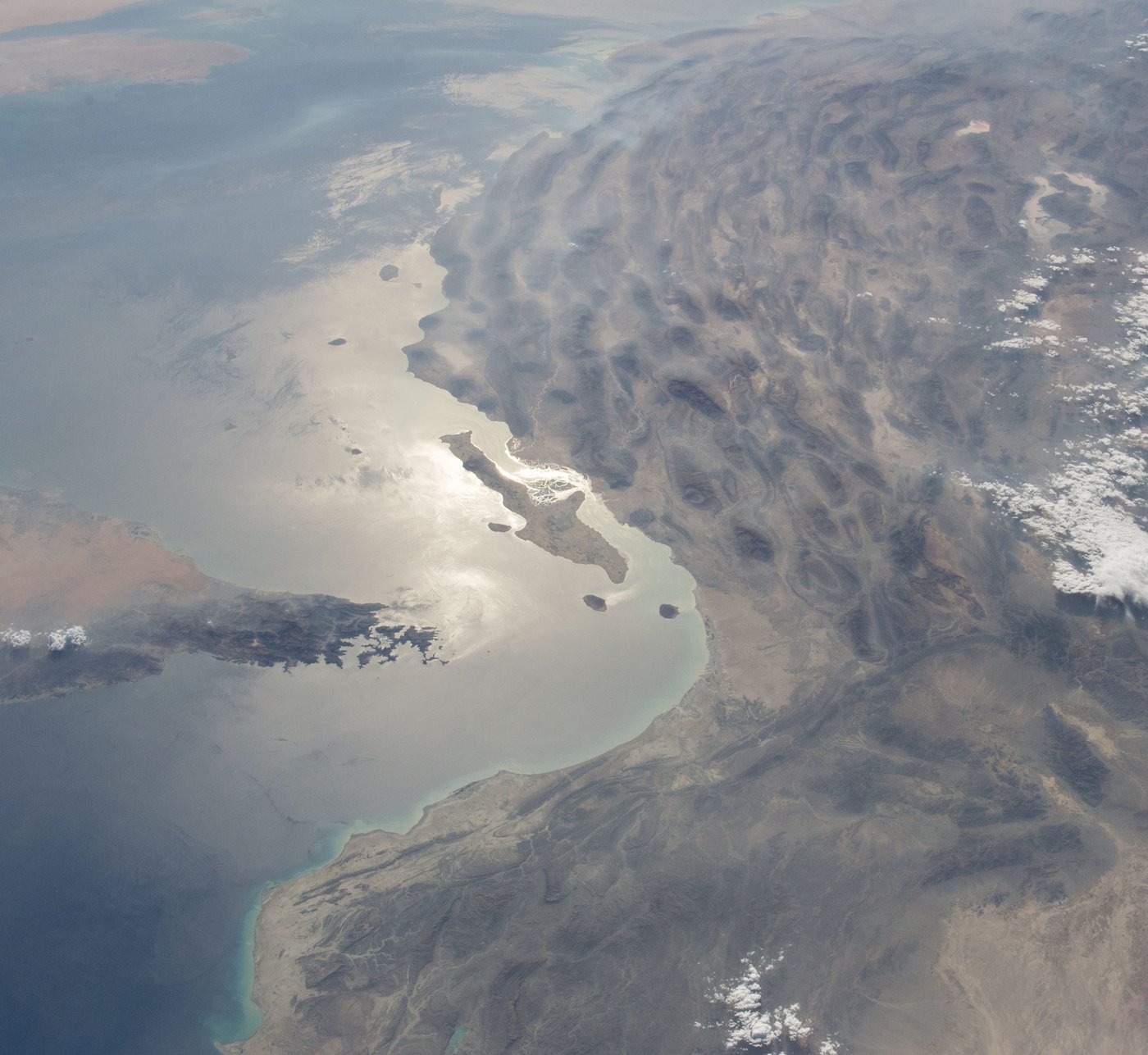
The United States, Marandi says, has plans for a ground invasion. He is careful not to say that it will necessarily happen, or that it will happen soon, but the plans exist, and that is why Iran's strikes have concentrated on Bahrain and Kuwait, where most of the American assets suited to an invasion are based. Iran has also struck American targets in Jordan, Qatar, and Iraq, and this time in Oman too, because Oman had been used against it. The two sides, he argues, are fighting with very different vulnerabilities. Iran's key assets are deep underground. When it wants to fire missiles or drones, it does not keep them in buildings or stockpiles; it brings out what it needs, fires, and returns to its bases, or disperses launchers across wide areas so that they cannot be destroyed in large numbers. Iran can do this because it is mountainous, and underground bases dug into mountains are far stronger than anything that can be built in flat land or on islands.
American assets in the Gulf, by contrast, sit on the surface, on flat desert coasts and small islands where hardened underground bases are impractical and would in any case take years to build. Iran's task is therefore comparatively simple: destroy the radars and electronic-warfare systems first, then the hangars and buildings behind them. And Iran has been accumulating missiles and drones for decades. Trump had claimed that Iran's missiles and drones had been wiped out, but the Iranian strikes of the preceding days, Marandi notes, had been very heavy, and a new missile had just been introduced into the war. Iran, he insists, will not allow normal traffic through the strait until the United States carries out its obligations, whatever the document is called: Israel out of Lebanon, an end to what he calls the genocidal attacks, the return of Iranian assets. Even if the Americans halt their military operations, he is quite certain that shipping through Hormuz will not return to normal until those demands are met.
4Millions in the Streets
Diesen asked about the wider front, and Marandi pointed first to Iraq. During the funeral of Ayatollah Khamenei, held in the holy cities of Najaf and Karbala as well as in Iran, many millions of Iraqis took to the streets, crowds so vast that, for once, he says, Western media did not try to minimize them. In the past, any huge gathering in Iran was reported as thousands, sometimes tens of thousands of people; this time the coverage conceded many millions. In Tehran, on his account, fifteen or sixteen million people took part over three days, and across Mashhad, Qom, and the rest of Iran, some forty million. For Marandi, the Iraqi crowds show where the sentiment of the Iraqi people lies, and they mean that if the war escalates, the armed groups of the Iraqi resistance have a mandate to join it.
So far, though, he notes, the Iraqi groups have been less active than they were four months earlier, and the same is true of Yemen. The axis of resistance, Iran and its allies, has not yet climbed very far up the ladder of escalation. Iran, he concludes from this restraint, wants to manage the escalation rather than unleash an all-out war, and the decision of how high to climb remains, for now, in Tehran's hands.
5Yemen and the Red Sea
Yemen, Marandi says, is a strange case, and he would not have done in Saudi Arabia's place what Saudi Arabia did. For years, Yemen lived under a blockade. He recalls a former American military officer describing his time on a United States naval ship enforcing that blockade, when his crew seized a small boat smuggling medicine into Yemen and dumped the medicine into the sea. That, in Marandi's account, is how the United States, the West, and the Arab monarchies of the region treated Yemen: trying to starve its population and make it suffer as much as possible, in a war waged for years by Saudi Arabia and the Emirates with broad outside support that he calls genocidal, like Gaza. But the war failed. And recently Iran broke the siege, sending a passenger aircraft to Sanaa to carry Yemeni officials to the Iranian funeral. As the plane was returning, Saudi Arabia bombed Sanaa's international airport, endangering both the Iranian aircraft and Yemeni civilians, and Yemen retaliated. He has heard from people he generally considers credible that the United States pressed the Saudis to carry out that attack, but he is explicit that he has no proof.
The result is that the Red Sea is far more dangerous than before. Yemen, Marandi argues, could stop the flow of oil from the Red Sea to Asian markets very easily. Striking even one supertanker would be enough, because insurers and shipping companies would immediately rethink sending ships through those waters, and striking Saudi energy facilities directly would be catastrophic. He reminds listeners how the earlier war against Yemen ended: in its last stage, Yemen's armed forces acquired drones and missiles, struck Saudi Arabia's export capacity, and the Saudis quickly accepted a truce, the one negotiated under United Nations auspices in 2022. Those capabilities have not disappeared. With Hormuz closed, Saudi exports through the Red Sea, somewhere between three and four and a half million barrels a day on different estimates, are among the last major flows of Gulf oil still reaching the world, which is why he calls the pressure on Riyadh to provoke Yemen foolish. If those exports were hit, the price of oil would rise sharply. So far, he notes, Yemen has not struck them.
6Four Weeks of Oil
Diesen raised the economic pressure. The long war against Yemen ended when Yemen hit Saudi Arabia's economic interests, and when Trump reluctantly signed the memorandum, he had himself cited the need to get energy moving through Hormuz, saying the United States had only a few weeks of oil left. How long, then, can this go on? The irony, Marandi says, is that if the United States had simply let the memorandum work, the flow of oil would have returned to normal by now. Instead it tried to seize control and undermine Iran. He accepts, for argument's sake, Vice President J. D. Vance's own figure that around twenty million barrels a day left the Gulf during the window the memorandum opened, more than in normal times, which is plausible because so many tankers were already full and waiting. But that surge was not sustainable. New production was not necessarily taking place, and the shortages were so large, and daily consumption so unchanged, that a few weeks of three or four million extra barrels a day barely dented them. The days of closure since then, on his estimate, have already cancelled the gain.
From here, every day the strait stays shut makes the situation more dangerous. When Trump was attacked from all sides for signing the memorandum and supposedly accepting Iran's demands, he said the country had only four weeks of supplies left, and he invoked Herbert Hoover and the Great Depression, which he did not want to preside over. Trump is not known for honesty, Marandi says, and the real figure might be six or eight weeks; but the crisis worsens by the day. Two further problems compound it. During the brief reopening, far more tankers left the Gulf than entered it, so any future reopening will take longer to restore exports. And shutting down production, restarting it, and shutting it down again does increasing damage to the oil fields themselves. The long-term consequences will be felt even if the crisis is resolved, and this time, he insists, Iran will not reopen the strait without major concessions actually delivered.
7United in Tehran, Divided in Washington
What about diplomacy? Diesen put the history bluntly: the 2015 nuclear agreement, the Joint Comprehensive Plan of Action, was never fully implemented by the United States, which withdrew from it in 2018; Iran was then attacked twice while talks were said to be close to a deal; and now the memorandum had collapsed. It begins to look as though diplomacy is simply a tool for regrouping and reshaping the battlefield. Marandi agrees that Iran was divided after the memorandum. Some argued it was good enough, that Iran needed to export oil and import essential goods and could simply keep pressure on the strait if the Americans cheated. Others argued that the war should have continued and the memorandum never been signed. But there was a consensus that the deal would not last, and with the return to war the gap has narrowed. Iranian politics, he says, is more united now than it was a week ago. He dismisses a claim aired on a popular American podcast that Iran's leadership is split between reasonable people and crazy ones, and that only the crazy ones wanted to hit the tankers. Nothing of that kind happens in Iran, he says, without a mandate from the Supreme National Security Council; no branch of the armed forces can simply decide on its own to fire missiles.
Washington, in his reading, is the divided capital. Vice President Vance seems to speak a very different language from Trump and the people around him, and the administration's attempt to win extra money for the war has met strong resistance from Democrats in Congress, who see that the American public opposes the war and whose own voters almost universally oppose it. If that resistance holds, it will be hard for Trump to keep fighting, because he needs the money. That may, in time, create an opening to force a change in American policy. But Iran is not interested in an opening yet, and Marandi does not expect a ceasefire soon. What Iran will want, when talks eventually come, is not another piece of paper but action: the United States carrying out what it has already promised. Trump may yet claim that his Iranian friends, real or imaginary, gave him everything he wanted, and use the claim to cover another retreat. It will not matter to Iran what Washington says. It will matter only what Washington does.
8The Heat and the Invasion
Could Iraq be used against Iran, as Ukrainians are used against Russia and Filipinos, Diesen suggested, might be used against China? Marandi agrees that the United States uses proxies: armed Kurdish groups based in northern Iraq, tolerated by the regional Kurdish government and bombed by Iran almost daily, and militant Salafi groups in Pakistan's Balochistan, where Islamabad's control is thin. Their activity has increased, but their numbers are small and their capabilities limited. If the United States wants a land operation, it will have to fight it itself, from its bases in Kuwait and Bahrain, which is why anything in those two countries that could support an invasion is being struck. And Iranian military observers, he says, have noticed something about the pattern of American bombing: it looks like preparation for a ground offensive.
That surprised them, because this is the worst possible season for one. Around the Persian Gulf, summer temperatures run into the high forties and past fifty degrees Celsius, with humidity near a hundred percent. Seizing islands under those conditions would be hell on earth: soldiers in full gear, running in daylight, could die of heat alone. Iran had expected any invasion to come in late September or after, when temperatures begin to fall. Meanwhile American troops sit in miserable conditions, their morale, he assumes, very low, and billions of dollars of equipment suffer from dust, heat, and humidity, while Iranian soldiers, even near the Gulf, can go home. And Iran has been preparing for a land war for decades. As during the earlier forty-day war, Marandi says, Iran actually wants the Americans to invade, because it believes it would win. Iran would let them take some islands and parts of the coast, and then start hitting them, and American soldiers would be very exposed, with supply lines stretching back across the Gulf to Kuwait and Bahrain. A land invasion, in Iran's view, would end the war sooner, because it would be America's final defeat.
9The Desert Kingdoms
Diesen's last question was about Saudi Arabia: would it join an invasion, which would seem to need Saudi help? Marandi answers with a warning his country's military had issued only hours earlier, and had issued during the forty-day war as well: if Iran's critical infrastructure is attacked, Iran will destroy everything. A land invasion means attacking critical infrastructure by its nature, because territory is being taken and destroyed. So every country in the region is at risk, and Saudi Arabia doubly so, from the Gulf and from Yemen across the Red Sea. The Gulf states, he argues, understand that fighting Iran is against their interests, though Kuwait and Bahrain, whose ruling family depends heavily on American support, had shown particular hostility in recent weeks. If Iran's infrastructure were hit, Iran would no longer confine itself to those two, and the region's oil fields, gas facilities, and power plants, large, few in number, and close to Iran's shores, would be destroyed. Iran would not even need its long-range missiles; in recent days it had used mostly short- and medium-range weapons, firing only a handful of long-range ones.
That, for Marandi, is the deepest danger of the war. Iran is a country of mountains, forests, and rivers as well as deserts, nearly self-sufficient in food even under sanctions, and blessed that year with better-than-average rain after three or four years of drought. The Gulf monarchies are desert states that cannot survive without their power plants and desalination. If their critical infrastructure were destroyed in that heat, their populations would have to flee at once, to Iraq, Yemen, or Syria; nobody could remain near the Gulf. Those countries would, in his words, probably cease to exist, and their collapse would plunge the world into an economic depression far worse than the 1930s. Diesen drew the lesson he believes the war keeps teaching: the illusion of escalation control is very dangerous, and the United States has not yet learned it.
10Gambling the House
Why, then, is the United States doing this? Marandi's final answer is the one most likely to be contested. He points to the resignation, at the start of the war, of Joe Kent, a senior intelligence official appointed by Trump, who, on Marandi's account, wrote in his resignation letter that the war was wanted by the pro-Israel lobby and the Israeli government. Add to that hubris, Trump's arrogance, and American exceptionalism, Marandi says, and there is no other reason for what is happening. Trump is gambling the house, hoping that somehow he will miraculously come out on top, and Marandi does not believe he will.
He reads the signs of strain inside Trump's own camp the same way. Steve Bannon, in a recent interview, repeated the line about fanatics and sensible factions in Tehran, which Marandi calls nonsense said so as not to be seen breaking with Trump; but Bannon, he thinks, recognizes that the ship is sinking and wants to get off it, or perhaps imagines himself as the man who can save it. The Democrats' resistance to new war funding, he suggests, shows that they too know things the media will not tell the American people. Marandi closed by saying he hoped that the next time they spoke, it would be to discuss more optimistic scenarios. The second conversation in this volume, a few months later, turns from the battlefield to a different front, one he considers just as important: the war over what the world is told.
11Where the United Nations Failed
After the BRICS summit in New Delhi, the channel Think BRICS asked Marandi a pointed question. He had said that the Shanghai Cooperation Organization and BRICS were stepping in where the United Nations had failed, and that an attack on Iran was an attack on the multipolar world. Yet the New Delhi Declaration condemned unilateral sanctions without naming the attacks on Iran, even though Tehran had asked it to. What makes BRICS credible when its own declaration avoids the war that matters most? Marandi conceded the point. Neither BRICS nor the SCO, he said, will bring about global justice. But both can play a much more constructive role among their members, because they are more democratic in structure: there is no inner circle of countries with special powers like the permanent members of the Security Council, and small and large nations sit at the same table. The two organizations were created for different reasons and cover different geographies, but they are growing more alike as they broaden the issues they address, and for an Iran that wants to integrate economically with Asia and the rest of the Global South, they are the most useful bodies available.
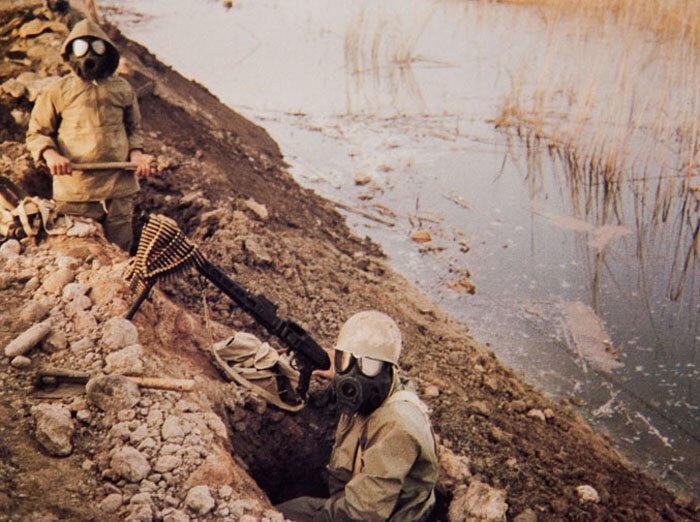
The United Nations, by contrast, has rarely been of much value to Iran, and in his view never will be. Iran has been the victim of three wars, he says, and the UN did little in any of them. When Saddam Hussein used chemical weapons against Iranian soldiers in the 1980s, weapons whose ingredients, Marandi notes, Western suppliers helped Iraq to obtain, while Gulf monarchies helped fund Iraq's war, the Security Council's response was muted and slow. Only when Saddam invaded Kuwait in 1990 did the dynamics change, and suddenly, as the host put it, the world seemed to wake up; chemical weapons became a bad thing, even though none had been used against Kuwait. Marandi is careful to add that he is exaggerating somewhat: the UN is not worthless. But practically speaking, for a country like Iran, BRICS and the SCO hold far more potential.
12The Oligarchs' Megaphone
The host turned to a claim Marandi had made before, that Western media are complicit in genocide and that American media are controlled by oligarchs. Western mainstream media, he answered, are useless and irredeemable, because a small number of very powerful people control them. Westerners like to talk about Russia's oligarchs, he observed, but the concentration of power in the Western plutocracy is greater than anywhere else, and everyone knows the handful of names who control the largest technology companies. American culture, in Hollywood and on television, treats great wealth as simply good, and he cites the endless retelling of a single story, the rich man who hides his wealth and falls in love with a poor young woman, or the reverse: Cinderella, as the host laughed. In the West, he argues, the only place to find reliable analysis is almost always alternative media, and even alternative media is being infiltrated by the powerful, who fund their own outlets, and who can suppress, demonetize, or remove independent ones. The host offered the channel's own case: its Facebook page had been shut down a few days before the New Delhi summit, so it could not report to its own subscribers from Delhi.
Marandi offered his. He lost his Facebook account years ago, and then his Instagram account, for posts about the war with Iraq. On Facebook he had shared a photograph of a friend who had been his commander in that war, a picture of the man in his youth, not in his hospital bed, with a note that he was dying, many years later, of the lung damage left by chemical weapons that German and other Western suppliers had helped Saddam Hussein acquire. Facebook deleted the account. Instagram deleted the other for something similar, a photograph of him and his friends from the war with a comment about the American role in it. What matters, he says, is what that does to a person: once your accounts can be taken away, you begin to change the way you speak.
13The Self-Censoring Student
If you have already lost one account, you do not want to lose the next one, so you watch your language. In a live conversation, he says, a host may hear him say something and think: he is going to get us into trouble. His own students in Tehran, whose views are very diverse, will not say certain things, because they worry that if they later want to study abroad, their social media will be examined. So they censor themselves. The West calls this freedom, he says, but when everyone self-censors because of the West, then after a few years that cautious language becomes the language people actually use. It is internalized. Views that are never repeated become less common, and a person grows distant from a part of himself that he has stopped allowing to develop.
The effect, the host suggested, is that audiences stay trapped in the same information bubble, consuming whatever they are given. Exactly, Marandi agreed. You can explore outside the mainstream narrative, but if you push too far you will be punished, so you cannot go too far; alternative media, in that sense, is well managed and well controlled. And yet it is having a huge impact, which is precisely why he expects it to be controlled more tightly in the years ahead.
14A Platform of Our Own
If BRICS or the wider global majority built its own social networks, as Marandi has suggested, what would have to come first: technology, money, or credibility? All three, he answered, but above all a credible narrative, accurate and authentic; the rest would follow. He had floated the idea, he said with some modesty, as someone with no official position at all: that if the BRICS countries came together to build their own social media platforms, the United States would no longer be able to control the narrative, and people would at least know that other points of view exist. Consider how the host would come to understand him: by getting information about Iran largely from Western sources. And if he wanted to understand the host's country, he would get it from the same Western sources: Bloomberg says, Reuters says, as the host put it, laughing. And those sources, he promised, will not say anything good about Iran.
New technology makes an alternative easier every day, he argued. His own words can now be translated by artificial intelligence into Italian, in his own voice and tone, so that Italians hear him as if he were speaking their language. People could reach one another directly rather than through Western intermediaries. He has been to China many times, mostly among academics and think-tank researchers, and found it utterly different from what he had read in Western media: not a utopia, any more than Iran or Russia or the host's own country is a utopia, but not the dystopia it is said to be either, just as the West is not the utopia it claims to be. Seeing other countries clearly, he argues, is not only an intellectual good but a practical one, for business, for academic exchange, for every kind of cooperation. As long as each country sees the other through a lens that says something is wrong and backward about it, progress of every kind is impeded. He offers a telling detail: in Iran, the most widely read book on China is Henry Kissinger's. He does not say students should not read it. He says that from the first day, Iranians who want to understand China are being introduced to it through an American lens.
15The Indispensable Nation
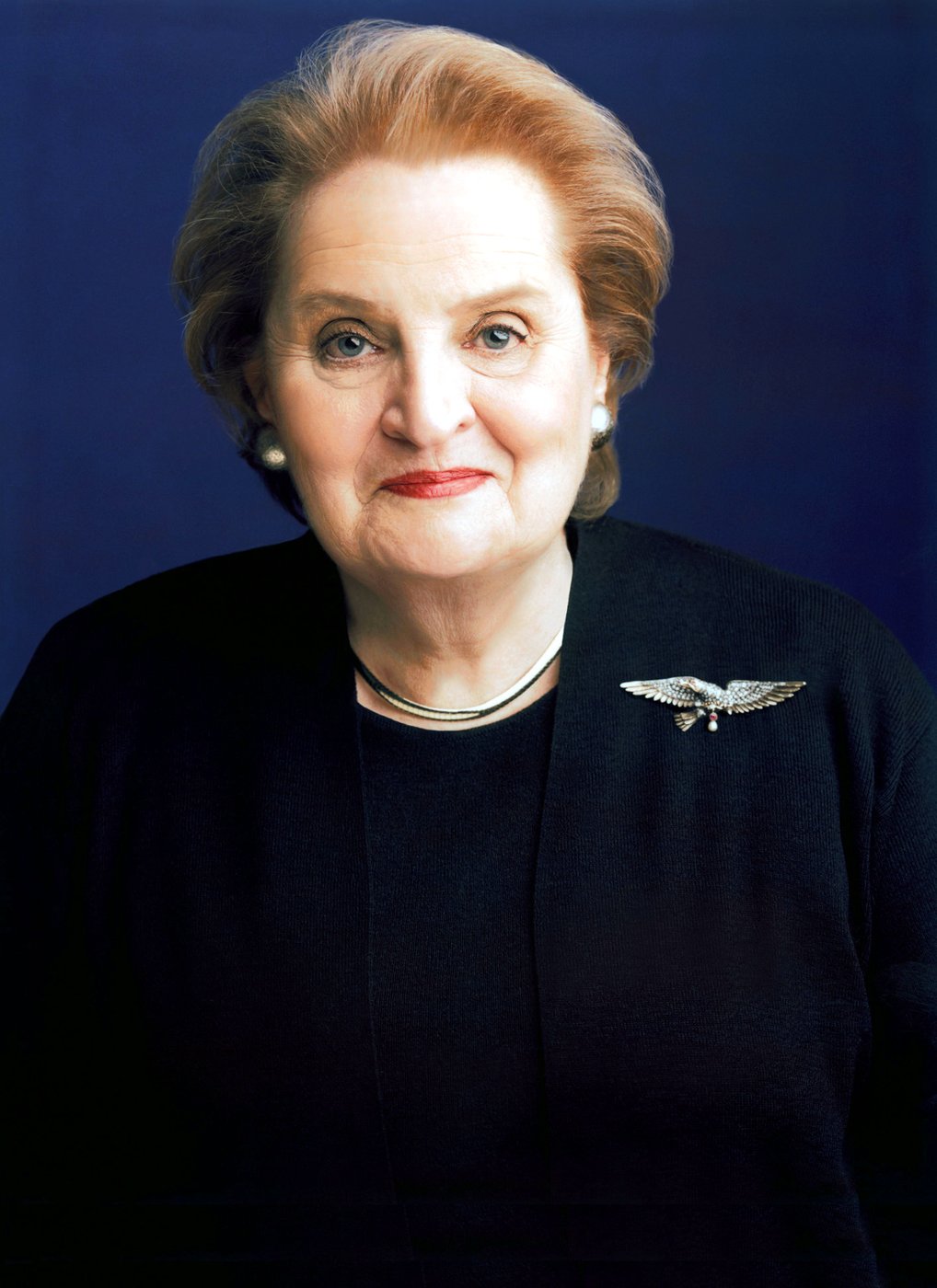
The host asked about the negotiations themselves, and whether a real deal was possible. Iran did reach one, Marandi answered: the memorandum was signed, and then Trump ignored it. He has always been skeptical, because in his view the United States never abides by its commitments when its rulers decide those commitments no longer serve them. Americans expect everyone else to honor agreements but see themselves as exceptional and above the law, and if they break a deal, no one in Washington and no one in the Western media will say that the White House is violating it. It is not simply a matter of strength, he argues, but of a belief in exceptionalism, and he recalls Madeleine Albright's words from 1998, that America is the indispensable nation that stands taller and sees further than other countries. Marandi calls this a supremacist worldview, and compares it to Zionism.
He describes how that worldview shapes the language of power. If the United States invades a country, kills a great many people, and fails to occupy it, the verdict in the Western mainstream is that it was a failed policy, never that it was a crime: Afghanistan was a failed policy, while Russia's war in Afghanistan was criminal and Iran's actions are terrorism. American wars are judged bad only because they were ill-informed or poorly executed, never because they were wrong. It is, he says, the logic of a father and a child: the adult has special privileges, and when he punishes the child, it is because he sees further and stands taller, while the child is immature. When the United States attacked Venezuela and seized Nicolás Maduro, he argues, the Western debate was never about what right Washington had to do it, only about whether it had been a good idea; some newsrooms, he and the host noted, even avoided the word "kidnapped," though he could find no better word for it, and they cited reports that the boats the United States had bombed in the Caribbean had been fishing boats, and that survivors had been killed. Say too much about any of this, he says, and you are labeled a hardliner or an extremist and kept at the margins. That, he concludes drily, is how freedom of speech works, in its American interpretation, and why BRICS or the SCO must find a way for people to produce alternative knowledge without fear of being removed from the platform.
16Three Fronts, One Target
The host's last question drew the two halves of Marandi's argument together. An attack on Iran, he had said, is an attack on the multipolar world, and the host laid out the evidence in fertilizer. A third of the world's fertilizer trade passes through the Strait of Hormuz, and both Brazil and India are exposed; India imports around half of its fertilizer through the Gulf, and its sulfur imports from the Middle East had fallen by about a quarter in the first months of the year. Iran had proposed a seven-day ceasefire and offered to reopen the strait; Trump had rejected it and told his staff he expected new attacks on Iran after the November midterm elections; and Washington had moved to shut down Iranian airlines worldwide, sanctions that China's foreign ministry called illegal and refused to follow. Three fronts, one target: was the United States trying to break BRICS by choking its members, and why was the response so fragmented? Marandi had no doubt that Washington wants BRICS and the SCO to get nowhere, because it is not part of them and cannot control them, and because it wants trade to continue in dollars and through the systems it dominates. But members have different priorities. For Iran, under sanctions, an alternative system is vital; for India, sanctions still seem farther away, though that may change as they tighten on Russia and Iran; India and Pakistan simply see the threat of the dollar differently than Iran and Russia do. Many members are afraid of being punished by the United States, and that reality has to be lived with.
So Marandi counsels modest expectations of BRICS, and confidence about the direction of travel. Change, he says, is happening, and it is inevitable. New technology makes it easier every day to trade in other currencies through systems the West does not control; what it requires is political will, and political will varies. He would like every country to move faster, and he acknowledges with a smile that people will say he only thinks so because he is Iranian. But the world is moving that way, perhaps not in a single BRICS breakthrough, perhaps more slowly than he would like. The host offered the thought that multipolarity is not something waiting in the future, because it already exists. Marandi agreed, with one refinement: it is not a neat map of three or four blocs that can be compared like teams on a board, but a world of overlapping regions and interests, harder to draw and impossible to undo.