1A Drone on the Wing
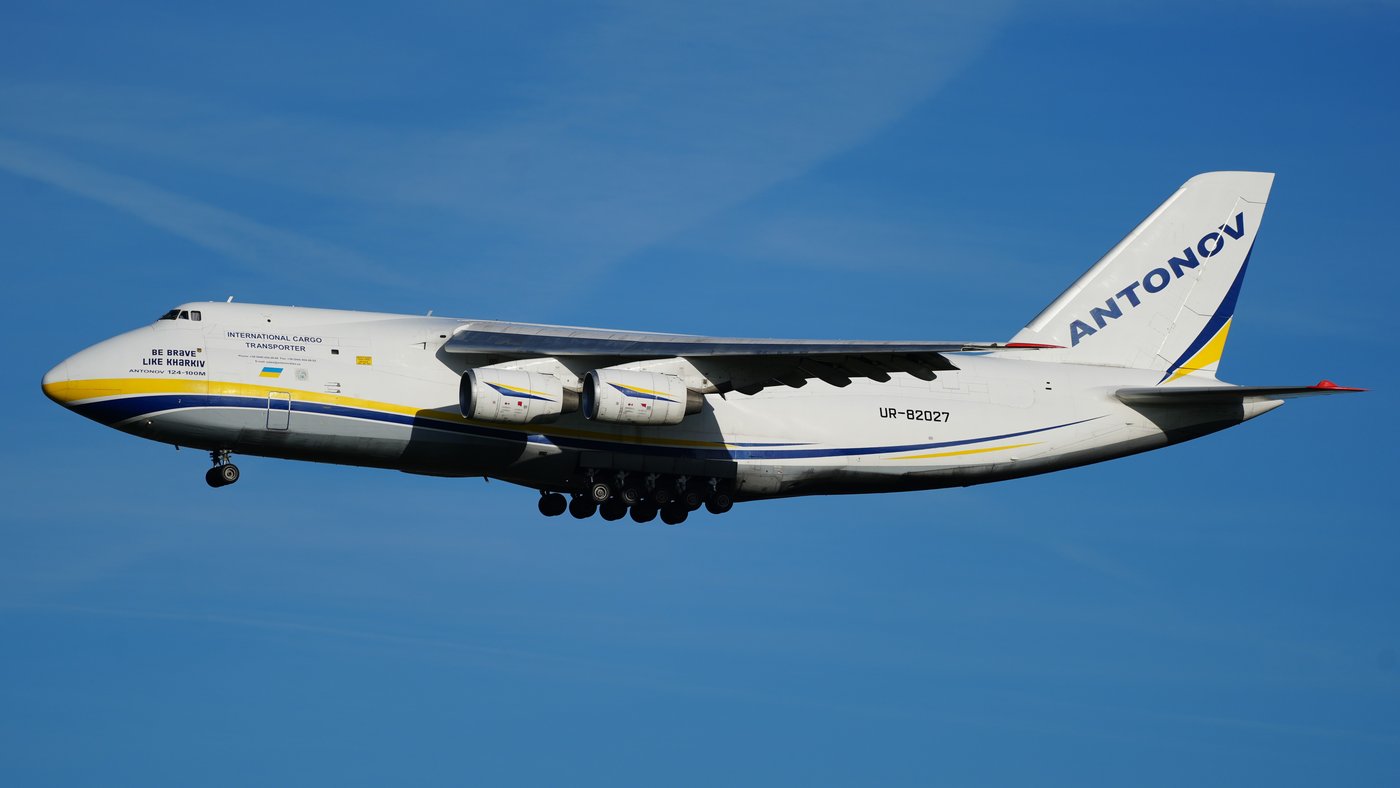
At Leipzig airport, in eastern Germany, Ukraine keeps its fleet of big Antonov cargo planes. They have been parked there since the war began. Before the war, they flew for a NATO airlift program, carrying military equipment for allies who lacked heavy transport capacity of their own; since the war began, they have also carried supplies for Ukraine's armed forces, flying not into Ukraine itself but to Poland, where the cargo continues overland. In 2026, a drone packed with military explosives landed on the wing of one of those planes, right where the fuel is stored. It was meant to ignite the kerosene. Instead, the detonator fell off, the drone dropped to the ground, and nothing serious happened, almost by chance. A second drone, also carrying military explosives, was found outside the airport.
Carlo Masala, professor of international politics at the University of the German Armed Forces in Munich and one of Germany's best-known voices on security, discussed the attack in two interviews that autumn, one in English and one in German for the Berlin Playbook podcast, recorded on 3 October 2026. The way the Leipzig device was built, he said, put it on a different level from the drone overflights Europe had grown used to over the previous four years. Whether it was a test or a real attempt is disputed. His own view is plain: if you use military explosives, you expect the attack to succeed. And it was, in its way, a version of a test he had imagined in a book two years earlier, a test that looked very different on paper.
2Two Fortresses
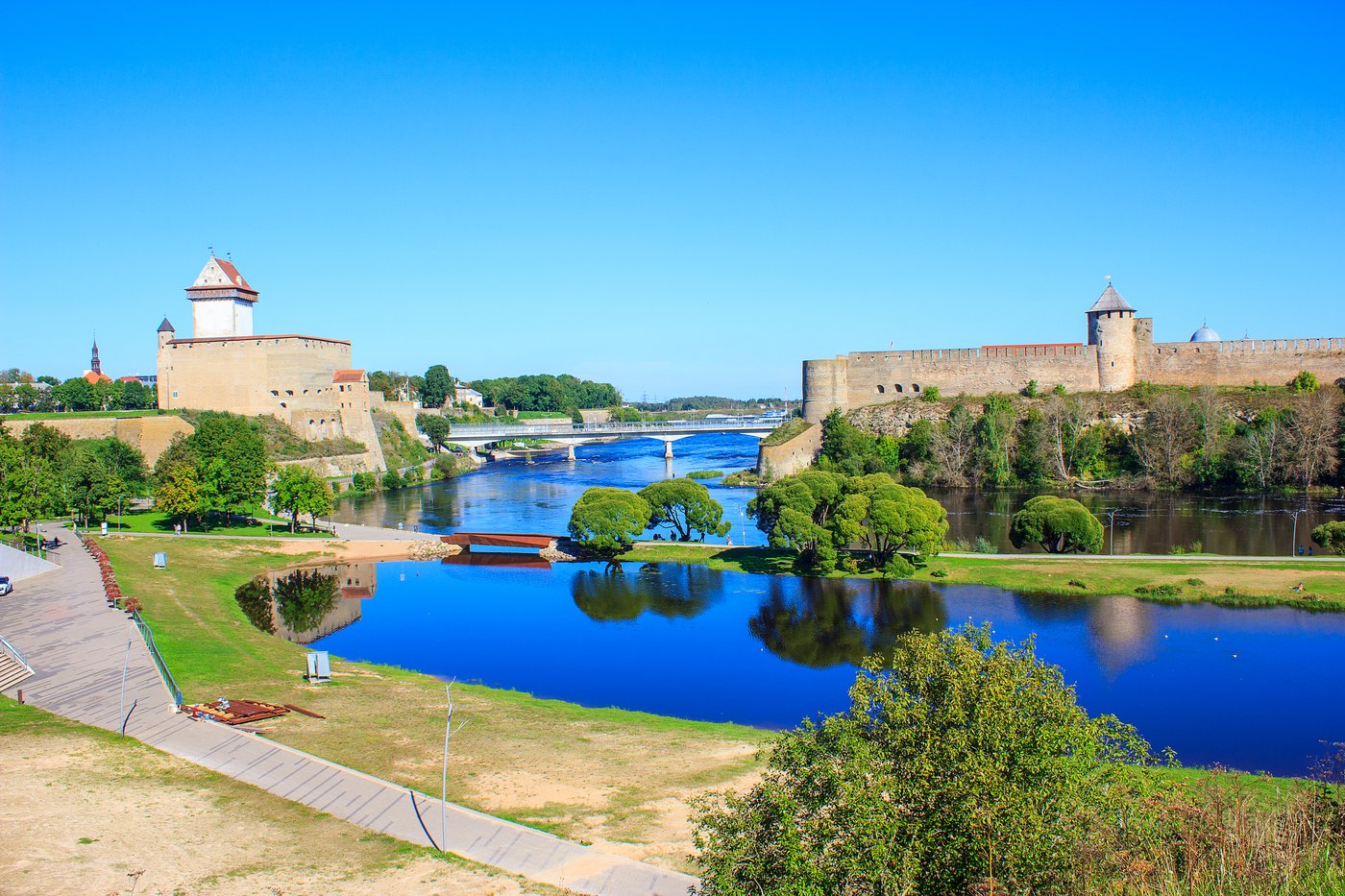
On the border between Estonia and Russia, two fortresses face each other across the narrow Narva River: the medieval Hermann Castle in the Estonian city of Narva, and the fortress of Ivangorod, built by Ivan the Great in 1492, on the Russian bank, with a bridge running between them. Narva is a city of around fifty thousand people, and most of them speak Russian. In his book If Russia Wins, Masala made that city the opening move of a war that has not happened. Russian troops cross the bridge into Narva. They are not there to conquer Estonia. They are there to ask NATO a question.
The book began with an argument. In early 2024, Germany's defense minister, Boris Pistorius, and its chief of defense, General Carsten Breuer, went public with an assessment drawn from NATO analysis: by 2029, Russia would have armed forces strong enough to attack a NATO country, if its leaders chose to. A debate broke out, first in Germany and then across Europe, and both men were criticized on two grounds. The first objection was that Russia would never be so foolish as to attack NATO, which has far more tanks, fighter aircraft, and frigates. The second was that Russia was struggling to advance in Ukraine, so how could anyone imagine it attacking NATO? Masala thought both objections answered the wrong question.
3The Question, Not the Conquest
The objections treated an attack on NATO as a purely military matter, a count of armies and equipment. Masala asked something else. What if Russia invaded a NATO country in a very limited way, and used that invasion to put the alliance to a test? The test would be whether NATO invokes Article Five, its promise of collective defense, in response to a small incursion into one member state. That makes it a political scenario more than a military one, because Masala's belief, then and now, is that Russia's intention is to destroy NATO, and to destroy NATO you do not need to conquer a NATO country. You only need to put the alliance to a test and see whether it passes.
From there he built his scenario. First comes a ceasefire, or a peace, in Ukraine, which Russia reads as a Russian victory. Then a period of calm. Then Russia moves into a small city on its own border, where a Russian minority lives. Masala insists that choosing Narva was not a prediction. He was looking for NATO's soft underbellies, and there are several: towns in Norway, Latvia, and Estonia that border Russia and have substantial Russian-speaking populations. In any of them, Russia can claim that its ethnic kin are being oppressed and must be protected, which is the perfect pretext to intervene.
4Donbas Two Point Zero
Once the troops are in, the scenario becomes politics. There are bilateral meetings, trilateral meetings, meetings of every shape. Moscow makes clear that this is not about the whole of Estonia, only about one city and the protection of its compatriots abroad. Then it asks NATO its question: does the alliance really want to risk a major conventional war with the Russian armed forces, a war that always carries a nuclear dimension, to liberate one small border city? In the end, a couple of NATO countries shy away from invoking Article Five, and Moscow reads their hesitation as the collapse of NATO, because an alliance whose promise can be questioned is no longer a promise.
Masala calls it Donbas two point zero. Crimea, in 2014, was never really about protecting minorities. But when Russia moved into the Donbas that same year, first with unmarked fighters and then with regular forces, the argument was always the same: the Russian-speaking population had to be protected from oppression by the Ukrainian government. The pretext works because it is hard to disprove in real time, because it divides those who must respond, and because it turns a military question into an argument about minorities, history, and grievance, the kind of argument democracies are worst at settling quickly.
5Writing Putin Out
The book also writes Vladimir Putin out of the story. He wins the war, at least in his own eyes, and then faces the cost of victory: an economy that must be turned from wartime back to civilian production, and that was, by Masala's measure, only about the size of Spain's when the war began. So he steps down as the statesman who brought Ukraine, or parts of it, back into Russia, which is the moment to resign if you want the history books to remember you as the victor. Masala had another reason, too. He wanted to remind readers that it is misleading to speak of "Putin's war." A successor carries on the same policy, because this is a war of the Russian regime against Ukraine and against Europe, and there is enormous continuity among the people who make up that regime.
The successor in the book comes from the financial sector: smart, charming, and set on persuading the West that Russia wants better relations. Masala modeled the moment on Mikhail Gorbachev's arrival in 1985, when Europe and the United States spent about three years arguing over whether he was merely a better-looking Brezhnev or a real change in Soviet foreign policy. In the book, a new Russian president opens a similar window, and most European countries stop rearming so as not to cause him trouble at home. In Masala's story, the overtures are a sham, and the pause in rearmament is exactly what Moscow needed.
6What Winning Would Mean
What would winning actually look like? Russia, Masala says, is more or less a dictatorship, and Putin can sell almost anything to his own people as a win. Objectively, though, the terms matter. Russia still makes maximalist demands. It wants Ukrainian forces to withdraw from the parts of the Donbas they still hold, and at times it insists on all four of the regions it has annexed, even though in the south, in Zaporizhzhia and Kherson, it does not fully control them.
Measured against those demands, Masala argues, compromise is defeat. If Russia has to give ground on territory, that is a Russian loss. If it has to accept security guarantees for Ukraine from European countries or the United States, that is a Russian loss. If it has to accept European troops on Ukrainian soil to deter a future attack, however few, that is a Russian loss too. If any of these ends up in a ceasefire or a peace treaty, Russia has, objectively, lost the war, whatever its television says.
7Escalating Sideways
Since the book came out, Masala's thinking has shifted on one central point. In the book, the war in Ukraine had to end before Russia could go further, because he did not believe Russia could open a second front while fighting the first. That has changed. Russia is advancing in Ukraine, slowly, but not really getting anywhere; by Masala's count, Putin has postponed his deadline for taking the whole of the Donbas four times. Its economic problems are growing as Ukrainian drones hit its refineries. Masala does not claim the regime is collapsing. But the Kremlin's reasoning, as he reads it, is that the only way left to win the war militarily is to get Ukraine's supporters to give up first. So Russia is escalating sideways, against Europe.
People call it hybrid warfare; Masala thinks it should be called a shadow war, and in the two months before these interviews he saw it intensify, with Russia growing ever more willing to take risks. There was Leipzig. There were ammunition factories exploding in Europe, a ballistic missile landing in Poland, an armed sea drone found in international waters off Romania, near-daily drone incursions into Romanian airspace, and violations of national airspace across the continent. On 2 October, the day before the podcast, Russia stopped several merchant ships sailing under European flags, on one pretext or another. And in recent weeks a string of heads of state and government had gone before the press to say they had concrete evidence that Russia was planning operations on their territory, from cutting data links to false-flag attacks. The aim, in Masala's reading, is to spread panic among the people of the countries that support Ukraine, above all Germany, so that they press their governments to scale that support back.
8Did Leipzig Work?
Did the Leipzig attack achieve its aim? Germany's interior minister, Alexander Dobrindt, and its foreign minister, Johann Wadephul, announced the government's response at a press conference: the closure of the Russian House in Berlin and of the Russian consulate general in Bonn, both said to be used for espionage, and a list of Russian individuals submitted for new or tougher European Union sanctions. Masala doubts any of that hurt Moscow much. What did hurt came out around the press conference rather than at it: a few thousand strike drones promised to Ukraine, and closer targeting cooperation between Germany's foreign intelligence service and Ukraine's. Those measures showed Russia exactly what it did not want to see, that Germany would not be frightened out of supporting Ukraine more strongly. In that sense, the attack failed.
In another sense, it may have worked. After three state elections, in Saxony-Anhalt, Mecklenburg-Western Pomerania, and Berlin, voices inside both the Christian Democrats and the Social Democrats grew louder, arguing that a new narrative for supporting Ukraine was needed because public backing was crumbling. Masala believes that debate pleased Moscow very much. Then, in a speech in Münster at the ceremony awarding the Westphalian Peace Prize to NATO, Chancellor Friedrich Merz made clear that under him, support for Ukraine would not shrink. It would stay the same, or grow.
9The Center of Gravity
The spiral keeps turning, Masala warns. After Leipzig, part of the German debate went the other way: none of this would have happened, the argument ran, if Germany were not constantly supporting Ukraine; the Russians would have no reason to blow up a Ukrainian cargo plane, so cut the support, or end it. That is not a negligible part of German society, he notes. Every attack that is uncovered, successful or not, deepens and hardens that debate, which is exactly what Russia wants: a fight over Ukraine support and enough pressure on the parties and the government that the support is reduced. That is why Germany is in the crosshairs. If Germany tips on Ukraine, half of Europe falls away with it. In military language, Germany is the center of gravity.
It is also why Masala finds the talk in Berlin of replacing the chancellor so reckless. Nobody knows how long the current government will last, but on Ukraine he calls Merz, with deliberate exaggeration, the last man standing. Swap him out because one reform looks weak or because the party's management irritates people, and the whole structure shakes again, with no guarantee that support for Ukraine would continue. If it came to new elections, the far-right Alternative for Germany would, barring a miracle, come first. It could not form a government, but it would shift the whole debate among the other democratic parties, Ukraine included, and change the security posture of the continent; Repinski pointed out that the shift might begin as early as December, if the party's Ulrich Siegmund became premier of Saxony-Anhalt. Supporting Ukraine, Masala stresses, is not altruism. It rests on the insight that if Ukraine loses, everyone's security in Europe gets dramatically worse, and Europe will have to spend far more than it already does to keep Russia from attacking NATO territory. Merz understands that and said so plainly in Münster, and anyone talking of swapping the chancellor now, whatever his approval ratings, has in Masala's words lost their mind.
10Bait and Threshold
Repinski's worry was that German society does not really believe NATO territory could be attacked, and Masala agreed. Awareness is weak in Germany that this is a highly dangerous time, and that a limited military confrontation between NATO, or some of its members, and Russia is well within the realm of the possible: not certain, he stresses, but possible. Part of Russia's method, he argues, is to bait an overreaction. A Russian military helicopter flies briefly into a NATO country's airspace; shooting it down would be legitimate, and then nobody knows what happens next. Moscow, he suspects, is counting on exactly that, an overreaction that hands it a pretext. Suppose it went further: an airspace violation, a shootdown with crew aboard, and a comparable Russian response. Then Europe would be in a military escalation spiral. NATO would meet first under Article Four, which provides for consultations when a member feels threatened, and might go on to consider whether this was an attack on allied territory calling for a military answer under Article Five. Masala does not expect it to reach Article Five. But NATO would be challenged, and it would have to choose its answer, military, hybrid, or deliberately de-escalating, and which one it chose would depend on domestic politics in a whole range of member states.
That, for Masala, is the heart of it, the same test he imagined at Narva, only fought in the shadows. Russia's goal is to split NATO, to show European societies that the alliance is not the protective shield so many believe it to be. Every time NATO fails to agree on a common answer, Russia wins, because that is what Moscow has always been after, and what the Soviet Union was after before it. That is why hybrid attacks are so attractive. It is very hard to produce rock-solid proof that it was the Russians and that the Kremlin gave the order, and that makes it hard to respond, and the less unified the response, the better for Moscow. Russia also has a way of framing all this. Asked recently about such attacks, Foreign Minister Sergei Lavrov steered the answer straight to Ukraine: Russia, he said, was only destroying those who attack it. That framing presents a strike on German soil as part of Russia's defense against Ukraine, on a par with Ukraine's own long-range strikes deep inside Russia.
11Below the Line
So where does the line sit? Masala is precise. Suppose a civilian passenger plane were electronically jammed and crashed over European territory, an MH17 scenario, as some European leaders had begun to warn. That would be an Article Five case, he says, which is not the same as saying Article Five would be invoked. And if NATO responded the way the world responded to MH17, the Malaysia Airlines flight shot down over eastern Ukraine in July 2014 with 298 people aboard, most of them Dutch, by spending years first establishing exactly what had happened, then Russia would get precisely what it wants: proof that the alliance cannot respond as one.
A Ukrainian transport plane is a different matter. Repinski pressed him: what if a Ukrainian Antonov came down over Saxony, hit a village, and killed three people? Three dead, Masala answered, is still not an Article Five case, and that is precisely the point. As cynical as it sounds, it is so far below the threshold that nothing would happen. He recalled the two farmworkers killed in the Polish village of Przewodów in November 2022 by a stray Ukrainian air-defense missile; it did not come close to the bar. That is what makes attacks of this kind so tempting: they are calibrated to cause fear without crossing the line that would compel a common answer.
12Showing Unity
In recent weeks, the alliance had worked hard to show unity, with a series of exercises, some unannounced, meant to tell Moscow: do not even think about it, we are united, and we will respond. The Americans took part. The director of the CIA, John Ratcliffe, flew to Moscow on a trip that was close to public, since everyone could see a military cargo plane flying in, and an assessment by the American intelligence community released around that visit warned that Russia would test and provoke NATO in ways ranging from a major cyberattack to a small land incursion. There were no signs of a land incursion. There were many signs that the test itself had already begun. So, unlike in his book, Masala now considers Narva and the Baltic states fairly safe. What he would not rule out over the coming months is a false-flag attack, or drone swarms, or ballistic missiles, after which Moscow would insist the missiles had simply strayed and were never meant to hit NATO territory.
But deterrence depends on what the other side believes. Do the Russians believe NATO will act if they do something? Do they believe the Americans will join the response? Masala's reading is that they still do not. They doubt that NATO will invoke Article Five, and they doubt the Americans will show up. That, he thinks, is exactly why Washington is taking part in the deterrence effort, and sometimes leading it: the Americans know that if deterrence fails, their president is unlikely to send American troops to defend Europe from Russian aggression. Timing matters too. Was there a logic, Repinski asked, to doing all this while Donald Trump is in the White House, since any successor, Democrat or traditional Republican, would probably strengthen NATO again? Yes, Masala said. The Russians are somewhat disappointed in Trump; they expected more. But they still see him as someone they can bring around on Ukraine by offering the United States economic deals, and they believe, correctly in Masala's view, that the administration is very keen on those deals and ready to make extreme concessions on Ukraine to get them.
13No Cracks in Moscow
Nor should anyone expect the problem to solve itself in Moscow. In the weeks before the podcast, Masala spoke with the intelligence chiefs of two countries that border Russia and asked how stable they thought the regime was. Both said they saw no cracks in Putin's inner circle. In the wider orbit there were efforts to soften the war's economic damage to Russia's regions, but neither saw anyone close to Putin working to topple him on the grounds that the war would ruin the country. Russian society is holding too. Taxes have gone up, more increases have been announced, and life is getting more expensive, but the typical attitude is not that this damned war should stop at once; it is that it should stop at once, on Russia's terms. Over the summer, at the G7 and NATO summits, there had been talk of a window for peace that might stay open until Russia's Duma elections. Masala says the window never existed. Russia has always made clear that it will negotiate only if the outcome is fixed before talks begin, and that outcome must serve Russian interests one hundred percent. Wadephul's meeting with Lavrov on the sidelines of the UN General Assembly showed no Russian interest, and Putin's speech to the Valdai Club confirmed it. Moscow is betting on military victory, on outlasting Ukraine's backers. And it has changed how it fights, aiming, as Masala puts it bluntly, to bring about a humanitarian catastrophe in Ukraine that winter, so that the population's will to keep fighting crumbles.
Ukraine has prepared, and it is getting intensive help. Masala had been in Ukraine a few weeks before the podcast, and the worst, he found, is not losing electricity but losing water. Russian strikes are systematically destroying critical infrastructure: bridges, food warehouses, high-voltage pylons brought down by drones. It will be a brutally hard winter. But from his conversations and from polling in Ukraine, it is not producing a mood of giving the Russians whatever they want for the sake of quiet. Ukrainians want a ceasefire, but they are still unwilling to accept one without security guarantees, or to give up territory the Russians have not even occupied. Could Ukraine do the same to Russia? Not on the same scale, Masala says. Its long-range strikes rely mostly on drones carrying small warheads, nothing like a medium-range missile; it appears to have used its first ballistic missile successfully, but it remains to be seen how many it has and how precise they are. There are also anomalies he cannot explain. Ukraine ran a very successful campaign against Wildberries, one of Russia's biggest online retailers, and another online marketplace, and at some point the campaign simply stopped. Whether Ukraine ran short of munitions or came under pressure, Masala does not know, but he would not rule out American pressure, because precision strikes depend on data that comes through American help. Data, he explains, does not mean knowing where a building stands, which anyone can find out; it means knowing where the air defenses are, so the drones can be programmed to fly around them.
14The Long War and the Election Year
Asked to look ahead to 2027, Masala voiced a fear: a war that settles into something like the Donbas between 2014 and 2022, a front line with two armies facing each other and fighting that rises and falls in intensity, for as long as Russia believes it can win militarily and the regime can finance the war without its population suffering badly. Scholars call it a protracted conflict. Until a few months earlier, he would have argued that by the middle of 2027 both sides might be exhausted, Russia by its finances and Ukraine by its shortage of soldiers, and forced to the table. Now he sees Russia coping with the economic damage and raising more money, and Ukraine limiting its losses through clever use of technology, though they remain high. The war could simply grind on for years: a war of attrition, fought not only at the front but in the economies behind it. If Europeans stay determined to support Ukraine, he believes Russia will be at a disadvantage in the long run. In the long run, he stresses.
But Europe faces a wave of elections in 2027, at least five of them, in small countries and in important ones like Poland and France, and any of them could change the picture completely. France votes for a president, and in Masala's assessment the outlook is not bad for Marine Le Pen, whom he regards as a pro-Russian figure; her recent declaration that what Russia was doing to European sovereignty was unacceptable he reads as a tactical move rather than a strategic change. In Italy, a new and strongly pro-Russian party on the far right is gaining ground. In Poland, as Repinski noted, a surprising number of anti-Ukrainian voices have entered the political debate. Masala expects more disinformation campaigns and hybrid attacks aimed at pushing these elections in Russia's direction. By the end of 2027, Europe's support for Ukraine could look completely different, and the unity the European Union has shown on sanctions, despite all its weaknesses, might crumble.
15Never Only About Ukraine
The biggest misunderstanding, in Masala's view, is about what the war is for. For Russia, the war against Ukraine is much more than a war against Ukraine. It is a war against the European security architecture. Moscow said as much, and even put it on paper, in two draft treaties sent in December 2021, one to Washington and one to NATO's headquarters, demanding among other things that NATO's forces and infrastructure in Europe be rolled back to where they stood in 1997, before the alliance took in its first former Warsaw Pact members. Yet the mood in many societies, and in some governments, is that if Russia gets what it wants in Ukraine, the war will be over: a pity for Ukraine, but life can go back to normal. What that overlooks, Masala argues, is that for Russia this would be only the start of a second phase, aimed at the security order of Europe itself.
The second thing Europe underestimates is the shadow war itself. Part of it is about Ukraine, but it reaches much further. Masala points to Russian support, political and sometimes financial, for populist and extremist parties, mostly on the right and in some cases on the left, and he names Reform UK in Britain and the Alternative for Germany among the parties Moscow favors. Russia's aim, he argues, is to destabilize Europe's democracies, an aim that has nothing to do with the war in Ukraine and that began a decade before it. The test Masala imagined on the bridge at Narva may never be set there. In his reading, it is being set already: on a cargo plane's wing at Leipzig, in the skies over Romania, on merchant ships stopped at sea, and in one election after another, across the whole continent. It is about Europe, about its societies, and about its democracies.