1The Sports Day
Every school has its sports day, and every sports day has its ending. The parents stand along the edge of the field, the children run, and one small boy crosses the line first. Little Johnny gets a medal, and the parents clap and cheer. Samantha, who did not come first, gets nothing, and nobody cheers for her at all. It is the most ordinary scene imaginable, and for the Australian psychiatrist Niall McLaren it is where politics begins. That afternoon is the first rung of a ladder that runs on through the classroom, the university and the workplace, and from there into the police, the armed forces, finance and government. Practically everything people do, in his account, is either an attempt to climb that ladder or an attempt to avoid being pushed down it. And he adds a detail that turns the image from a description into an accusation. Once someone reaches the top, he says, the first thing they do is push the ladder away, so that nobody else can climb up behind them.
McLaren made the argument in a conversation with Pascal Lottaz, a scholar of neutrality who runs the channel Neutrality Studies, in the autumn of 2026. He is retired now, and says he is glad of it. His career ran through military psychiatry, through years in isolated parts of Australia working with Aboriginal communities, and through cross-cultural work in southern Thailand: a broad practice, by his own description, conducted from the start on the critical side of his profession. That has not won him many friends among the psychiatrists of this planet, he says, and he has learned to live with it. The conversation itself began as a reply. Lottaz had recorded an episode with the Norwegian scholar Glenn Diesen in which the phrase human nature carried a good deal of weight, and McLaren, who writes about his theory on Substack, took it up in an essay and got in touch to say that human nature needed discussing. Lottaz introduced him as one of his favorite psychologists, or psychiatrists, and asked him to say which. A psychiatrist, McLaren said, and retired, fortunately.
2A Science Without a Model
His quarrel with his own profession is the foundation of everything else he argues, so it is worth stating precisely. Modern psychiatry, McLaren says, is not a science, because it lacks the most fundamental element of one: a model of its own field of study. Physics has a model of matter and biology a model of the cell, but there is, in his words, no model of mental disorder, whatever anybody says. Psychiatry has diagnostic manuals, medicines and a vast research literature, but no agreed account of what a mental disorder actually is, and the talk of enzymes, genes and neurotransmitters that fills its lecture halls is, on his reading, no substitute for one. It is a minority position in his profession, and he knows that better than anyone; it has cost him dearly, as a later chapter shows. In this conversation, at least, it is not an argument against treatment, and he does not present it as one. It is an argument about theory: about what psychiatrists think they are doing when they diagnose, and whether they could explain it in terms a physicist would accept.
To fill the vacuum he proposed a model of his own, set out in a book titled Natural Dualism and Mental Disorder and known as the biocognitive model. The name carries the idea. Mental disorder is essentially psychological, a matter of the mind rather than of the brain's chemistry, but it can never be understood apart from the body, because human beings are animals and their minds work within biological limits. Then McLaren did something unusual for a psychiatrist. He decided to test his model in a completely unrelated field, to see whether it explained anything outside the clinic. He chose politics, partly because he had always been interested in history and politics, and partly because in military psychiatry, as he says, you simply cannot get away from it. The question was how well the biocognitive model describes what goes on in extremist politics. The answer became a thesis he calls narcisso-fascism, and the thesis rests on a single claim about what human beings want.
3The Paradox of Hierarchy
Among all the forces at work in human behavior, McLaren argues, one of the strongest is the urge to dominate. Climbing a hierarchy is biologically rewarding, intensely so; in the psychologists' term, it is reinforcing, and people who taste it want more. The opposite experience, being oppressed or pushed down a hierarchy, is so unpleasant that people will resist it to the death. Put the two together and you have what he calls the paradox of hierarchy. Human beings have an urge to form dominance hierarchies and to climb them, and at the very same time an urge to resist being pushed down within them. It is, he says, like a car that wants to turn right and left at once. Trouble is guaranteed from the start, because every climb pushes someone else toward the bottom, and the person pushed down has an urge every bit as strong as the climber's. The paradox is not a malfunction of human nature, on this account. It is human nature, and it generates conflict the way an engine generates heat.
The whole principle behind narcisso-fascism, as McLaren describes it, is to look for where dominance hierarchies are active, and the answer is everywhere, absolutely everywhere. They begin in kindergarten, at the sports day, with the medal for Johnny and nothing for Samantha. They run through school and university and into the workplace. Politics is about dominance; so are the military and the police; so is finance. In each of them people are trying to get themselves higher up the ladder, or to make sure that somebody else does not push them down it, and once at the top they push the ladder away. McLaren insists on four properties of the urge, and he states them flatly. It is universal. It is biologically mediated. It is immensely powerful. And it is not understood at all, which is the gap he believes his model fills. Everything else in the conversation, from the British Empire to the European Commission, is an application of those four sentences.
4Before the Mob
That puts McLaren at odds with a familiar way of explaining political madness. Lottaz has hosted other psychologists on his channel, among them the Belgian Mattias Desmet, whose book The Psychology of Totalitarianism explains political trouble through mass psychology: the way individuals change how they behave in step with everyone around them, until a whole society moves as one. Desmet roots the problem in the group. Psychiatrists, as Lottaz observed, usually avoid the group altogether and stay with the individual patient. McLaren does neither. He does not dismiss Desmet's work; he calls his own work preliminary to it, the stage that has to come first. Nobody can understand what drives mobs of people, he argues, or political parties, or churches, or football teams, until they understand what drives the individuals inside them. On this view the crowd is not a creature with a mind of its own. It is a great many individual minds, each with the same biological equipment, pulling in the same direction.
The founder of modern sociology took exactly the opposite view. Émile Durkheim, who died in 1917, insisted in The Rules of Sociological Method that social facts had to be explained by other social facts, and that sociology could not be reduced to psychology; he wanted it to stand as a discipline in its own right. McLaren reads that insistence with some mischief. Durkheim, he suggests, was defending his territory, asserting his independence and making sure that nobody, least of all the psychologists, dominated him. It is a joke, but it is also the argument in miniature: even the man who said society could not be explained by individual drives was, on McLaren's account, acting out one of them. So McLaren starts with the individual, and with three drives in a fixed order. The first and most powerful is the social drive. People want to belong to a group and hate to be alone, which is why the harshest punishments societies have devised are solitary confinement and, for life, exile.
The second drive switches on once a group exists: the fear of strangers. People like familiar faces and are uncomfortable with unfamiliar ones, and the less a stranger resembles them, the more they dislike him by instinct. McLaren traces it to childhood. Children can be trained out of it, he says, but only when they are very young, and generally they are not; most do not meet people of other races, religions and cultures until they are teenagers, and by then it is too late for many of them. The third drive arrives the moment a group forms. The first thing its members do, McLaren says, is build dominance hierarchies inside it. Belonging, suspicion of outsiders, and a ladder within: that, in his account, is the basic equipment every human group starts with, from a playground gang to a great power, and the rest of his argument concerns what the third drive does once the first two have given it a group to work on.
5No End to Entitlement
The dominance urge, McLaren says, is stronger in males, because it is mediated by testosterone, which he calls a very powerful anabolic hormone, not merely a sexual one, with effects right through the body and the brain. So the first thing people want in any group is to get to the top of it, and anyone who has been climbing and is then pushed down goes into something like grief, and fights it. Here McLaren notices an asymmetry that matters for everything that follows. The two halves of the paradox do not last equally long. The urge to dominate fades once it is satisfied: people who reach the top get lazy, they get fat, and they get comfortable. But the urge to resist being oppressed never goes away. It lasts, he says, for hundreds of years. Meanwhile, something else grows with every rung of the ladder, and it grows without limit: a sense of entitlement.
Near the top of the hierarchy, the sense of entitlement becomes immense, and it never occurs to the person who holds it that anything ought to be shared. No, no, McLaren imagines them saying, I have worked hard for this; I have earned it. His example is a Russian oligarch, one of those he calls simply crooks, who owns eight giant private yachts. What, he asks, is anyone going to do with eight yachts? Lottaz pushed the point further, to people who by definition earned nothing at all, such as the King of England, who was born into his position. How do they persuade themselves that they deserve it? McLaren's answer was to ask the King's brother, Andrew, who, in McLaren's view, still believes that he has rights other human beings do not have, and that anybody who interferes with those rights deserves punishment. Charles, he thinks, is probably more sensible. He would simply say that the palaces, and the air force plane that flies him about, come with the job, and he would feel entirely comfortable with it.
Across the Atlantic, McLaren says, Donald Trump simply sees something he likes and decides to have it: Greenland, for instance, which looks nice, so he will take it. Lottaz picked up the word entitlement and applied it to the rhetoric of Trump and others like him, in which being refused Greenland, or refused the top of the heap, is treated as having something taken away. He heard the same note, he said, in much of what comes from Israel's leaders, where anyone who disputes their claim to the whole of the land, and more, is said to be robbing them of what is theirs. McLaren took the point and widened it. Look at Elon Musk, he said, whose fortune he puts at a trillion dollars, and who now wants two. That is the crucial point, the one he returns to more than any other. The sense of entitlement is insatiable. It just grows and grows, and there is no end to it.
6Little Capitalists
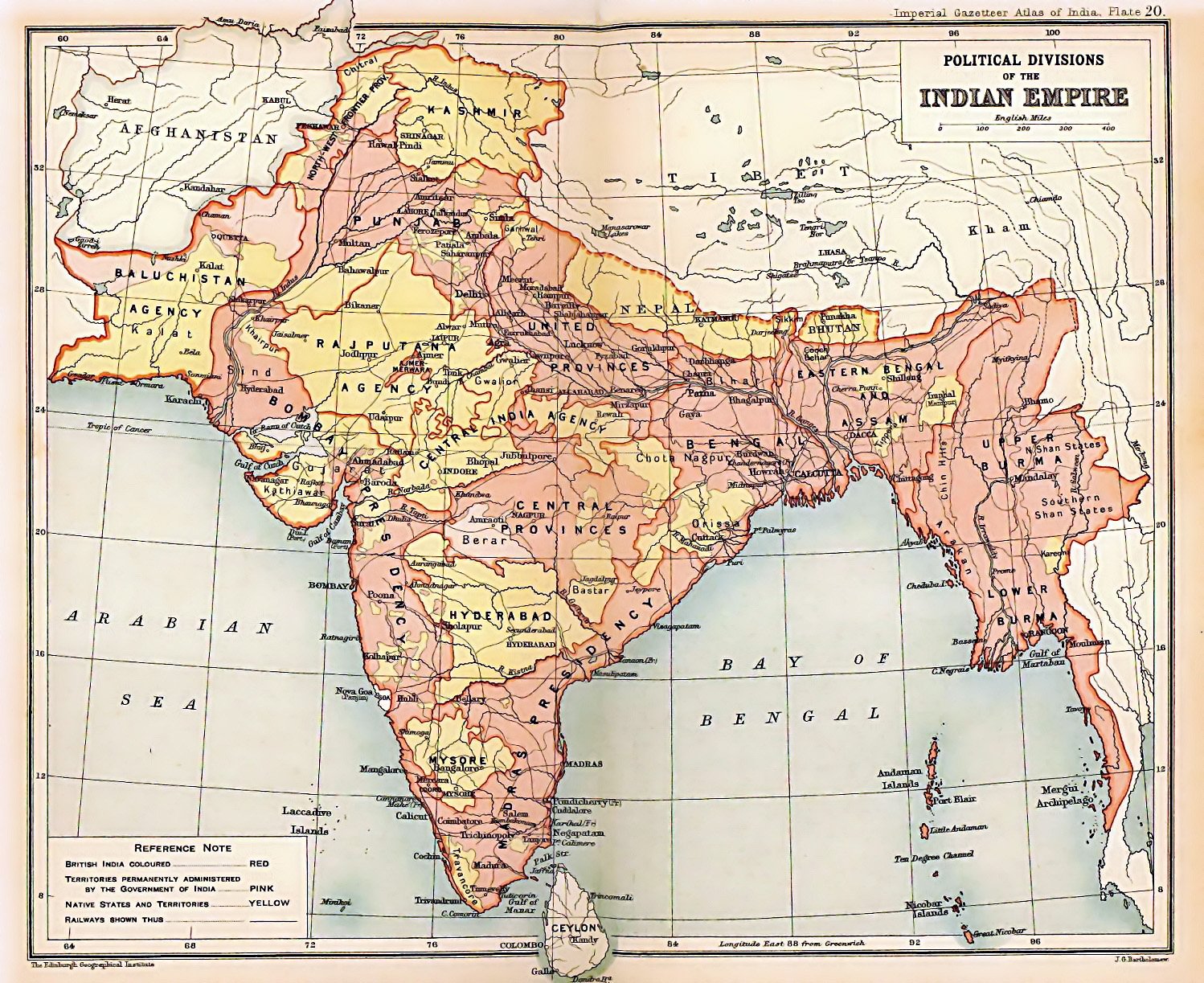
Lottaz then put the obvious objection from the left. A Marxist would say that it is not psychology but the capitalist system's need to expand that drives colonialism, and that the system makes the capitalist rather than the other way round. McLaren's answer was a question. What is a capitalist system, he asked, if not a whole lot of little capitalists sitting down and talking to each other and saying, let's have that? He told the history of British India in exactly those terms. British traders looked at all that land called India and asked, what about we get that? So they got a little bit, a trading station at Calcutta, which the East India Company founded on the Hooghly in 1690. Then they decided they needed this bit, and that bit, and then the next, and they ended up with a gigantic empire. Each step was a decision taken by particular people who wanted more, and in McLaren's account the system was simply the sum of those decisions, not a force standing behind them.
McLaren's list of what that empire covered ran wider than the record, and the correction matters to anyone reading in Kathmandu or Colombo. British India at its height took in what are now India, Pakistan and Bangladesh, and Burma until 1937. Ceylon, now Sri Lanka, was a separate crown colony, governed from London rather than from Calcutta or Delhi. Nepal, which McLaren also named, was never part of the empire at all. It lost about a third of its territory to the East India Company in the war of 1814 to 1816 and the Treaty of Sugauli that ended it, and it lived afterward in the empire's shadow, but it remained independent, as the map of 1909 still shows. The British wanted still more, McLaren went on. They wanted Afghanistan. What were they going to do with Afghanistan? Nothing, he says; they simply did not want the Russians to have it. The adults, he concludes, are worse than children in a playground.
7Back to Front
That brought the conversation to the oldest argument in the study of international relations: whether wars are driven by the structure of the international system or by human nature. Lottaz offered the crude version only to set it aside. Humans are naturally violent, therefore the groups they form must be violent. McLaren called it a very complex issue and refused the shortcut. People, he says, are spread along a gradation. Some will say, I will not use violence, I find it horrible, and I will get to the top by diligence and hard work alone. Others, across the spectrum, will kill anybody who gets in their way, and do. The larger political system is made of such individuals, sometimes working together to get themselves on top, sometimes pushing one another aside, in a constant ferment that is never static. It is full of feedback loops, and shaped by religion, culture, history and geography, all of which have to be taken into account. He would not like, he says, to reduce anything as complex as international relations to a simple formula.
But he does take aim at a formula, the one he says is most commonly heard today: the offensive realism of John Mearsheimer of the University of Chicago, set out in The Tragedy of Great Power Politics. As McLaren states it, the theory holds that international relations are anarchic, so countries must struggle to establish local hegemony to protect their interests. Lottaz offered a correction on Mearsheimer's behalf. The theory does not say that states ought to struggle, as a moral imperative, he pointed out; it says that they will, as a practical imperative imposed by the system. If you don't want to be crushed, you must be the crusher. McLaren accepted the gloss, and added the proverb that offense is the best form of defense. See international relations as a melee of violence, greed and oppression, he said, and you will become ultra-defensive, see your neighbor as aggressive, and want to get in first. It is as simple as that, and, in his view, it is exactly backward.
International relations are not anarchic and therefore full of nations striving for hegemony, McLaren argues. They are anarchic because nations strive for hegemony. And nations strive for hegemony because individual human beings want to dominate: they want to take control and to be the boss. It is individuals, coming together, who look across at a neighbor and say, we'll have that, because if we don't have it, they will. The explanation, he insists, cannot stop at the level of the mass, because the mass only does what the individuals in it do. What is needed is a reductionist explanation, the same kind physics uses. Lottaz noted that whether reduction is the right method, or whether higher levels develop emergent properties that make them work differently from the levels below, is one of the great unsettled debates across academia, and not one to be settled in an afternoon. McLaren's position within it is clear all the same. If the aim is to remedy international violence, the explanation has to be reduced to the first principles of psychology.
8The Club at the Top
McLaren's leading example is the United States, which, he argues, has believed firmly for the last hundred years that it has the right to run the world, and he says he could supply hundreds of quotations to prove it. Lottaz narrowed the claim: not the ordinary American struggling at Walmart, but the political class. McLaren agreed. He calls them the power elite, the term the sociologist C. Wright Mills coined for America's ruling circle in 1956, and he prefers it, he says, because he does not know how many of them there are: the one percent, the people who have already made it to the top, with their sense of entitlement already built up. The crucial thing about them, he says, is that they feed on each other. They reinforce one another's entitlement all the time, and nobody among them is allowed to stand up and say that America does not have to be dominant, that it does not need a Monroe Doctrine, that it could get by perfectly well without one.
He compares it to Japan before the Second World War. If anybody had stood up then and said that Japan did not need an empire in China, that it could be wealthy without one, McLaren says, he would have been dragged out and kicked to death. Lottaz supplied the record, and it is grim enough to bear him out. In May 1932 young naval officers shot the prime minister, Inukai Tsuyoshi, in his official residence. In February 1936 rebel army officers murdered the finance minister, Takahashi Korekiyo, who had tried to rein in military spending, in his home, while the prime minister, Okada Keisuke, survived by hiding in a closet as the rebels killed his brother-in-law in his place. Britain, McLaren went on, has its own version. He named Jacob Rees-Mogg, who, as McLaren recalls it, has talked of getting ready to fight wars against Russia and of everyone being prepared to sacrifice themselves for the greater glory of England. Nobody, McLaren says, is able to stand up and ask him whether he has forgotten his history, or ever knew any. The only thing we learn from history, he adds, is that people don't learn.
9Others Go to War
Lottaz then raised a puzzle that he said he has great difficulty understanding. The people who call loudest for war with Russia are those who would never go anywhere near a battlefield, not even close. They will always send others, and they will always find reasons why they must. He saw the same pattern in the politics of climate. The people who write the rules on carbon emissions make everyone who flies economy pay more to plant trees, and then take a plane from Brussels to Berlin instead of the train. They exempt themselves from all the obligations they would impose on others, including the ultimate obligation, which is to give your life fighting for your country. They will never do that. And yet some of them are remembered the way Winston Churchill is remembered, as great leaders. Why, Lottaz asked, does that work? Why does a man who sends others to die, and would never go himself, end up on the plinth?
McLaren's answer goes back to entitlement. People who have it can always justify what they want to do. I'm terribly important, they say, so I have to go to Berlin; I can't do it by Zoom; I have to go and see my friends. People do it all the time, he says, but really it is self-interest, naked self-interest, and the people at the top talk quickly enough to fool others into thinking otherwise. The public comes away believing it has watched a very noble person sacrificing himself, when in fact he is in it for himself. That, McLaren says, is the trouble. The rules are for those lower down the ladder, and part of what it means to have climbed is to be exempt from them. In this account the hypocrisy is not a lapse the powerful commit in spite of their position. It is one of the things their position is for, and one of the ways they know they have arrived.
10Half the Parliament by Lot
If dominance is the problem, then the remedy has to work on who rises. Lottaz reminded McLaren of an idea he had produced, almost out of the blue, in their previous conversation, when asked what could be done about the tendency of the scum to swim to the top: the most ruthless all ending up in the same circle, in parliament for instance. His proposal was to fill half of parliament with ordinary people chosen at random, by lottery, to break that sociology of the scum swimming upward. Lottaz called it genuinely innovative, an additional pillar beside traditional democracy. It is also very old. In classical Athens most public offices, and the council that prepared the assembly's business, were filled by lot, using stone allotment machines whose rows of slots held the citizens' identity tokens. In modern Ireland, assemblies of randomly selected citizens helped prepare the referendums that legalized same-sex marriage in 2015 and repealed the constitutional ban on abortion in 2018.

This time, McLaren named a deeper obstacle: the concept of the neoliberal economy. The people who held power, he argues, have built an economic system designed to reinforce their power, and it has to be broken. They protect it with what he calls a wonderful propaganda machine, which screams socialist, or communist, at any challenge, a cry he says they have resurrected. His example was a report of about a hundred pages that the State Department issued in July, describing Cuba, in his paraphrase, as a nest of communist vipers trying to overturn the government of the United States. This is just lies, he said. Lottaz admitted he would never read such a thing, but he named the phenomenon behind it: projection. When you are yourself in the business of trying to stifle Cuba and change its government by brute force, you accuse Cuba of trying to do the same to you. It is an insane form of projecting yourself onto others, Lottaz said, and the West does it time and time again. Nonstop, McLaren agreed.
11Stop Threatening Us
The clearest case of projection, for McLaren, is Europe's view of Russia. Europe says it must get ready to fight Russia because the Russians want to attack it. No, they don't, he says. In his account, all the Russians want from Europe is for it to stop threatening them and leave them alone. They have a gigantic country of seventeen million square kilometers to look after and develop, with pockets of poverty to fix, and their message to Europe, as he renders it, is simply to go away and let them get on with it. It is one of the most contested claims in the conversation, and the record sets another account beside it. In February 2022 Russia launched a full-scale invasion of Ukraine, and the European governments now rearming point to that invasion, and to what they describe as Russian sabotage and drone incursions since, as the reason they fear what Russia might do next. McLaren's account does not take up that objection. It sets the present hostility inside a much longer story, and finds its source on the European side.
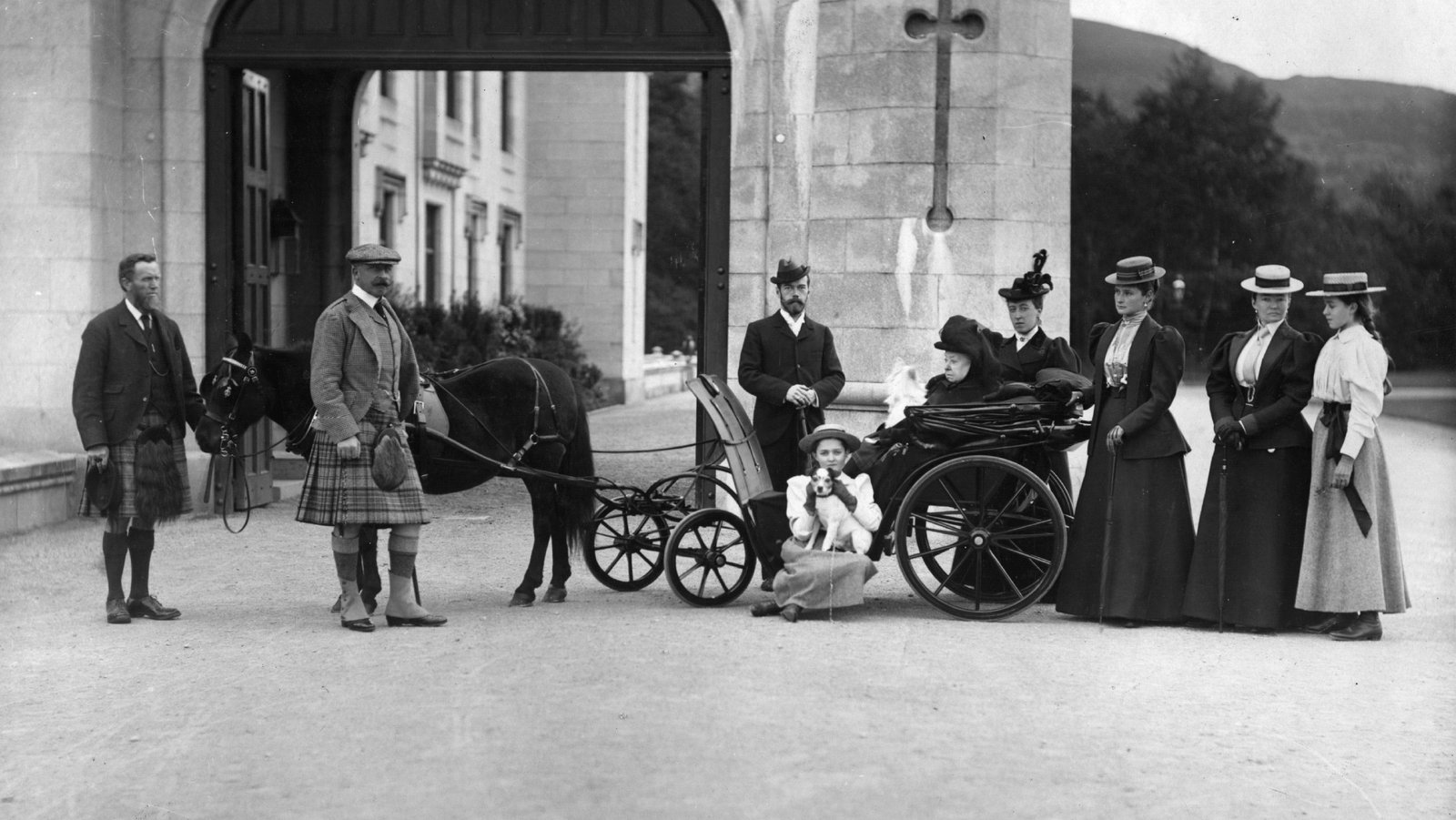
Western Europe, McLaren argues, has wanted to dominate Russia for as long as anyone can remember. Queen Victoria, in his telling, hated the Russians, even though her granddaughter Alix of Hesse married Tsar Nicholas II and became the Empress Alexandra; McLaren remembered the connection as Nicholas himself being Victoria's grandchild, but it ran through his wife. Victoria's hostility is well attested, at least for the years of the Russo-Turkish War of 1877 and 1878, when she pressed her government toward war and threatened to abdicate rather than see Russia take Constantinople. Winston Churchill, McLaren adds, loathed the Russians, and that has never changed. What the West cannot stand, in his view, is the idea of a huge country with a large population of very cultured, intelligent people who will not do as they are told. On this reading the dispute is not really about Ukraine, or about any particular border. It is the paradox of hierarchy at the scale of continents: a would-be master facing a people who will not be pushed down.
12The Quiet Pole
Lottaz then raised a challenge from the other side of the world. Several Chinese colleagues have told him that China is a civilizational state without the West's drive to dominate: that all it wants is to develop, and that the West, in laying its neoliberal framework over the whole of humanity, mistakes one category of civilization for all of them. They contradict Mearsheimer, in other words, from the other side. Did McLaren buy it, Lottaz asked, or was it just an underdog making its way slowly up the ladder? McLaren's answer was more complicated than either. China, he says, was so big that for most of its history it knew it had all it needed. It did not have to deal with outsiders, whom it regarded as inferior, as barbarians, and he thinks Japan has the same habit of mind, badly. That self-sufficiency has carried through to the present. But the deeper reason, in his view, is fear. The Chinese fear of chaos is so intense that it overrides the need to dominate.
He does not rule out that one day China might decide to take control of the world precisely so that there would be no chaos, though he does not think so. Nor does he think the Chinese particularly like Europeans. Look at Europe's history of conquest, he says, and the dislike is easy to understand. What he suspects is that the Chinese have concluded that if they just sit quietly and keep to themselves, they are not like the Europeans, and that this difference is itself their sense of dominance. Lottaz seized on the idea. Dominance, he suggested, can show itself not in trying to control everything but in being different, and in that sense better: better by not behaving like the others. McLaren agreed that it takes many forms. A man who collects stamps can become dominant in his own small field and be perfectly happy, as long as everyone leaves him alone with his perfect set. But the form that has to be dealt with, McLaren says, is the one that has taken control of politics, commerce and finance throughout the world.
13Feet of Clay
That form, Lottaz suggested, is now running into walls. Unless something escapes his analysis, the Western way of doing world politics is hitting a Russian wall, an Iranian wall, and its own internal contradictions. The United States still presents itself as if it stood at the pinnacle of its power, where it was in 1950 or 1956 or 1960, when in fact it is 2026, and much of its industrial capacity has decayed and gone. The mentality has not caught up. What happens, Lottaz asked, when a drive to dominate runs into walls it cannot climb? McLaren's answer is a sequence. You would expect them to redouble their efforts, he says, because that is what humans do: if something does not work, we do it twice as hard. If it still fails, we blame other people and attack them. And when that fails too, which is where he thinks the West now stands, countries start to fall apart. The Iranians, he adds, deserve a national medal for being the people who put their hands up and said stop.
His first example is Britain, declining, he says, since the First World War, its colonies gone. He cites an estimate that Britain extracted something on the order of forty-three trillion dollars in today's money from its Indian empire, and argues that without that wealth Britain cannot function. The figure he has in mind is close to the best-known estimate, by the Indian economist Utsa Patnaik, of about forty-five trillion dollars drained from India between 1765 and 1938; other economists dispute her method and her total, though not that the drain was large. British leaders now talk about attacking Russia, about being at war with Russia, and McLaren calls them fools, complete fools, because, in his view, Britain no longer has a military of any standing. That is overstated, since Britain still has nuclear weapons and a navy with two aircraft carriers, but the trend he points to is real: the regular British Army is now the smallest it has been since the Napoleonic Wars. They are going to crumble and fall apart, McLaren says.
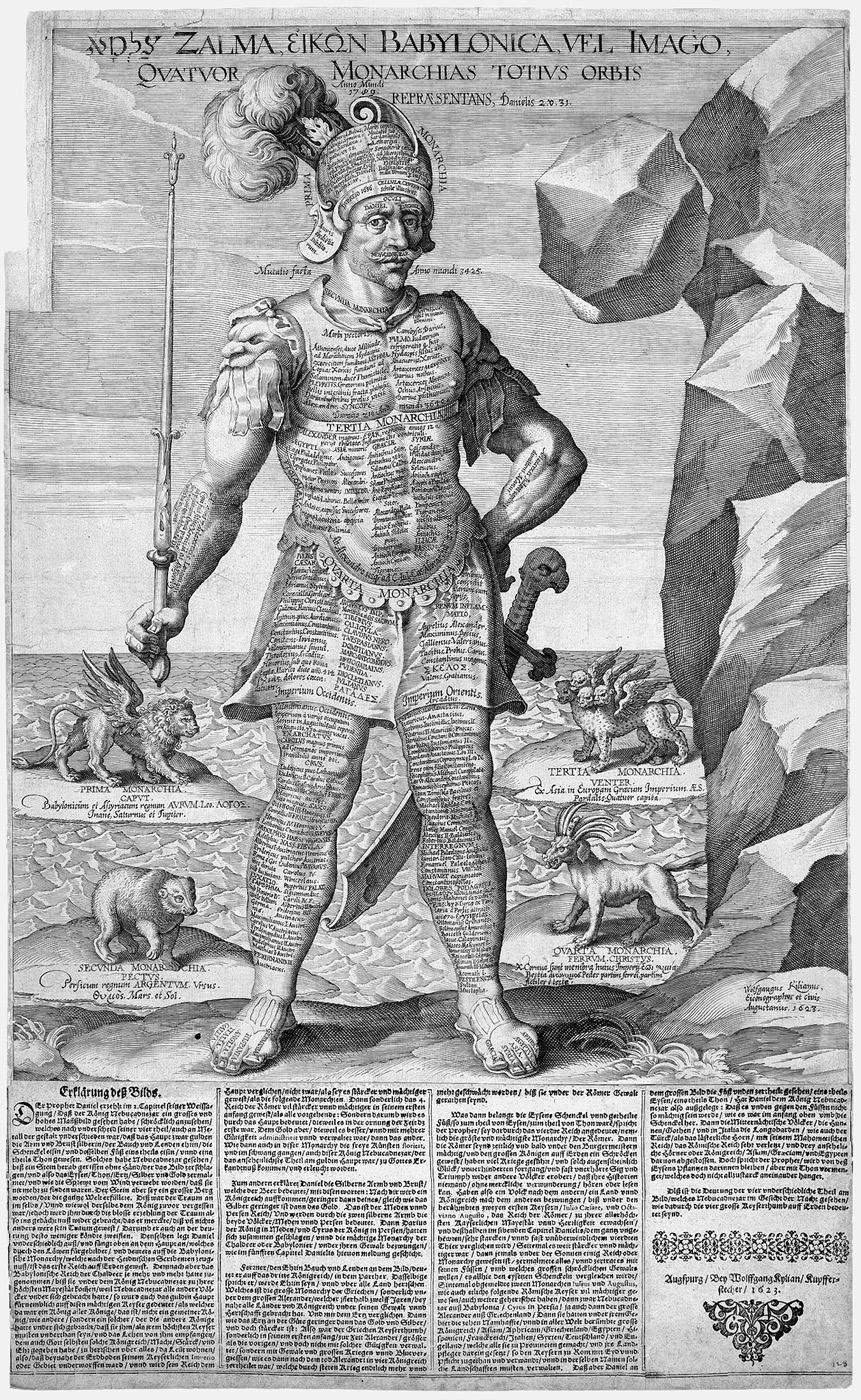
Lottaz worried that the problem is not British but Western. The political West, as the scholar Richard Sakwa calls it, works as one body, on sanctions, on Russia, on Israel, and its national elites trade places within the same club. If that whole system has exhausted itself, does its violence turn inward? That is what McLaren expects. Once it becomes clear that they cannot order the world about, the next phase, he says, is always to find an internal enemy, which he calls absolutely central to fascism. The Americans have run out of communists, so they are picking on migrants, and the more they expel, the more their agriculture and their building industry start to collapse. He reached for an image from the Book of Daniel: the statue in Nebuchadnezzar's dream, with its head of gold and its feet of iron and clay, which a stone strikes and shatters. The clay feet, McLaren says, are starting to fall apart. German industry is struggling; Volkswagen, he says, is laying off fifty thousand workers, and the real figure, agreed with its unions in December 2024, is more than thirty-five thousand jobs in Germany by 2030.
The British car industry, he says, is essentially dead. That too is overstated, but in 2024 Britain built fewer cars than in almost any year since the 1950s. Britain cannot make any major industrial project work, McLaren argues. Hinkley Point C, its new nuclear power station, is in his words decades behind and three times over cost; the record is that it was meant to start generating in 2025, is now expected around the end of the decade, and has roughly doubled in estimated cost. HS2, the high-speed railway, lost its northern leg in 2023 and is still years from opening. The whole neoliberal, colonial-minded model, as McLaren sees it, is collapsing. We live in very interesting times, he says; he wishes we did not. Over the next twenty years he expects to see spreading chaos, and Lottaz added the qualification that matters most to the argument: chaos still driven, all the way down, by the domination drive of those at the top.
14Utterly Insightless
But do the people making these decisions understand what they are doing? McLaren's answer was immediate: no, they are utterly insightless. Lottaz pressed the question in another direction. Do they believe what they say, he asked: that Ukraine is about to win a great victory and Russia about to collapse, with Russians fighting with shovels; that Israel is only defending itself, and the killing in Gaza only the result of Hamas hiding behind civilians? Or do they know these are lies, talking points to justify whatever the real agenda is? McLaren holds both positions at once, and they are less contradictory than they sound: such people lack insight into themselves, but they know perfectly well when they are lying to others. They do not believe their own talking points at all, he says. Their real agenda is to dominate at any cost, at any price. And he applies this, explicitly, to Israel's leaders: when they say that criticism of Israel is antisemitism, he argues, they do not believe it either; they know it is an excuse.
How, Lottaz wondered, do people live with that kind of dissonance, knowingly lying to get their way? McLaren's reply was that Lottaz's problem is that he is an honest man. The people he is describing couldn't care less. They are like Trump, McLaren says, who once said in public that not paying tax proved he was smart. The moment came in the first presidential debate of 2016, when Hillary Clinton suggested he might have paid no federal income tax and Trump interjected, "That makes me smart." Their attitude, McLaren argues, is that if they can fool the general public, that proves they are clever and the public stupid; the public deserves to be fooled, and they deserve to be in charge. Lottaz called it the government of the wicked, who wear their wickedness as a badge of honor, and McLaren agreed that a lot of them do. They really get a kick out of it, he says: I'm smarter than them, I fooled them. What they do not realize is that they did not fool anyone. They simply broke the rules, and it doesn't take any brains to break the rules.
15Two Speeches
Lottaz then told a story from a panel he had chaired a couple of weeks earlier at a forum in Istanbul. One of the speakers, a young Palestinian intellectual, described a meeting he had been granted, two years or so before, with a very senior official of the European Union, whom he would not name. He had prepared for weeks, believing that if he could convince this person of what was actually happening on the ground, something might be done. In the room, the official agreed with everything. What the Israelis are doing to you is a genocide, he said; look at these before and after pictures; we know about the mass executions; I feel very strongly for you. The moment the official left the room, his public line changed completely. The political speech and the real speech behind it were opposites, and the young man came away more desperate than he had been before. Lottaz offered it as a picture of people who live inside a construct of lies because they need it to stay on top.
The record sets the charge beside the denial. In September 2025 an independent commission of inquiry appointed by the United Nations Human Rights Council concluded that Israel was committing genocide in Gaza. Israel rejects the finding, and the genocide case brought against it by South Africa at the International Court of Justice has not yet been decided on its merits. McLaren, for his part, took the story as confirmation. This is the psychology of power, he said, and the psychology of dominance: being at the top feels so good that it does not matter what has to be done to get there. He reached for the darkest example he knew. When Nazi Germany planned its invasion of the Soviet Union, its planners expected that tens of millions of Soviet citizens would starve so that the German army and the Reich could eat, and in 1941 Heinrich Himmler spoke of reducing the Slavic population by thirty million. The justification, McLaren says, was that they were superior and the Slavs existed to serve them as slaves. But they could not say so in public, so they spread other stories instead.
McLaren then put the same question about a living man: does Jared Kushner know that he is egregiously dishonest? His answer is the sharpest charge against a named individual in the conversation, and it is reported here as his. Of course he knows, McLaren says. He knows perfectly well that you should not be conducting private business worth billions of dollars with the Saudis while you are negotiating on your country's behalf. The record behind the charge is this. After leaving the White House in 2021, Kushner founded an investment firm, Affinity Partners, which took two billion dollars from Saudi Arabia's sovereign wealth fund, and in 2025 he returned to Middle East diplomacy on Trump's behalf. Critics, among them members of Congress, have called that a conflict of interest; Kushner rejects the charge. McLaren's guess at Kushner's own answer is the paradox in a single sentence: I am a very intelligent, well-connected person, and if I can do this, that proves I am better.
16Common Enemies
If the people at the top are all climbing, Lottaz asked, they must also be one another's rivals. He imagined that Ursula von der Leyen and Kaja Kallas, at the top of the European Union, must distrust each other, locked in a constant competition to stay on top of the heap. How does that affect the way they deal with the outside world? McLaren's answer brings back the second drive, the fear of strangers. They fight each other, he says, but the moment somebody outside their little group asks what they are doing, they gang up. They link arms and present a united front. His illustration came from sport. Two football teams can loathe each other so much that they can barely be stopped from brawling on the field. But tell them their stadium is to be bulldozed to build housing for old people, and they will join hands and fight it together. A common enemy, Lottaz said; nothing surprising there. But it suggested something to him: that the worst thing Russia or China could do to the West would be to leave it alone.
Without a common enemy, Lottaz reasoned, the Europeans might start taking one another down again. McLaren agreed, and went further. His feeling is that the ninety percent of the world that is neither America nor Europe should cut them off completely, let them do as they like somewhere else, and try to learn from the experience and build some sort of stable international system without them. It is not very promising, he admitted. Lottaz said he read Vladimir Putin's recent speech to the Valdai forum in a similar spirit: that nobody needs to fight the West, because it is taking itself down, and that there is no need to reinvent the wheel, since the United Nations already offers a decent order whose task is only to be made to work. McLaren's advice to Putin was blunter. Stand up, he said, and tell America and Europe to stop threatening Russia, because they need Russia more than Russia needs them. They do, he said; they just haven't realized it. Lottaz doubted they would. They would rather starve, he said, than accept grain from Russia, and with energy they are already doing it.
17Delusions by Choice
Lottaz then asked whether the model has an explanation for what some call mass psychosis, when whole groups of people run onto a knife that is plainly in front of them. McLaren's example was Israel, and the notion that God gave it a gigantic swath of land from the Nile to the Euphrates, reaching into Turkey and halfway down Saudi Arabia. They all believe this, he claims, even atheist Israelis, because none of them is prepared to stand up in public and say that it is ridiculous, that well over a hundred million people, by his count, cannot be pushed off their traditional land because of a notion two and a half thousand years old. The record is narrower than his claim. The maximal idea of a Greater Israel belongs to Israel's religious-nationalist right rather than to any official policy; but in August 2025 Prime Minister Benjamin Netanyahu said in an interview that he felt very connected to the vision of a Greater Israel, and Arab governments across the region condemned the remark.
In a sense, McLaren says, this is a mass delusion, though not a delusion in the strict medical sense, and the distinction is the most useful thing he brings from the clinic to politics. A medical delusion is one the patient does not choose; he has no control over it. A social delusion is a completely wacky belief that everybody in a group holds because they like it, because it feels so good. The British, he says, genuinely believed that they were the superior race. Lottaz objected that a belief one is born and raised in is not really chosen, since it is all one has ever known. McLaren answered that this is what indoctrination is for. The Israeli army, he argues, conducts what it calls education but what he calls brainwashing, very well organized and very successful, and no eighteen-year-old conscript is going to stand up and tell his captain it is complete rubbish. If he wants to keep any friends, he has to join the group; otherwise he is ostracized. And the fear of isolation, the first drive of all, is very powerful.
McLaren knows that fear from the inside. He says he is almost totally isolated within the psychiatric community, and has been since nearly his first day in it. He came into psychiatry from neurosurgery, which he had been studying with a view to becoming a neurosurgeon, when he was given a term of psychiatry just to fill in. He realized at once that it was what he wanted, what he had always wanted: people. Then he sat in a lecture while the professor talked about brain enzymes, genes and neurotransmitters, and said: excuse me, sir, that's actually wrong; what you're saying is wrong. That was it, he says. You do not tell the professor he is wrong, and his career suffered as a result. The story carries its own irony. The man who argues that the fear of isolation keeps conscripts in line is someone who chose isolation early in his career rather than nod along, and has spent the decades since paying for the choice.
18The Gobstopper
Lottaz recognized the pattern from his own field. Professions that live inside their own jargon, he said, go into minute detail, but question the fundamentals and you are thrown out. McLaren put it more bluntly: they will expel you; you will be extruded. Lottaz's own example was international relations, where, for what he admits are selfish reasons, since he studies neutrality, he opposes the concepts of balancing and hedging, which in his view explain away what is really neutral behavior. Those terms are only sixty or seventy years old, he said, yet they are so deeply encrusted that much of the field's research depends on them. McLaren said psychiatry is the same. His research showed very early that there is no model of mental disorder, and it was very, very difficult to get published, among people who are supposed to be educated and prepared to be self-critical. No, they're not, he said.
Lottaz then turned the point back on both of them. Being self-critical, he said, means accepting that it is theoretically possible that they are the crazy ones, and the others got it right. How would they check? McLaren's answer is short, and it is the method of this whole series. You put your material out in public, he said, and you say to people: criticize it if you can. That's it. It is also the challenge he puts to others. To Professor Mearsheimer he says: the concept that international relations are anarchic is incomplete; now you must explain why they are anarchic. To Professor Diesen, who invoked human nature in his conversation with Lottaz: you must explain what human nature means. What is it? You cannot use it to stop further discussion, as what McLaren calls a gobstopper, the sweet so big that it leaves the mouth unable to say anything else.
His own explanation of human nature is the biocognitive model, carried all the way down. The mind, he says, is an emergent phenomenon, something that arises from the brain without being reducible to it, but it is bound by biological constraints, and one of the most powerful of those constraints is the urge to be dominant. It is so powerful because it is so rewarding, immensely rewarding, or, as the psychologists say, reinforcing. There is a tension here that the conversation does not resolve: a mind that is emergent is exactly the kind of higher level that, in the debate Lottaz raised earlier, resists reduction. McLaren's way through is to say that whatever emerges, it emerges inside limits the body sets, and that those limits are where explanation has to end. Human nature, on this account, is not a mystery to be invoked when argument runs out. It is a mind shaped by a body, and the body keeps score of every rung.
19A Testosterone Blocker
Lottaz asked whether a biological process was ultimately responsible: testosterone, or something like it. Yes, McLaren said; it has been known for a long time. Go up the hierarchy, and your testosterone level rises, and you feel good. Get pushed down, and within an hour it is dropping, and you feel bad. Go back up, and the level rises again. Research on what is called the winner effect lends him partial support: studies of athletes and chess players have found testosterone tending to rise in winners and fall in losers after a contest, though the effect is inconsistent and many studies fail to find it. Lottaz then asked, out of pure curiosity, the question that produced the conversation's most memorable answer. If every decision maker in a position of power could be given one substance, what would McLaren give them to drive the urge down? A testosterone blocker, he said, without hesitation. Would Ursula von der Leyen and Donald Trump then suddenly decide to talk to Russia? No, McLaren said. They would say they couldn't be bothered; if the Russians want it, they can have it. They would not become friendly, but they would stop being antagonistic. They would just lose interest.
He named the people he thinks the urge drives. Trump is driven by the urge to dominate, he says, and so are Marco Rubio and Pete Hegseth, and Keir Starmer in Britain. About Friedrich Merz he was unsure: he did not know what drives the German chancellor, whom he called an unfortunate fellow. From history he named Hermann Göring, who made no secret of wanting to dominate everybody and was very good at it, and Mussolini, and from the present he added Narendra Modi in India. Xi Jinping he set apart. He does not think Xi is driven by an urge to be personally dominant, but by a very strong urge to make sure that nobody dominates China, which he considers much more beneficial. Trump, by contrast, just wants to be sitting on top of a pile of gold. Lottaz liked the concreteness of the answer and suggested approaching the pharmaceutical industry. McLaren proposed the water supply; Lottaz amended it to the water only the powerful drink, and between them they named the brands: Fiji, Vichy, Perrier, San Pellegrino, and the salty Russian one whose name neither could remember.
There was more to say, and both men said so. McLaren wants to talk next time about the great national delusions: the British belief that they were the dominant race, the French belief that they are the only people with culture, the American belief that they have the right to run the world. Underneath them all, he suspects, lies one basic delusion, born of the fear of strangers: we are better than them. It does not matter where you go, he says; you run into it, down to the street gangs, who all want to be better than the gang next door. Lottaz had a counterpoint ready, about people who put themselves lower in the hierarchy than others, which he promised to bring next time. For now, he said, they had advanced one step further. For a reader, the conversation leaves a map with a single engine at its center: the ladder from the sports day, climbed by people who will push it away once they are up, and resisted by everyone they leave at the bottom.