1Three Narrow Waters
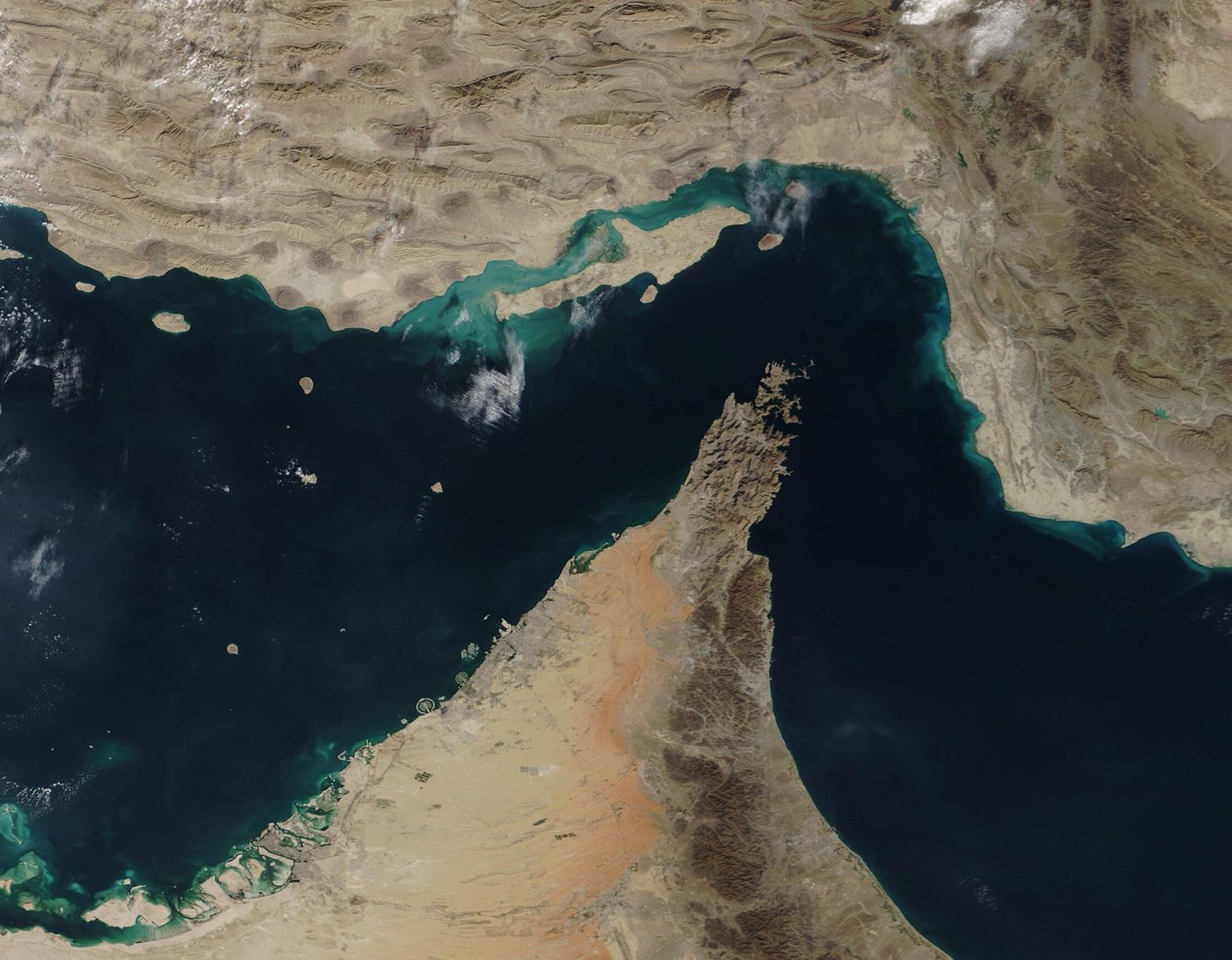
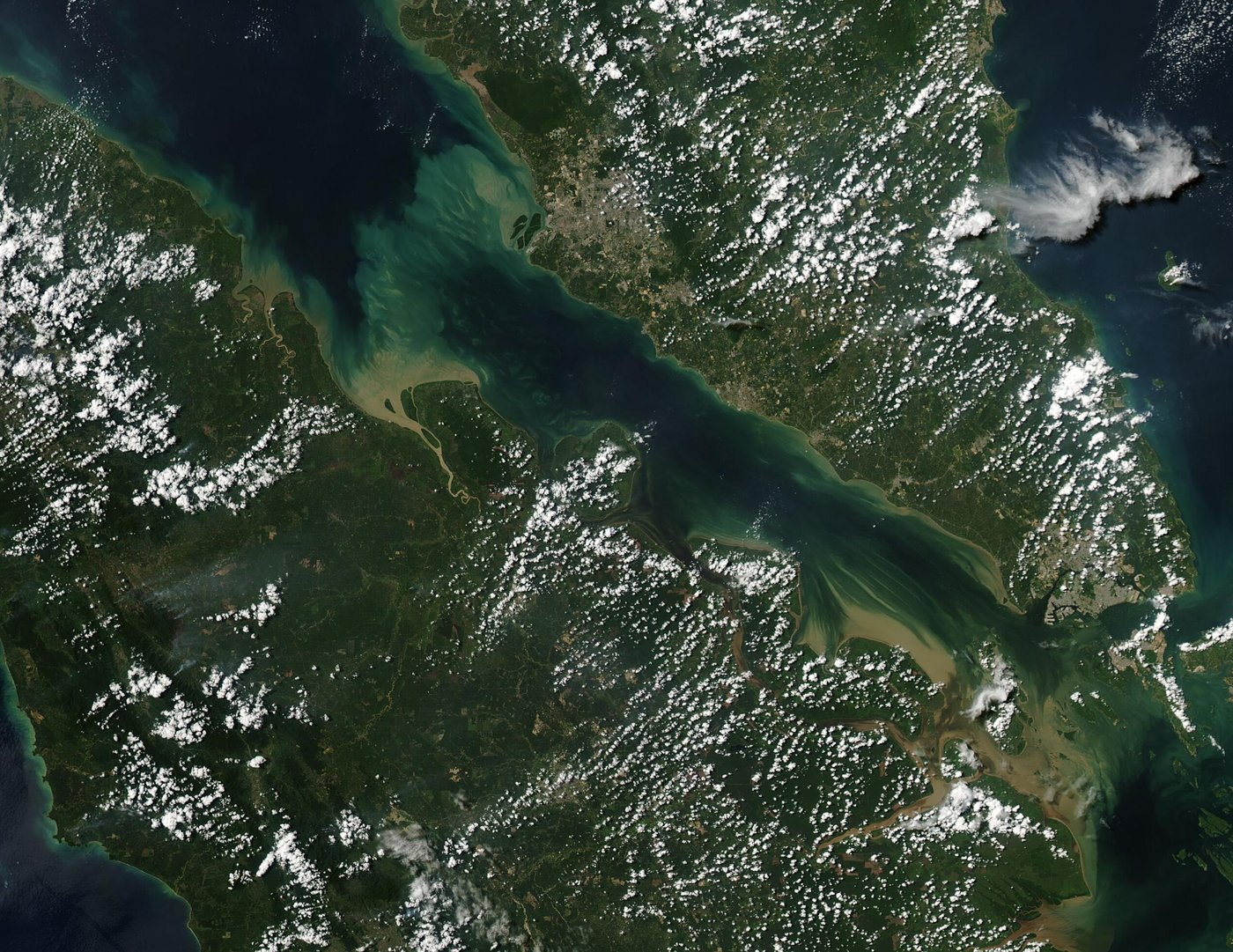
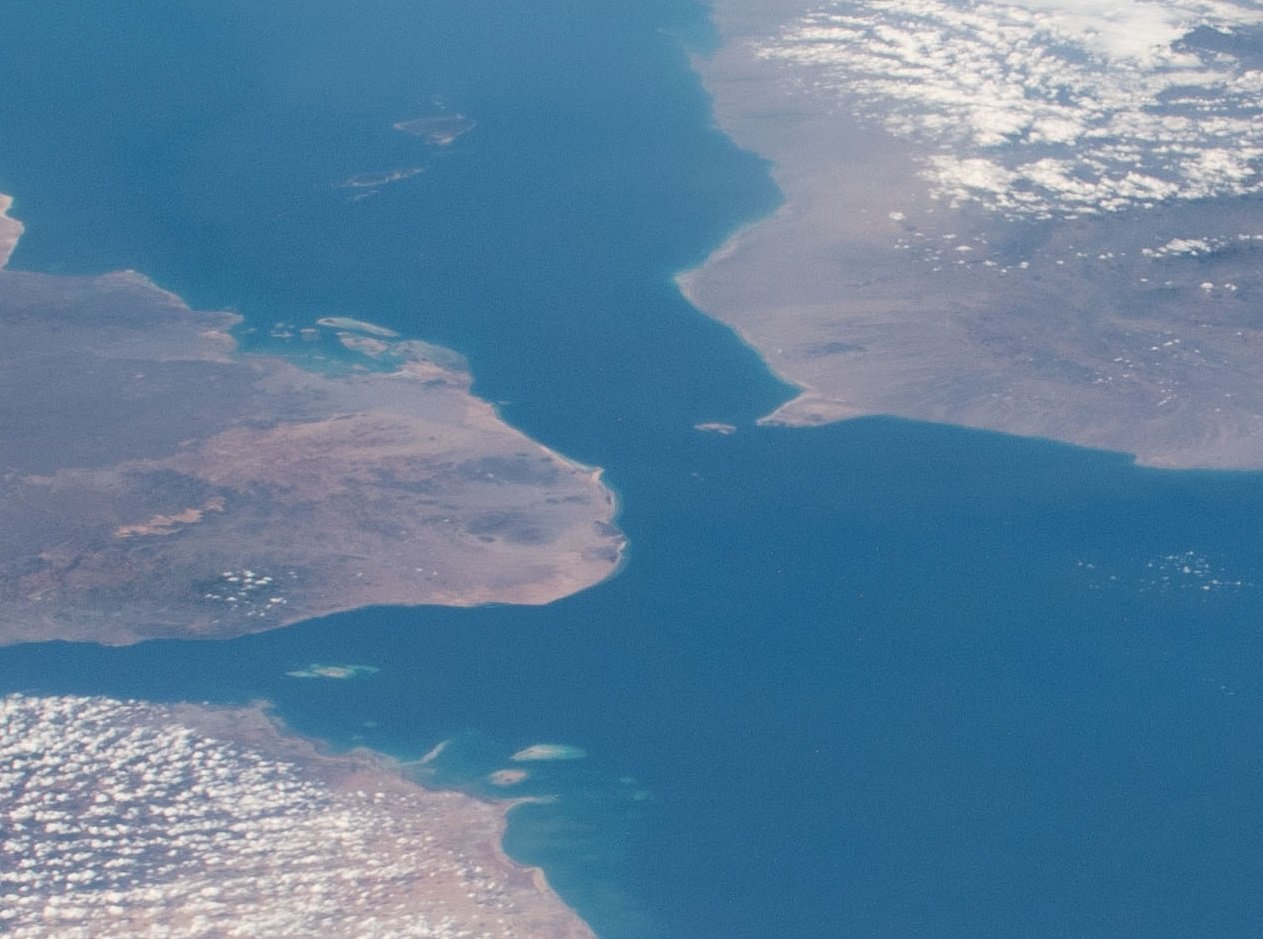
Most of the oil that keeps Asia's economies growing has to pass through one of three narrow waters. The Strait of Hormuz, at the mouth of the Persian Gulf, is only about thirty-four kilometers wide at its narrowest point, and roughly a fifth of all the oil the world consumes moves through it. The Bab el-Mandeb, the gate at the southern end of the Red Sea, links the Suez route to the Indian Ocean, and since late 2023 attacks on shipping there have sent many tankers and container ships the long way around Africa instead. The Strait of Malacca, between the Malay Peninsula and Sumatra, is the main passage through which oil from the Gulf reaches China, Japan and South Korea. Each of them is a place where someone can decide who gets fuel, at what price, and on what terms. Those three waters ran through the keynote address Alexander Dugin gave to the Asia Energy Security Dialogue in the autumn of 2026. The Russian philosopher, the leading theorist of the movement known as Eurasianism, was speaking mostly to Indians, about India's energy and its partnership with Russia: two growing economies that between them demand enormous volumes of oil and gas. Securing that energy, he said, is a shared task. But he refused to begin where energy conferences usually begin, with pipelines, tankers, prices and contracts.
Forget the geopolitical context, he warned, and obstacles nobody planned for can wreck every project on the road. Miss the concrete situation on a global scale, and the projects themselves can be lost. The context he meant is a single tendency, the one he believes defines the present moment: the shift from a unipolar world to a multipolar one. Any serious argument about world affairs, in his view, should start with that shift, finish with it, and keep it in view at every step in between, and an argument about energy is no exception. Energy, for Dugin, is not a technical sector sitting beside geopolitics. It is the place where geopolitics becomes most concrete, where an abstract question about who rules the world turns into a practical one about whether a refinery in Gujarat may buy the cheapest crude on offer. The rest of his address follows from that premise. First he describes the order that, on his account, still controls the flow of energy, and it turns out to have two faces rather than one. Then he describes the order he wants in its place, and what India and Russia would have to do to build it.
2Two Faces of One Pole
Unipolarity, Dugin argues, comes in two branches, and anyone who counts only one of them will misread the world. The first is open hegemony, and he identifies it with Donald Trump. Its message is unembarrassed: America is the center of the world and the one global superpower, and while American values may be adapted to circumstances or limited in their reach, American interests are universal. In this version, global security simply is American security. Everything outside America has to be written into that system, and there is only one point of decision and one subject whose interests count. Everyone else is invited to join the camp, and those who accept American leadership are granted a portion of the security that America controls, the way a lord once granted land. Dugin stresses that none of this is hidden. Under this branch Washington says openly what it wants, and the openness is part of the message: the United States does not pretend that the arrangement is a partnership among equals, and it expects the countries that join it to understand their place.
The second branch is the globalist, left-liberal version, and Dugin calls it only slightly different. It does not declare the United States the center of the world. Instead the West as a whole, Europe, the United States, Canada and the openly pro-Western states around them, stops calling itself the West and starts calling itself global humanity. There is still only one world, designed by Westerners according to a liberal and globalist concept, but the price of entry has changed. This time it is values more than interests. Those who share the West's values are invited to take their share of the global system, including the distribution of energy; those who do not are declared enemies, to be defeated. The globalist branch is milder in manner. It gives no direct orders. It calls itself multilateralism, invites other countries into its coalition, and suggests its rules rather than imposing them. But you had better accept them anyway, Dugin says, because the milder branch is not an alternative to the harsher one. It is the other face of the same coin, and under either face the rules come from one place.
3Vassals at the Chokepoints
Dugin sees the open branch at work in the energy crisis of the moment. What is happening in the Strait of Hormuz and the Bab el-Mandeb, he told his audience, reflects an American design to take hegemonic control of the Middle East, the main zone of the world's oil and gas production, and he described Israel as the instrument of that design, America's proxy in the region. It is one of the heaviest charges in the address, and it is reported here as his stated accusation, not as a finding this essay makes. On his account, the disruption the world is living with in those waters is the result of the Trump administration's will to secure absolute dominance over energy. The United States, he argues, does not have allies in any meaningful sense. The countries it calls allies are vassals, entitled to a share of their master's interests and nothing more, and Washington does not hide it. Every country that relies on American protection for its energy holds that security, in this reading, as a portion granted from above, revocable whenever the master's interests change.
Then he named the third water. The Strait of Malacca, the third great passage in the world's circulation of energy, also lies within America's reach in his account, and he warned that it could very soon become the third point of conflict, once the administration tries to bring it, too, under unilateral control. For his Asian audience, it is the warning that matters most. Hormuz and the Bab el-Mandeb sit at the western end of the routes that carry Gulf oil to Asia; Malacca sits at the eastern end, where those routes squeeze between the Malay Peninsula and Sumatra before opening into the South China Sea. Chinese planners have worried about that squeeze for more than two decades: President Hu Jintao is reported to have named it the "Malacca dilemma" in 2003, the fear that whoever could close the strait could starve China of fuel. Dugin's warning turns that old Chinese anxiety into a general one. If the passages at both ends of the route can be closed by an outside power, then energy security for every importer along it, India included, depends on that power's goodwill.
4Global Humanity
The globalist branch, in Dugin's telling, has its own way of dealing with countries that refuse it, and he offered the war in Ukraine as the example. Russia, as he tells it, declined to share globalist values and tried to establish an independent center of power, and it is being punished for that refusal, just as Iran is punished for trying to be independent. The next step, he predicted, will be to punish China, or else to fold it into the globalist project on the West's terms. Ukraine and its Western partners tell the story the other way round. In their account, the war began on 24 February 2022, when Russia launched a full-scale invasion of its neighbor, and the sanctions that followed were a response to that invasion, not a punishment for Russia's values or its independence. The two accounts do not meet, and this essay does not try to reconcile them. What matters for Dugin's argument is the pattern he draws from his own account: a country that refuses the system's values, or tries to stand on its own, finds itself treated as an enemy and punished accordingly.
Both branches, then, arrive at the same bargain, and Dugin spelled it out in terms aimed squarely at his Indian listeners. In the open version, Washington grants security and, with it, permission. India may have this much oil and gas, delivered from the Middle East or from somewhere else, on condition that it stays loyal, and if Washington decides to confront China, India is expected to join the camp. There is no other choice. Any country that wants a place in the Pax Americana follows the same rule, and energy security becomes a reward for loyalty to the single pole. In the globalist version the bargain is phrased as an invitation rather than an order, but the invitation carries the same terms. Either way, the barrel of oil that reaches an Indian refinery arrives with a political condition attached, and the condition is written somewhere other than New Delhi.
5Energy by Permission
For Dugin, the clearest proof that this bargain is real is the sanctions regime around Russian oil. He did not name specific measures, but the record supplies them. In July 2025 the European Union put Nayara Energy, an Indian refiner part-owned by Russia's Rosneft, on its sanctions list. In August 2025 the United States doubled its tariffs on Indian goods, citing India's purchases of Russian oil. In October 2025 Washington sanctioned Rosneft and Lukoil themselves, Russia's two largest oil companies, and Indian and Chinese buyers alike had to reconsider their cargoes. To Dugin this is what unipolarity looks like in practice. You are not allowed to have relations with Russia. You are not allowed to secure the energy your economy needs without the West's permission. You are obliged to buy costlier oil and gas instead of cheaper supplies, and the reason, in his words, is that you are not free; you are a vassal. The same holds for Russia, he said, and for China as well. China is enormous and independent, and yet it still depends on Western markets and on the Western financial system. It is trying to establish its autonomy, its self-sufficiency and its sovereignty, but it has not got there yet, because it cannot get there alone.
The point of the proof is that no single country can escape the bargain on its own. Neither Russia nor China nor India, Dugin argues, can afford to build an alternative pole by itself and face the global West alone; a new bipolar standoff is beyond any of them. What they need is mutual cooperation. Put China, Russia, India, the Islamic world, Africa and Latin America together, and real multipolarity is within easy reach, and with it a new meaning of energy security. Everything would then turn on sovereignty: sovereign demand for oil, sovereign supply, the sovereign capacity to produce and to sell, all without the permission of the global West. A country that needs relations with a region outside Western control would simply be free to have them. No more sanctions, no more permissions, no more imperial will imposing someone else's interests or values. Sovereignty, Dugin insists, has to hold in both senses at once, in values and in interests alike, or it is not sovereignty at all.
6A Charter and Its Poles
Against both branches of unipolarity Dugin set multipolarity, and he pointed to what he called a very important document: the Eurasian charter on multipolarity, which he said had recently been signed at the United Nations General Assembly. The record is more modest, though it explains why the charter was on his mind. Belarus floated the idea at a conference on Eurasian security in Minsk in October 2023, and Russia backed it. In February 2026 five states, Belarus, Iran, North Korea, Myanmar and Russia, signed a joint statement launching consultations on it. On 25 September 2026, during the General Assembly's high-level week, a ministerial meeting chaired by Russia's foreign minister, Sergey Lavrov, and Belarus's, Maxim Ryzhenkov, adopted a joint statement opening negotiations on the text. What exists, then, is a negotiating process rather than a signed charter, and only a handful of countries have joined it. Dugin acknowledged the small numbers. But he called it a first step toward a multipolar understanding of world politics in every sense, and it is the frame he wanted his audience to think inside.
Multipolarity, as he defines it, is an alternative project. It means that there is no longer one paradigm, and no single subject of world politics able to impose its order on everyone else, to change the rules at any moment, and to oblige everyone to follow them. Instead there are several poles. The West is one pole among others. China is a second, and fully independent. Russia is a third. India is a fourth, and not only the Indian state but India in its widest sense, its whole zone of influence, which Dugin calls a civilizational state. There may also be an independent Islamic pole, an African pole and a Latin American one: everything gathered, more or less, under the name BRICS, or under the Eurasian charter. Make that shift, he argues, and everything about security and energy changes at once. No one could rely any longer on the West's goodwill, on its absolute leadership, or on its supposed right to decide which countries may trade energy with which, and no one would need to.
7India First
For India, Dugin argues, multipolarity begins with putting Indian interests first: above the United States and above the West, but also, he added pointedly, above China, above Russia and above the Islamic world. India first, and India alone deciding with whom it cooperates to secure its energy. It was a striking thing for a Russian speaker to tell an Indian audience, since it places Russia's own claims on India below India's interests, but it follows from his argument: a pole that takes orders from another pole is not a pole. He called it a crucial mental shift, and tied it to a phrase he credited to Prime Minister Narendra Modi, the decolonization of the Indian mind. Modi's own wording is usually freedom from any trace of a colonial mindset, one of the five pledges he set out in his Independence Day speech of 2022, but the idea is the same, and Dugin wants it carried into the field of energy security. Russians, he said, need exactly the same thing: a decolonization of the Russian mind and the restoration of full sovereignty, within a multipolar world rather than a new bipolar one.
The stakes for India are higher than for most, because India depends on energy more than on anything else. It is the world's third-largest consumer of oil and imports well over four-fifths of the crude it uses, and since 2022 Russia has become its single largest supplier. Dugin describes India as a great and growing economy, on the rise as a new superpower in many senses, and calls its dependence on oil and gas a dependence of life: without enough energy at normal, affordable prices, its development and its rise will be destroyed. So he invited his audience to behave as a superpower, because, he told them, that is what India already is, an independent pole of the emerging multipolar world, and not a junior partner waiting to be told which oil it may buy. On that footing, he argued, the relations among Russia, India and China all need to be revised for the new multipolar context, and the revision should begin with energy.
8A Sovereign Continent
His proposal was a Eurasian vision of energy security. Russia, China, India, Iran and the Islamic countries, he suggested, could form an energy pact: supplying one another, meeting one another's demand, and selling and buying from whomever they choose, which would demand serious strategic planning of the relations among them outside the West. It would also mean rethinking whose business the great sea passages are. In Dugin's view, the Strait of Hormuz and the Bab el-Mandeb are a vital interest of these countries, and it is they, not the United States, who should secure them. Asking what the United States is doing there, having attacked Iran, he answered that it has no right and no reason to be there, and that the region should have no American military bases at all; it should be governed, he said, by the people who live there, by Iran, by the Arabs and by the region's Islamic peoples. The Gulf monarchies that host those bases under their own agreements with Washington would see it differently, and the address did not take up their view. Dugin presented all of this as a move from reactive to proactive policy on energy supply.
The concrete form he gave it was a Eurasian multipolar energy charter, a declaration of total sovereignty in the energy field across the Eurasian continent. Begin from the idea of a sovereign continent, he argued, and it becomes easy to see how to escape a fatal, total dependence on the West. Russia could supply India directly. The two could form a Eurasian energy consortium. They could even create, in his words, a military structure to secure the supply of oil and gas between them, with the whole deal, from beginning to end, treated as a common concern of supplier and buyer alike and as a matter of national and state interest on both sides. Energy, for Dugin, is problem number one, and the place to start; other areas of cooperation will follow. But he closed with a warning against treating the relationship as economics alone. Russia and India share spiritual, cultural and civilizational ties, and they need dialogue and relations on many levels at once. Without that cultural and spiritual understanding, he said, energy is not enough. With it, thinking in multipolar terms could lay a deep foundation, a frame within which, as he put it in his last words, Russian and Indian friendship, partnership and alliance could grow.