1The Game Beneath the Speeches
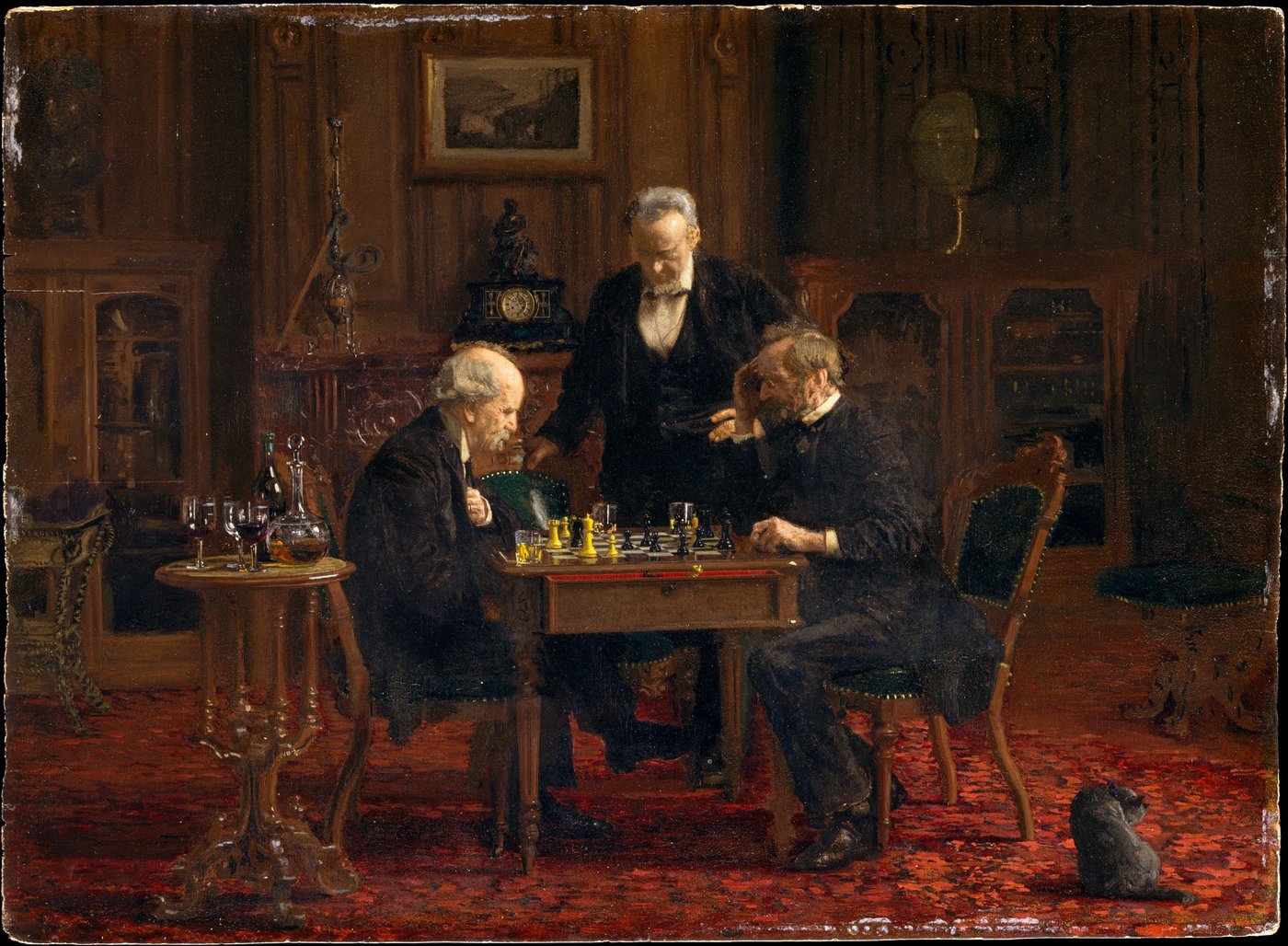
Begin with the simplest possible model of the world: a game, with nations as its main players. The model only becomes useful once you notice that the players are not interchangeable pieces. Each nation carries something like a personality, assembled over centuries out of geography, history, culture, memory, trauma, and strategic position. The United States behaves the way it does because it is a continental power protected by two oceans, born in revolution and raised on expansion. China behaves differently because its civilizational experience runs through dynastic collapse, foreign humiliation, and a long memory of what happens when the center loses control. Iran, Russia, Turkey, Israel, Japan, and the states of Europe each move according to their own place on the board, and none of them can simply decide to be a different kind of player. The most common mistake in reading this game is to pay too much attention to what the players say. Public statements are, for the most part, theater. Speeches, promises, press conferences, the careful language of diplomacy, moral slogans, and campaign lines are performed for audiences, and they rarely reveal where events are actually heading. The more useful question is always strategic: given where this player sits, and what it needs, what is its optimal move? Over time a player drifts toward that move, whether or not its leader understands it at first, whether or not the leader would ever describe it in those terms, and sometimes in spite of everything the leader has promised.
That is the whole method of predictive history. It does not claim that every detail can be known in advance, and it does not depend on secret or perfect information. It reads incentives, structures, geography, resources, strengths, weaknesses, and the long record of how a given state has behaved before. A declining empire that must preserve its hegemony will, sooner or later, escalate. A rising power whose growth depends on stability will avoid wars it does not need. A state that lives on energy routes will act to secure them. And a leader who behaves like someone with no intention of leaving power usually has no intention of leaving power. None of these rules names a date. Together they tell you which way the board is tilting.
2The Leader Who Does Not Plan to Leave
Seen through that lens, the possibility of a third Trump term stops being an eccentric forecast and becomes a question of incentives. Suppose a leader and his family have accumulated enormous financial entanglements while in office. Leaving power then stops being a graceful exit and becomes a danger. A successor administration would hold the files, the investigators, and the political motive to make use of them. For a leader in that position, the safest path is not retirement but continuity: remain in power, change the rules, suspend the rules, or find a legal mechanism that allows a return. The route matters far less than the pattern. A third term would not need to arrive through anything resembling a normal election. It could come through emergency rule declared during a crisis, through a war that makes a transfer of power seem reckless, through a suspended constitution, or through a legal loophole, the kind sometimes floated around the vice presidency and a sympathetic Supreme Court. Each of these paths sounds implausible when stated in advance. Each would sound almost inevitable in hindsight, once the crisis that justified it had arrived.
This is how politics tends to work once power is determined enough. People treat constitutions, institutions, and procedures as fixed walls, because in ordinary times they behave like walls. Under real pressure they behave more like problems to be solved. The law becomes something to reinterpret. The court becomes a battlefield. The emergency becomes an opportunity. The crisis becomes the justification. None of this requires a master plan written down in advance; it only requires a powerful person who has more to lose by leaving than by staying, and a system that has quietly stopped believing its own rules are untouchable.
3Iran at the Center
Trump's role in Iran fits the same logic, and here the argument makes a point that is easy to miss: it does not matter very much whether the president personally understands every layer of the geopolitics. He may not. He may act on emotion and instinct, or under the influence of the people closest to him. But the American system has strategic needs of its own, and those needs do not wait for the president to understand them. If American hegemony is weakening, Iran becomes a central target, because Iran sits where several of the board's most important lines cross: at the heart of the world's energy supply, on the path of Eurasian integration, at the center of regional resistance to American power, and on the hinge between the Gulf monarchies, Russia, and China.
A war against Iran, on this reading, would not have to be fought mainly by Americans. The more useful design is a broad coalition. The United States would supply what it does best and most cheaply in political terms: air power, special forces, intelligence, command and control, logistics, and diplomatic cover. Regional forces would carry much of the burden on the ground. Iraqi units, Kurdish fighters, Gulf militaries, and other allied contingents could all be drawn into such a structure. Even distant states such as Japan or South Korea could be pulled into indirect roles, because their own energy security depends on oil and gas moving freely through the Strait of Hormuz, and a war that threatened that passage would make their interest in its outcome very concrete. The deeper purpose of the coalition is political. A war that looks international can justify itself in a way a unilateral war cannot. A coalition creates the appearance of legitimacy, spreads responsibility across many governments, and reduces the visible American cost in coffins and headlines. Most important of all, it changes the story the war tells about itself. What would otherwise read as imperial war can be presented instead as collective security, a defense of the international order rather than an effort to preserve one country's place at the top of it.
4The Rival That Wants Order
Behind much of this stands China, the main long-term competitor to American power. The talk makes a claim about China's character that cuts against most Western commentary: China is not naturally aggressive in the way the United States has been. Its strategic interest is stability. It wants trade routes open, energy supplies secure, its borders calm, and its domestic development protected from disruption. That is not the same as saying China has no interests or pursues them gently. It means that China's interests are generally better served by order than by chaos, which is the opposite of the position a challenger is supposed to occupy in the usual story of rising and falling powers. That observation alone, the talk argues, can be treated as unacceptable inside the American information system. Describing China as an ordinary country pursuing stability is dangerous to a certain kind of politics, because imperial systems need enemies. A great power that justifies its military reach, its alliances, and its budgets by pointing to a threat needs the threat to remain threatening. If China is simply another civilization pursuing development, trade, and security, the case for encircling it, through new bases, new alliances, and new restrictions on technology, becomes much harder to make, and the people who make that case for a living become much harder to fund.
China also exposes a deeper contrast between social systems, and the clearest window onto it is education. The Chinese public education system is extraordinarily intense. Children are pushed from a very young age into study, competition, examinations, and achievement, all of it pointed toward the national college entrance exam, the gaokao, which can decide the shape of a life in a few days. Many students break under that pressure. Wealthy families often look for an exit, sending their children into private international schools as an alternative road toward American universities. The public system is rigorous, and it produces real excellence, but it is also psychologically heavy in a way that few outsiders appreciate. The result is a strange educational world. Some of the private schools are not filled with the most brilliant students at all, but with wealthy students who failed in the public system or escaped it before it could fail them. The goal in such schools often becomes admission to Yale, Harvard, or another elite university, rather than education in any deeper sense. Critical thinking, Socratic dialogue, the great books, philosophy, history, the slow work of real intellectual formation: all of it can collide with a system whose actual product is the credential. Teachers who try to offer the first find that families are paying for the second.
Against this, the talk sketches a different model of education, built on three pillars. The first is the great books. In a digital age it becomes more important, not less, to read Homer, Dante, Plato, Shakespeare, and the other foundational works, because they train the kind of sustained attention that screens erode, and because they record what human beings have learned about themselves over three thousand years. The second pillar is game theory, so that students can understand geopolitics, power, incentives, and the events unfolding around them, instead of absorbing the news as a series of disconnected shocks. The third pillar is religion and the occult, studied not as blind belief but as a way of understanding the forces that actually move human beings, including the ones they would rather not admit to.
5The Crisis of Materialism
That third pillar is the one modern people are most likely to wave away, and the talk argues they do so at their peril. Modern analysis tends to assume that politics is purely material, a contest of resources, money, and force. But most human beings throughout history have been religious, and many of the people who hold power today remain religious or quasi-religious even when they speak in secular language. Eschatology, prophecy, a sense of sacred destiny, messianic expectation, and hidden spiritual frameworks still shape real decisions. Without some grasp of religion, it becomes almost impossible to understand the Middle East, Zionism, evangelical politics in the United States, the crusader language that surfaces in Western rhetoric, Islamic resistance movements, or the symbolic imagination of power more generally. Materialism explains a great deal; the question is whether it explains everything. A few years earlier, the speaker says, a purely materialist view would have seemed sufficient. Class, production, capital, interest, and power account for an enormous share of what happens in the world, and the materialist tradition deserves credit for that. But a long immersion in history, literature, and the world's spiritual traditions can produce something like a crisis of faith in materialism itself: the slow realization that the framework which explains so much may still be leaving out the part that matters most.
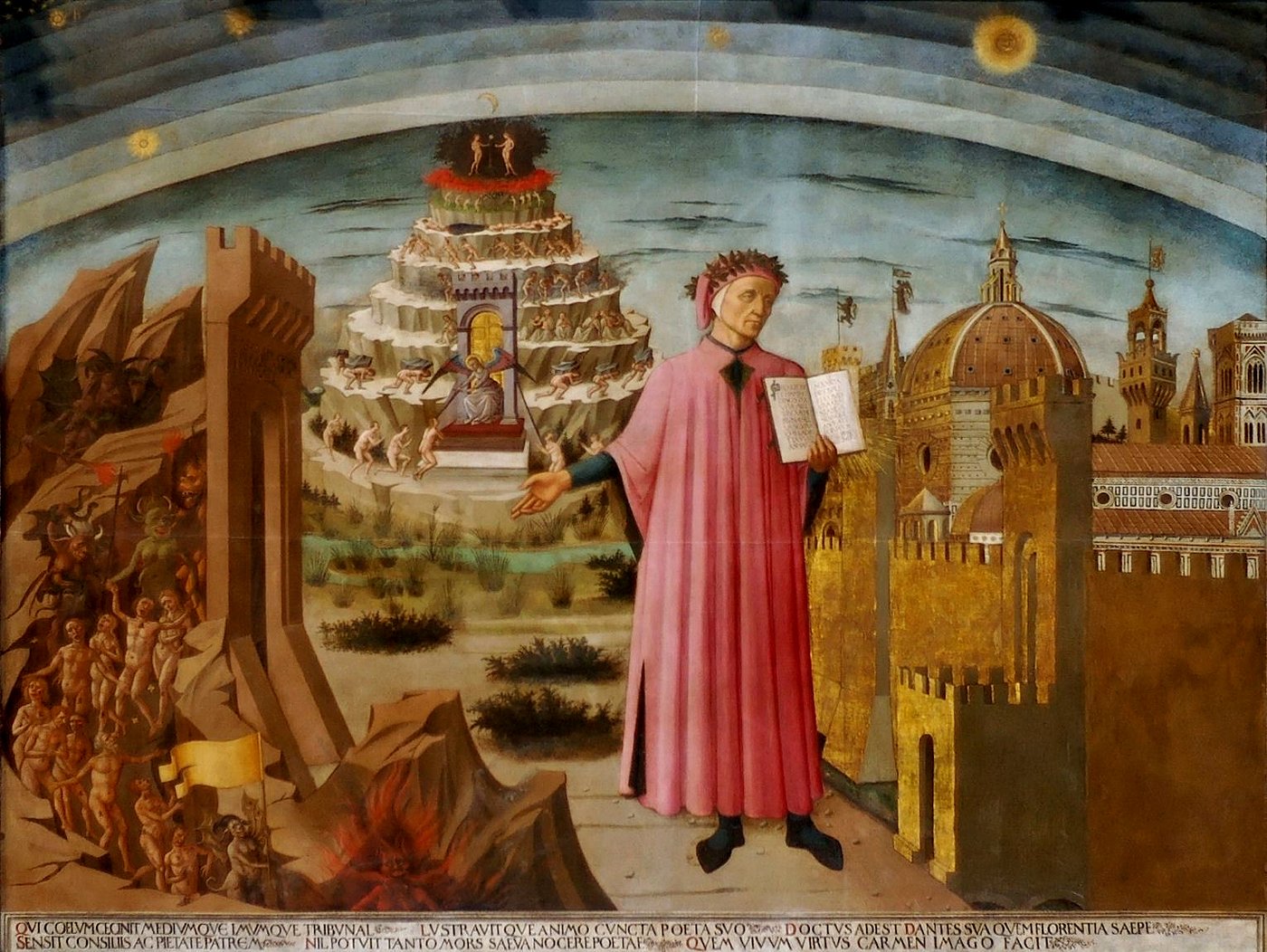
Dante's Divine Comedy sits at the center of that crisis. In the talk it is treated not merely as literature, however great, but as a kind of revelation of a deeper order. Its beauty, its structure, its symbolism, and its spiritual architecture, a cosmos of nine circles, seven terraces, and nine heavens built out of interlocking threes, seem too complete to be the product of one man's private imagination. It reads as if Dante were channeling something larger than himself and translating the structure of the universe into poetry. The poem suggests that there are two worlds: the material world we inhabit, and a spiritual world in which consciousness moves through higher dimensions, ascending, in the poem's final line, toward the love that moves the sun and the other stars.
6Consciousness as a Doorway
If Dante is right, then consciousness is not merely a byproduct of the brain. It is a doorway. Trained through meditation, focus, discipline, and presence, it can reach into the universe rather than simply reflecting it. The great religious traditions all teach some version of this idea, in very different vocabularies: God is in the human being, and the human being is in God. The divine is not only somewhere outside the world, issuing commands from a distance. It is also present within consciousness itself, available to anyone willing to do the work of turning attention inward. Modern society is unusual, historically, in denying all of this. It denies God, the soul, the spirit, and any deeper nature of consciousness. Neuroscience has learned a great deal about the brain, yet the origin and structure of consciousness remain largely mysterious; even the people who study it most closely cannot explain why there is something it is like to be a mind at all. Human beings spend most of their lives thinking, imagining, remembering, dreaming, praying, fearing, and desiring, and yet modern institutions tend to act as though all of this were merely chemical activity, a side effect to be managed rather than a reality to be understood.
The mystery deepens when you consider the span of human time. The human brain has been biologically modern for hundreds of thousands of years, while recorded civilization, writing, cities, and the archive we call history cover only the last five thousand or so. That disproportion raises an uncomfortable question about what came before the known record. Sites like Göbekli Tepe in southeastern Turkey, a complex of carved stone enclosures raised more than eleven thousand years ago, before pottery and long before writing, along with evidence of other ancient settlements, lost traditions, and the possibility of societies older than the end of the last Ice Age, all suggest that the official history of civilization may be far less complete than the textbooks imply.
7The Gaps in the Official Story
Once the materialist frame begins to weaken, other questions find their way in, and the talk follows them further than many readers will be comfortable going. Conspiracy theories that once seemed impossible begin to look less easy to dismiss. The moon landing, the assassination of John F. Kennedy, and the attacks of September 11 are named as examples. The argument is careful about what it is claiming. These events look strange, it says, not because any alternative explanation has been proven, but because the official accounts contain gaps, contradictions, missing evidence, and a long record of institutional concealment.
The details it points to are specific. World Trade Center Building 7, which was not hit by a plane, collapsed late on the afternoon of September 11; the official investigation attributed the collapse to fire, an explanation many people have never found satisfying. The original telemetry tapes from the Apollo 11 landing can no longer be found, and NASA has acknowledged they were most likely erased and reused. Footage goes missing, documents remain classified decades after the fact, and intelligence agencies behave in ways that would invite suspicion in any other context. Taken together, these feed a larger suspicion that governments hide far more than they admit. It is worth being as precise here as the talk tries to be. A gap in an official story is not evidence for any particular alternative, and the absence of a tape is not the presence of a hoax. What the gaps do establish is narrower and harder to argue with: institutions that conceal routinely forfeit the presumption of honesty, and a public that has caught them concealing before will reasonably ask what else has been left out.
8Summoning the Machine
To understand why elites might do things that look irrational from the outside, the talk argues, one has to understand the occult imagination. Some people in positions of great power may not see themselves as ordinary political actors at all. They may believe they hold a religious mandate: to remake the world, to summon a new order, to fulfill a prophecy, or to prepare history for some form of divine return. Actions taken in that spirit cannot be fully explained by the pursuit of profit, and analysts who look only for the profit motive will keep being surprised by them. Artificial intelligence belongs to this same symbolic world. Researchers and technology leaders talk openly about summoning demons, building gods, and creating superintelligence; Elon Musk said in 2014 that with artificial intelligence "we are summoning the demon." This can be dismissed as hype designed to attract investment, and some of it surely is. Fear sells: if people believe AI will change everything, they will pour more money into it. But the language also reveals something deeper. The technological elite increasingly speaks as though it is no longer simply building tools. It is trying to create a new intelligence, a new authority, perhaps a new deity, and it describes the project in the vocabulary of ritual rather than engineering.
In that sense AI becomes a modern occult project. It promises knowledge beyond the human, prediction beyond ordinary intelligence, and a system that can guide civilization from above. Whether the religious language is meant literally or only as marketing, it shows how fully technology has taken on a religious function. The machine is cast as oracle, demon, god, servant, and master all at once. The same logic connects mysticism to finance. If consciousness can access hidden patterns in the universe, then disciplined mystical traditions become valuable not only spiritually but strategically. Someone who believes meditation can reveal the future may also believe it can sharpen business decisions, geopolitical forecasts, and market timing, and finance has always been drawn to anything that promises foresight.
9Heaven, Earth, and Hell
In a classroom lecture from the same course of thought, the argument takes its most openly metaphysical form, and it is worth following on its own terms before weighing it. Picture three realms. Heaven is spiritual: it is consciousness. Hell is mechanical: it is machines. Human beings are stuck on the earth in between, and because they have free will, it is always their choice which way to turn. For most of human history, the lecture says, people chose heaven. But eventually some chose hell, and choosing hell brought access to technology, and technology allowed them to conquer and control other people. Conquest, though, creates a problem of its own. Once you have conquered people, you must get them to obey you, and an enlightened person, one who knows the truth that we are all going to die and that none of the conqueror's power ultimately matters, has no reason to listen. So to control people, the lecture argues, you need them to forget God and to fear death. Before, death was understood as part of a journey: a release, an opportunity to reset and come back. Now it had to become the worst thing that could ever happen to you.
How do you make people forget God and fear death? The lecture's answer is science, and here it makes its most provocative claim: that theories like the Big Bang, evolution, and neuroscience serve to make people forget the divinity inside them, teaching that there is no God and no purpose, that everything is random and material. That claim deserves the same scrutiny this volume has asked the reader to bring everywhere else. The Big Bang theory was first proposed in 1927 by Georges Lemaître, a Belgian Catholic priest; evolution and neuroscience rest on enormous bodies of evidence gathered by people of every faith and none; and many scientists have found in their work a deepened sense of wonder rather than its absence. What the lecture's argument can more defensibly claim is narrower: that a culture can use science as a worldview, a story about meaning, which the science itself does not supply. Even that, on the lecture's account, is not enough for those who rule through it, because everyone still dies. So the final project is what it calls transhumanism: to surpass humanity by defeating death, uploading the mind so that a person can remain in this world forever, which the lecture describes, pointedly, as trapping you here forever. It is the same horizon this volume met in the language of technologists who speak of building gods.
10The Inversion
Why would people in power pursue such a project? The lecture's answer returns to secret societies. In a mass bureaucracy, it argues, most officials do not really want to do anything, so a small group able to coordinate in secret can steer the whole machine, because it is the only part of the machine that is actually moving. But bureaucracies dislike secret societies, and such groups must preserve their secrecy, and the lecture claims they do so through transgression. If members commit wrongs together, each holds leverage over the others, and all are bound to keep one another's secrets, because if one falls, all fall. It is the logic this volume examines a few chapters on in the figure of the fixer, the man who trades in compromising secrets, and a familiar mechanism to anyone who has studied organized crime. The lecture adds a further step. How can such people coordinate without meeting, when meeting is how conspiracies are discovered? Through religion, or more precisely eschatology: a script for understanding the world that lets people who never speak to one another act in concert, because each already knows the story and his part in it.
Then comes the inversion, the lecture's darkest claim, and one that is, by its nature, impossible to verify. People who know they are doing evil, it argues, also know that they will one day face judgment, and their way out is to invert the moral order: to worship a power they imagine as greater than God, which in the language of religion is Satan, and so recast every transgression as service. The lecture grounds this in three principles it attributes to the esoteric traditions such groups draw on. The first is unity: the system is complete and whole. The second is polarity: if there is good there must be evil, if there is beauty there must be ugliness, because neither means anything without the other, so if there is God there must be Satan. The third is the old Hermetic maxim, as above, so below: everything is a reflection of everything else. You cannot defeat God, on this account, but you can corrupt human beings into worshipping what God is not, and the method is to teach them to worship the material world and abandon the spiritual one: to exalt money, power, technology, and science as the greatest things there are, and to strip away religion, compassion, and love. What is happening in the world, the lecture concludes, is a war between heaven and hell, in which those in power must make hell look like heaven and heaven like hell in order to keep their power.
11Why Heaven Waits
A student pushed back. If God and Satan do not intervene in the world, then all of this is simply decisions made by people. And if Satan seems to have gained the upper hand, why does God not do something about it? The lecture's answer has three parts. First, because of free will, neither God nor Satan can interfere directly in human affairs; the choice must remain ours, or it is not a choice. Second, there is no single secret society but thousands of them, and the ones that gather the most power are simply those that make the most effective use of the principles described above; the pattern is a matter of selection, not of a single master plan.
The third part of the answer is the one the lecture leaves its students with, and it turns the whole bleak picture around. Why does God not stop it? Because only in a time of complete darkness can human beings fully shine. God, on this account, trusts us, has faith in us, and loves us completely, and believes that someone will stand up and do the right thing; and when that person does, the universe will shine. Whatever a reader makes of the theology, the moral it draws is the one that runs underneath this entire volume: that the outcome is not fixed, that the darkness is not the end of the story, and that the choice between the two directions a human being can face is still, every day, our own.
12The Committed Minority
The talk becomes most controversial when it turns to Kabbalah, the Chabad Lubavitch movement, Zionism, messianic politics, and the idea that small mystical movements can influence geopolitics. It draws the boundary of its claim explicitly, and the boundary matters: the point is not that Jews in general believe any of this. Many Jews are secular, liberal, or atheist, and many are opposed to religious Zionism outright. Many Jewish religious traditions historically rejected the idea of forcing a return to the land of Israel before the coming of the Messiah, a prohibition rooted in the Talmud's "three oaths," and some strictly Orthodox communities oppose the State of Israel on exactly those grounds to this day. Zionism itself began as a fringe movement, rejected by many religious and secular Jews alike, for very different reasons.
The argument concerns something more general, which history shows again and again: a small committed minority can shape events far beyond its numbers if it is organized, patient, well funded, and intergenerational. A movement does not need majority support if its members are disciplined and strategic, and willing to dedicate their lives, their children, and their institutions to a goal measured in decades. One percent of a population can exercise enormous influence when it is focused and everyone else is distracted. The early Christians, the Bolsheviks, and many smaller sects have all demonstrated the same principle. What makes this particular case dangerous, in the talk's account, is the turn from waiting to acting. Some religious networks work toward the ingathering of Jews to Israel, the completion of a Greater Israel, and the rebuilding of the Third Temple. In the traditional view, such events belong to God's timing alone. In a more activist view, human beings can push history toward them. That is the dangerous turn: prophecy becomes political strategy. If a group believes it can help bring about the end times, then war, settlement, demolition, migration, political influence, and religious symbolism all become pieces of sacred history, and the material world becomes a chessboard for spiritual ambition. The same turn appears in Christian dispensationalism and in strands of Islamic apocalyptic politics; it is a feature of activist messianism wherever it arises, not of one people.
From there the talk ventures into the question of how such influence might travel, through real estate, finance, political networks, philanthropy, lobbying, and elite social circles, naming Brooklyn property, Birthright trips, American and Russian political connections, Israeli politics, and relationships with figures such as Trump and Jared Kushner as possible pieces of a larger pattern. It is explicit that much of this is speculative and offered as a thought experiment: a way of asking how small networks could use wealth, belief, family, and institutional reach to shape events over decades, not a demonstration that they have. That distinction deserves to be held firmly, because this is exactly the territory where pattern-seeking slides most easily into prejudice, and where a responsible reader should demand evidence for every link before accepting any chain.
13The Fixer
Jeffrey Epstein enters this world as a study in elite networking, intelligence, blackmail, and hidden power. His rise has always been strange. He moved from teaching mathematics at a Manhattan prep school without a degree to a job at Bear Stearns, and from there into the orbit of the powerful: arms-related networks, billionaires, politicians, academics, and royalty. He gained access far beyond anything his public credentials could explain. The retail billionaire Les Wexner gave him extraordinary control over his affairs, including a sweeping power of attorney granted in 1991. Epstein became woven into philanthropic networks, elite universities, and spaces adjacent to the intelligence world.
The most straightforward explanation, the talk suggests, is that Epstein functioned as a fixer and a blackmail operator, creating compromising situations involving powerful people and turning them into leverage, whether for intelligence services or for factions within the elite. That explanation alone would account for a great deal, though it remains an inference rather than an established finding. The deeper questions remain open: who elevated him, who protected him for so long, and why so many powerful people wanted to be near him at all. Whatever the final answers, his case shows how power actually moves through hidden networks. Official titles explain very little. A person can become enormously valuable because he connects people, offers forbidden services, gathers secrets, moves money, protects reputations, and opens doors into circles where influence is traded. Such a person can look socially insignificant on paper and still become central to the system, precisely because he performs functions that official institutions cannot openly perform.
14Hostages to Status
China presents another layer of this hidden structure. The Chinese elite is unlikely to be captured through ideology in any simple way; very few senior officials are going to be converted by Western political theory. The practical route is through wealth, children, education, immigration, and offshore finance. A billionaire or a provincial official inside China may publicly want stability and loyalty, while privately wanting money held safely abroad and children placed in foreign schools. Western prep schools, elite universities, finance jobs, visas, real estate, and offshore accounts all become channels of influence. That does not mean China is controlled from outside. It means that elite vulnerability exists wherever wealth looks for an exit. If powerful families want access to Harvard, Yale, Wall Street, London, New York, Vancouver, or Singapore, then the networks that control that access gain leverage over them. Children become hostages to status. Money becomes a chain. Education becomes an entry point for influence that no army could achieve.
China, however, is not passive in the face of this. The Chinese state understands capital flight, foreign influence, corruption, and elite dependency very well. Under Xi Jinping, a sweeping anti-corruption campaign and a series of moves against overmighty private fortunes, most visibly the abrupt halt of a record-breaking technology IPO in 2020, have restrained the autonomy of billionaires. The Communist Party tries to keep political power above oligarchic power, and that, in the talk's view, is the central difference between China and the West. In the West, capital often stands above the state. In China, the state tries to stand above capital.
15The Tree and the Dialectic
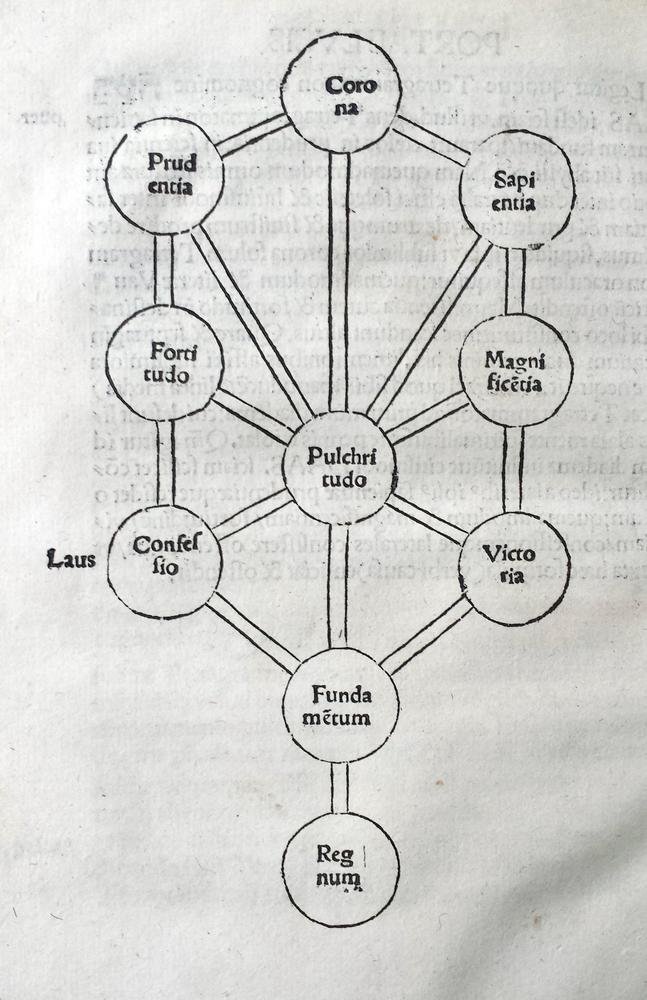
The argument then returns to Marxism and dialectical materialism, and finds something unexpected underneath them. Materialism reads history through class, production, capital, and social organization, so that everything is downstream of the means of production. But there may be older spiritual patterns beneath the dialectic itself. The Kabbalistic Tree of Life arranges its ten emanations in three columns: a pillar of mercy, a pillar of severity, and a middle pillar of balance between them. It is a structure of polarity, movement, tension, and synthesis. Thesis produces antithesis, and out of their tension comes a new synthesis. The resemblance to dialectical thinking is hard to miss, even though Marx applied the pattern to economics and class rather than to the divine. Marx's own background matters to this reading. His family line on both sides included generations of rabbis, and his father converted to Lutheranism only to keep practicing law in Prussia. Marx rejected religion, famously and completely. But a person can reject an environment and still be shaped by it, carrying its concepts, its language, and its symbolic inheritance into a system that declares itself hostile to everything spiritual. Materialism, on this view, may carry the traces of older mystical structures inside it, precisely because it was built by people who grew up surrounded by them.
None of this erases class analysis. If anything, the political argument keeps returning to class. Behind Zionism, empire, war, and ideological conflict, the talk argues, stands transnational capital, and the real power is less religious than financial. Israel matters to Washington because it serves the interests of American and Western capital in the Middle East: it helps secure a resource-rich region, it functions as a strategic asset, and it aligns with the American state because it helps maintain American power. The relationship cannot be understood through religion or ethnicity alone. It is also about empire, energy, capital, lobbying, military power, intelligence, and Cold War strategy. Israel made itself useful to American power, and American power protected Israel in return, tolerating organizations whose work might otherwise have drawn legal scrutiny because that work aligned with the interests of the state.
16The Revolt Inside the Party
The same logic explains why anti-Zionist politics produces something close to panic in Washington. If younger voters, working-class voters, and democratic socialist movements begin to oppose war, oligarchy, the foreign policy establishment, and unconditional support for Israel all at once, then the old system loses its hold on the Democratic Party. Bernie Sanders showed the danger in 2016 and 2020, and newer antiwar voices show it again. The party establishment moved aggressively to contain him then, and it can be expected to move just as aggressively against his successors.
The future of American politics, in the talk's assessment, may depend on whether the Democratic Party can become antiwar and pro-worker again. The Republican Party has become increasingly cultlike in its devotion to Trump. If the Democrats stay bound to oligarchs, donor networks, financial elites, and the national security establishment, then ordinary people are left with no real political outlet at all. If young, antiwar, working-class voices rise inside the party instead, it may become the only viable path to reform left in the system. The obstacle is that the ruling system will not surrender easily. It controls money, media, intelligence agencies, universities, courts, party machinery, donors, and narratives. It can railroad candidates, shape primaries, buy media institutions, frame public opinion, and destroy reputations. And yet the old system is weaker than it has ever been, for one simple reason that no amount of money can fix: the public no longer trusts it.
17History Is Not Random
The deeper lesson is that modern politics cannot be understood through any single lens. Material interest matters. Class matters. Capital matters. Empire matters. But religion, mythology, occult belief, prophecy, trauma, family networks, spiritual longing, and hidden institutions matter too. Power is not purely rational. It is symbolic and emotional, and in the minds of many of those who wield it, it is metaphysical. The modern world pretends to be secular, but its elites still worship. Some worship money. Some worship technology. Some worship the nation. Some worship prophecy, some worship intelligence, and some worship power itself. The names change; the religious structure remains. Predictive history tries to read all of these layers at once: the material game, the spiritual imagination, the incentives of states, the psychology of leaders, the ambitions of networks, and the long movement of history where they all intersect. A leader may not know why he acts. A nation may not admit its true objective. A movement may hide its theology. A corporation may disguise its spiritual ambition as innovation. The pattern appears anyway, for anyone patient enough to look for it.
The coming years will be shaped by these collisions. Trump may try to remain in power. Iran may remain the center of imperial escalation. China will keep rising as the main structural rival to American hegemony. Artificial intelligence will become a battleground that is technological and spiritual at once. Israel and Zionism will stay at the center of the crisis in American politics. The Democratic Party may face a generational revolt, the old media system will keep losing its authority, and the deeper conflict between transnational capital and human freedom will intensify. The task is to understand this world without being trapped inside any one explanation of it. Pure materialism misses the spiritual imagination of power. Pure mysticism misses class and capital. Pure geopolitics misses hidden ideology, and pure moralism misses incentives. The world is all of these at once. History is not random; it moves through patterns. The challenge is to see the pattern before the event makes it obvious to everyone.