1Beyond Moscow
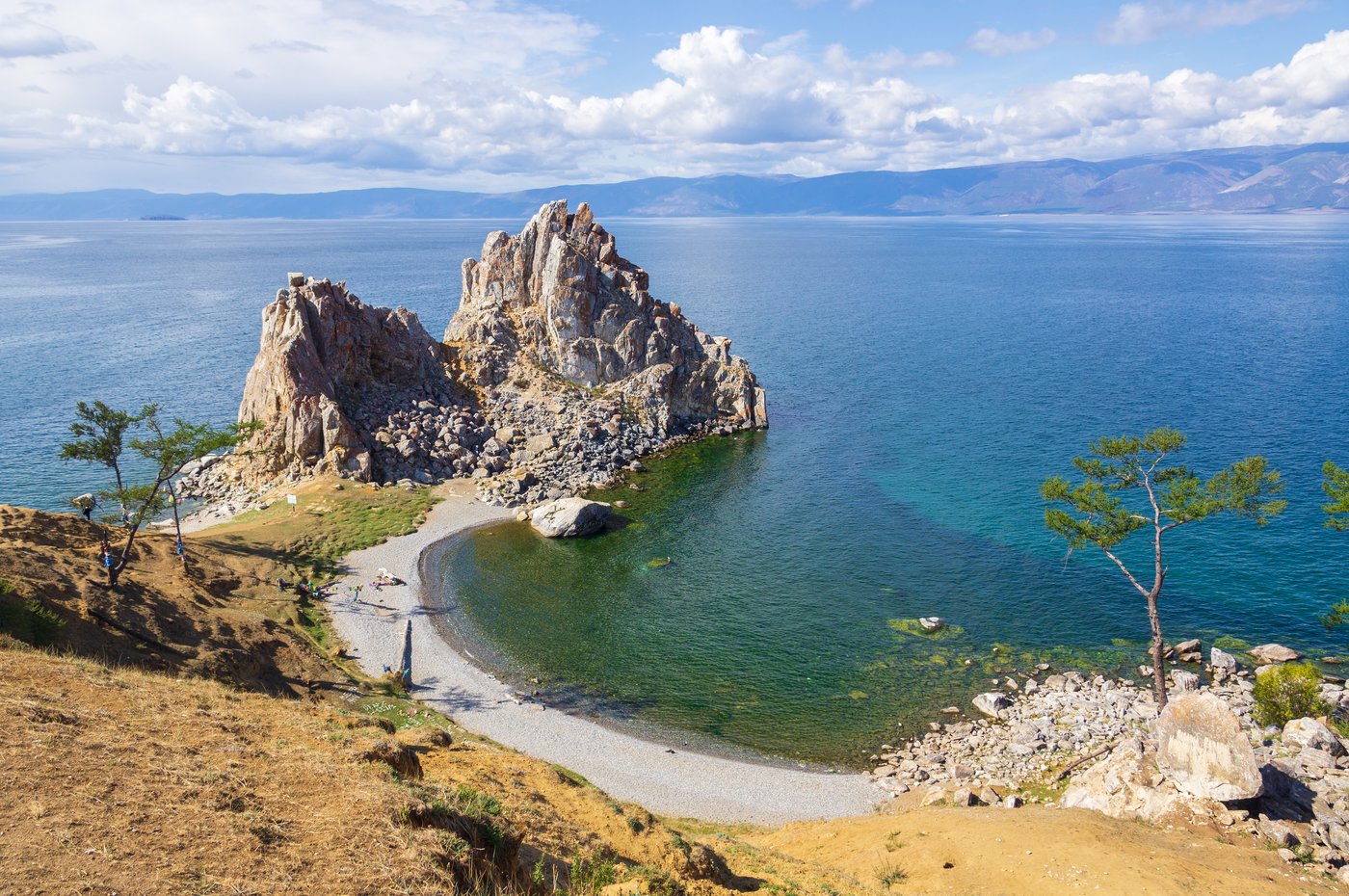
Alastair Crooke spent decades as a British diplomat and intelligence officer and later as an adviser to the European Union's foreign-policy chief, Javier Solana, before founding Conflicts Forum, a group that works to open channels between the West and movements in the Islamic world. He has long been better known for his reading of the Middle East than of Russia. But in September 2026 he came back from a journey that began not in Moscow but far to the east, and he wanted to start there. Westerners, himself included, he said, have tended to see Russia through the prism of Moscow and Saint Petersburg, but the country stretches across a vast eastern expanse that is not only a different landscape but in many respects a different world. In Siberia, people speak languages such as Buryat and Altai, which belong not to the Slavic family but to the Mongolic and Turkic ones. The nomadic culture endures, and so does the memory of the Mongols: Genghis Khan is still widely admired there, Crooke found, not as the destroyer of Western legend but as a founder of states, the ruler whose administrative structures Russia, China, and Iran alike inherited, and which Russia took over from around the eighteenth century. Buddhism arrived from Tibet and is very visible, yet paradoxically it seems largely to have been absorbed into shamanism; shamanic prayer flags fly across the region, alongside Russian Orthodox churches.
The lesson Crooke drew is that Russia must be understood as a fusion, and it is no accident, he says, that the Russian eagle has two heads, one facing west and one facing east. Russia is in a process of transition, and the work of bringing its many cultures and ethnicities fully into a shared sense of what it is to be Russian today is still in progress. He was careful to stress that this is not a story of antagonism; nothing he saw resembled the tensions with parts of the Muslim population during the Chechen wars. It is simply another dimension of the country, which Russian policy is trying to draw in, so as to nourish and enlarge the national identity rather than narrow it. There were practical observations too. Having driven long distances, he saw none of the fuel shortages the Western press had reported after Ukraine's drone attacks on Russian refineries; there were no queues at petrol stations except in a single place, which he took for a local distribution problem rather than a strategic one. Prices were rising, he acknowledged, but the economy, in his judgment, was stable.
2An Election Under Drones
Russia had just held parliamentary elections, and the results, Crooke said, came out more or less as anyone who knows the parties and their standing on the ground would have expected. There was no disruption and there were no protests, except that Ukraine, by his account, launched some two thousand drones and a few missiles on the final day of voting in an attempt to disrupt it. The attempt, he says, failed completely; the American commentator Larry Johnson, who was also in Russia at the time, slept through it. Crooke himself experienced the drone campaign from the air. Flying back to Moscow from Siberia, his plane was told that the airport had been temporarily closed. He asked the crew what would happen, and they explained, unbothered, that they would simply enter a holding pattern for an hour or so until the airport gave them the green light. In the end they landed at Kazan, waited on the ground for about an hour, and then flew on to Moscow without incident. What struck him was how routine it had become. The crew of a domestic airline handled it the way a pilot handles congestion over a busy Western airport, with no sign of alarm at all. The country, he concluded, is stable. But he also sensed that the mood had changed considerably, and the clearest evidence of that change came at a dinner table.
3Dinner With the Foreign Minister
Crooke's group was invited to a private dinner of about three hours at the residence of Sergei Lavrov, Russia's foreign minister. Lavrov, Crooke notes, is the consummate professional diplomat, a man who does not normally break confidence or speak without restraint, which means one can read a great deal into what he does say. And what came across very clearly, in Crooke's account, was a sense that there is really no point any longer in talking with the Americans, and absolutely no point in talking with the Europeans. That shift, Crooke argues, changes the whole idea of BRICS and of multipolarity, a subject he had been writing about on his Substack.
The reasoning behind it, which Crooke offers as his own general reading rather than a quotation from Lavrov, concerns what the United States has become. Any common element of a shared order, a legal basis, agreed norms, moral values, a sense of civilizational inheritance, has in this reading disappeared. Trumpism, Crooke argues, is coercion: coercion through sanctions and tariffs, coercion to sustain the dollar's dominance, and overt coercion in threatening countries such as Iran with annihilation. All the foundations a multipolar world might have rested on have been subsumed, on this view, by a politics that condones destroying countries economically, or bombing them, or going further still. And if that is so, the world order that multipolarity was supposed to reform no longer exists to be reformed.
4A Defensive Multipolarity
What, then, is multipolarity for? Crooke's answer is sobering. Where sovereign states and whole civilizations are met with extreme hostility, there is not much room for conversation, so any concert of civilizational powers will be largely defensive: a structure for deterrence and protection rather than an active political force. The most immediate and obvious form it takes is a way around the dollar's hegemony, a payment system and the structures that go with it, and that, he thinks, is what we are seeing now and perhaps all one can expect for the moment. Multipolarity is unlikely to become a proactive bloc taking strong positions on the ground, partly because its members are different states trying, rather awkwardly for now, to keep a foot in every camp.
How, then, does the world move to a new order? With great difficulty, Crooke says. It cannot simply slip across to one. The transition will be fought over and will probably be quite destructive, and he does not expect a major evolution until either a financial crisis or a political crisis changes the paradigm in the West. That may come sooner than expected, he suggests, pointing to Germany's recent elections and to forces in American politics that could reshape the scene after the coming election. But until something of that kind happens, he does not see a big change. Russia's message in the meantime, as he reads it, is stability: the military operation in Ukraine continues and is advancing, and the idea that the Russian public is turning against Putin or the government is, on the evidence of the election and of everything he saw, completely unfounded.
5The Restrainer
Someone in Moscow, Crooke recalls, used a phrase for Russia's present posture that he found apt. It is a posture of restraint, of trying to stop things from deteriorating badly and suddenly, and one largely shared with China, which also understands the dangers of the moment. The word used was katechon. It comes from Saint Paul's second letter to the Thessalonians, which speaks of a power that "letteth," that holds back, the coming of lawlessness until it is taken out of the way, and in Orthodox political thought it has long named the role of the Christian empire as the restrainer of chaos. Applied to the present, it describes a Russia that sees its task as holding back a severely destructive force from taking control of the world. The idea recurs throughout Crooke's account, and it carries an obvious tension that he does not hide. A restrainer, by definition, does not expect to win; it expects to delay. Russia's leaders, he says, understand that there is a limit to what restraint can achieve. But they see everything heating up at once, and the will in Moscow, as he describes it, is to find ways to pull back the destructive forces being unleashed, to modify them, to keep them under control, for as long as that remains possible.
6The Eagle Faces East
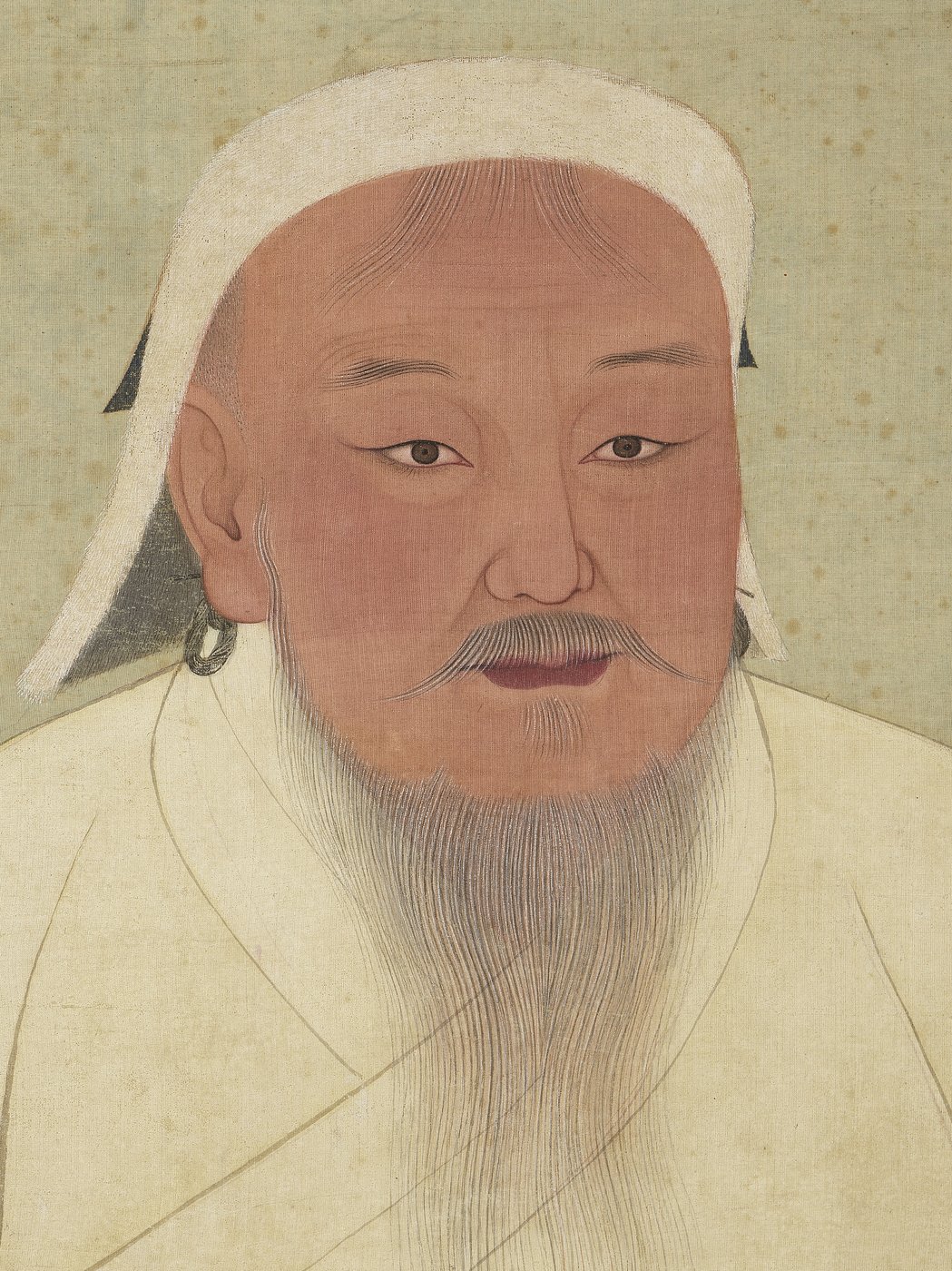
The host picked up Crooke's remark about Genghis Khan with an observation about how Russia's own story of itself has shifted. Through the 1990s, Russia's main strategic objective was to integrate into a common European home, a greater Europe, and it found itself awkwardly on the periphery of both Europe and East Asia, the two economic centers of the continent. After 2014, when it became obvious that there would be no common Europe and that the continent would be divided again, the project of a greater Eurasia gained momentum, with Russia cast as the land that connects it. Historical figures like Genghis Khan changed their place in the Russian narrative accordingly. Some Ukrainian nationalists had long drawn the line between Ukrainians and Russians precisely there, casting Russians as Asiatics shaped by the Mongol yoke rather than true Europeans, and Russian rhetoric once tended to distance itself from that history. Now, the host noted, one hears arguments that Russia should be seen as the successor of the Mongols, reconnecting the Eurasian landmass much as they once administered the Silk Road.
Crooke added a nuance from his own travels. Spending time with people whose grandfathers were nomads, he found that Genghis Khan is not seen as Westerners see him. He is remembered as a great administrator and a builder of states, and people take note that he was close to shamanism and that he sought out Chinese advisers, including the Daoist master Qiu Chuji, whom he summoned across Asia to consult him. Some in the West find this embrace of Asia difficult to accept. But Saint Petersburg is no longer part of the West, Crooke says; Russia is the two-headed eagle facing both ways, and it is putting great effort into making that work. Its identity between East and West is not completely resolved, in his view, but it is getting there.
7From a City on a Hill to Light and Darkness
The host then asked the question that troubled him most. From the 1990s on, the political West defined itself by common values, and the idea was to bring more morality into politics. Yet when morality is tied to policy, positions become more uncompromising, and understanding the opponent, now cast as the immoral one, becomes harder. How did the West go so quickly from defining itself through liberal democracy to calling for the destruction of nations, criminalizing diplomacy, and dehumanizing its opponents? Crooke's answer begins with loss. The West, he argues, has lost so much of its founding narrative, the stories by which it lived and through which it understood moral questions.
America, he says, began as a millennial project, almost messianic in form: a light to all nations, the city upon a hill that John Winthrop invoked in 1630, meant to bring about a new paradigm for humanity. Then, somewhere around the time of September 11, though he does not attribute the change to that event, it became Manichaean. It lost its redemptive element, and in its place came an intolerant vision of a world divided into absolute good and absolute evil. He recalls the image of an American president speaking before Independence Hall in Philadelphia against a blood-red backdrop about the struggle of light against darkness, and the habit of describing Russia as simply evil and America as simply good. Those who do not accept that definition of the good, which is no longer the good as an ancient philosopher would have understood it, a matter of light and shade rather than absolutes, are cast out of the moral community altogether. Exactly why that happened, and where the influences came from, Crooke says he does not know, and he leaves it for historians to untangle.
8War, War, War
What struck Crooke most on his return was Europe's talk of war. He had raised it many times in Moscow, and he came home to find it had gone much further than before he left. It looked to him like a concerted messaging campaign spreading across the continent: British people told to stock up on bottled water and tinned food for the war that is coming; videos urging people to prepare; pictures of young people in military uniform presented as the direction they should look; talk shows announcing that war is imminent, that many will die in it, and that being ready to die to preserve freedom is their duty. He was, he says, astonished, and he wondered who was behind it, because it makes no sense. Europe, Crooke argues, does not have the manpower mobilized, does not have the military means, and does not even have the beginnings of the supply lines a war would require. Converting a carmaker's factories to produce tanks, as has been floated for Volkswagen, to find work for laid-off employees, does not amount to a military supply chain; building one takes a decade. And he does not believe there is the culture, or the political will among the people, to fight such a war. So what is going on, and who is pushing Europe toward it?
9Who Is Pushing?
Crooke offers one possible explanation. Europe's elites have made so many wrong decisions in this period, and have prepared their populations for none of the consequences. The energy crisis, he says, is no longer coming; it has arrived. Diesel is in short supply, and in France people are queuing to fuel their cars and trucks; the prices of diesel and gasoline are rising along with everything else, and no one has been prepared for it, so it will feel like going over a cliff, perhaps with rationing to follow. He believes it will get much worse and may last through the following year, because the shortage has become structural rather than a matter of a flow being shut off and turned back on. The war talk, on this explanation, might be a scare project meant to divert attention from the crisis the elites have brought on.
But he is not satisfied that this explains it. The Europeans, he observes, have all adopted the same talking points at once, and he describes a group of European leaders photographed after a summit all wearing camouflage jackets, looking, in his word, stupid. Some force or political impulse, he suspects, lies behind the uniformity. And Washington is doing nothing to stop it. On the contrary, he notes, Trump complained that the diesel crisis had nothing to do with the war on Iran or the closures of Hormuz and the Red Sea but was all about Putin and Ukraine's strikes on Russian refineries, and said he had told Zelensky to choose other targets than refineries, which Crooke reads not as a call for restraint but as a request to keep attacking other targets while sparing fuel prices before the midterm elections.
10Pressure on Every Front
The Russians cannot simply ignore all this, Crooke says. They hear the talk of war endlessly, and so they are preparing. Before the attacks on Moscow during the election, he notes, Zelensky had listed the drones and missiles Europe had supplied, Britain's Storm Shadow among them, and Crooke recognized most of them in what was used. That raises a question he cannot answer: why would it be in American or European interests to try to disrupt an election in Russia? Did anyone really think it would damage Putin? And the pressure was escalating across the board. Trump received from Congress what was being called the "sanctions from hell" bill and signed it the same day, rather than holding it in reserve as leverage, and shortly afterward a major Russian bank was sanctioned. Russia was threatened with secondary sanctions for allowing an Iranian plane to land, and China with it.
There were attacks on the elections, attacks on the financial system, and attacks on Putin personally, Crooke observes, and he was struck by the language of Britain's representative at the United Nations General Assembly, telling Putin that his war had failed and that everyone could see it. One does not expect that tone, he says, from the representative of a middle-sized power addressing the assembled states, insulting heads of state in terms that belong to the street rather than to diplomacy. None of it, in his view, serves Trump's own interests ahead of the midterms, neither escalating the war against Russia nor intensifying the financial war against the world. It is all coercion, which returns him to his starting point: what is the point of a global order if the most basic rules of law are overthrown? Can there be a global order at all? Seeing all this, Russia, he concludes, can only prepare for escalation and further conflict.
11The Script Changes
The host had noticed the same shift. Not long before, the script all European leaders read from was that this was not Europe's war but a conflict between Ukraine and Russia. Now he had seen a NATO video about the alliance's decades of keeping its members safe that ended with the Ukrainian nationalist chant "Slava Ukraini," as if that slogan had been absorbed into NATO itself. In Britain, he pointed to a video by the politician Jacob Rees-Mogg suggesting that dying for one's country was now a duty. And he cited Slovakia's prime minister, Robert Fico, who had argued openly that European leaders wanted to distract from disasters at home by provoking war with Russia; when a sitting prime minister says that, the host remarked, people should be concerned.
The narrative was shifting in other places too, the host noted. For a long time, Western audiences were told that Ukraine was losing comparatively few soldiers. Now Poland's prime minister, Donald Tusk, was saying that Ukraine was taking some twenty-seven thousand casualties a month. Everyone, the host said, seemed to have started chanting the same thing at the same moment, and it was no coincidence. How were the Russians responding? Lavrov and Putin had said they had no plans to go to war with Europe, but that if Europe attacked, it would be a very short war of a very different kind. Beyond the rhetoric, were they actually preparing, bringing out their newest missiles from storage?
12Window Dressing
Two things, Crooke answered. At the dinner, Lavrov had been adamant about how much Russia respected President Trump's efforts to bring peace to the conflict, and how it was always ready to talk. Crooke reads that as window dressing from a consummate diplomat. He does not think Lavrov believes there is any point in talking to the Americans now, or that a solution will emerge from talks with Steve Witkoff or Jared Kushner; quite the opposite. The point of saying it was the message underneath: that Russia is no threat to America or to Europe, that it has no ambitions against them, that multipolarity threatens no one, and that if there is a threat, it comes out of Europe, propounded by European leaders for their own self-serving purposes.
And yes, Crooke says, Russia is preparing, in the expectation of escalation after the American midterm elections in November, or before them. That is where the language of the katechon comes in: Putin's will, as Crooke reads it, is to find ways to pull back the destructive forces that seem to be being unleashed and to keep them under control, while knowing there is a limit to what any restrainer can do. What troubles him most is that the war on Iran and the pressure on Russia seem to be pushed by the same people, and that the war on Iran, in his view, looks absurd unless seen through one particular lens, the one coming from Israel; otherwise, he says, it was neither a sensible nor a morally defensible action. Now comes the escalation against Russia, the new sanctions, and the abandonment of diplomatic standards in language about Putin and about China's President Xi, all of it, as he sees it, pushing aside the norms that once made diplomacy possible.
13Something Cracking
The host offered a final observation. In Scandinavia, he said, the line in the media and from some politicians was that war could be coming because Russia was losing, and a losing Russia might do something crazy. Anyone following the war, he argued, knows that is nonsense. If Western leaders admitted that Russia was winning, the logical Russian policy would be to keep NATO calm while Ukraine fell apart, which is consistent with what Lavrov and Putin say; but if things were going wrong for NATO and Ukraine, it would make sense for someone in the West to do something reckless and blame it on Russian hybrid warfare. Was something cracking at the front, or in Ukraine itself? Crooke's answer was that the fractures are very clearly there. Winter is coming, and it is not only the energy system that is under attack but petrol stations, some fifty locomotives destroyed, the railways, warehouses, the whole logistics of the country; a former head of Ukrainian intelligence, he notes, has said that ninety percent of Kyiv's logistics are gone. It is serious.
And there is the other front that had not yet been discussed: the economy. The bond market, Crooke says, is cracking, and Western leaders are growing desperate, having tried to keep the problem out of the press and having done nothing to prepare their people psychologically for what is coming, so that it will hit far harder than it needed to. So yes, he concludes, it is possible that someone will do something stupid, whether against Iran or against Russia, and there seems to be no visible control over it. Congress itself seems unable to define what American interests and American foreign policy are; they seem to be defined somewhere else. That is a very worrying conclusion, he says, because no one can see the end game, for Ukraine or for Iran. In Crooke's telling, Russia has set itself to be the restrainer, holding back what it sees as a destructive force for as long as it can. Whether anyone on the other side is restraining anything is the question he leaves open.