1Three Pillars of the Old Church
Capitalism did not emerge from economics alone. Its roots reach down into religion, into anxiety and faith, into a slow transformation of the relationship between human beings and God. The Protestant Reformation is usually remembered as the moment Western Christianity split in two, and it was that. But it did something larger and quieter as well: it changed the inner psychology of Europe, and in doing so it helped create a new civilization organized around work, accumulation, rationalization, and money. To see how, you have to begin with the church the reformers rebelled against, and with the three principles on which it rested. The first was orthodoxy. There were beliefs that had to be accepted, memorized, and obeyed, and the individual believer was not free to interpret doctrine independently; truth belonged to the church. The second was hierarchy. Priests, bishops, and above them the Pope stood between ordinary people and scripture, holding the authority to say what the Bible meant, and the Pope represented God on Earth. The believer did not need to understand everything personally, because the church carried that burden on his behalf. The third principle was justification by works. Salvation depended on action: the believer followed the rituals, obeyed the church, took part in the sacraments, and performed the works required of him. Personal certainty and inner conviction mattered less than correct behavior.
This system created an enormous amount of stability, which is why it lasted for a thousand years, but each of its pillars also produced a characteristic problem. Orthodoxy produced disconnection. Human beings have always sought direct contact with the divine; they want to feel God, understand God, and experience something greater than themselves, and a rigid system of dogma placed an institution in the way. Hierarchy produced corruption. If priests possessed a unique spiritual authority, there was little to stop them from abusing it. Wealth accumulated inside the church, political power braided itself into religious authority, and those who claimed to represent God could use that position for very worldly benefit. Justification by works produced hypocrisy. A person could follow the ritual without believing a word of it, obeying in public while remaining spiritually empty, and the system could end up rewarding conformity rather than faith. These contradictions generated centuries of rebellion long before Martin Luther. The Waldensians, followers of a twelfth-century merchant of Lyon who gave away his wealth to preach poverty, were driven underground; the Cathars of southern France were destroyed by a crusade launched against them in 1209; the Czech reformer Jan Hus was burned at the stake in 1415. Again and again people tried to recover a direct experience of the divine, and again and again institutional power crushed them.
2Three Answers, and a Question
The Protestant Reformation changed the balance because it offered an answer to each of the three pillars at once. Orthodoxy was replaced by direct access: the believer no longer needed a priest to explain scripture, because the Bible could be read personally and God could be approached directly. Hierarchy was challenged by spiritual equality: if everyone could read scripture and speak to God, then all believers stood equal before the divine, and the priest was no longer a different kind of person from the farmer. Justification by works was replaced by justification by faith: ritual alone was no longer enough, because the believer now had to truly believe. These ideas were liberating, and it is important to say so plainly before turning to their cost. They broke the clergy's monopoly on meaning, encouraged ordinary people to learn to read, exposed corruption, and gave individuals a dignity before God that the old system had reserved for its officials. But they also created a new kind of psychological problem, and the first of them was anxiety.
Under Catholicism the believer could obey the church and trust the structure to carry him. Under Protestantism the individual had to ask himself a terrifying question: do I truly believe? The answer could never be completely certain. A person might say that he had faith, but how could he know? How could he prove that his belief was genuine rather than superficial, and how could he be sure he had not simply deceived himself? The believer had become responsible for his own spiritual condition, with no one to hand the burden to. The doctrine of the Trinity made this harder still. God, Jesus, and the Holy Spirit are distinct and yet one, separate and yet equal, a mystery the ordinary human mind finds extraordinarily difficult to grasp. The Catholic Church had absorbed that contradiction into its own authority, so that the believer never had to solve it personally. Direct access removed that protection. Now the individual had to confront God directly while trying to understand something that resisted ordinary logic, connecting personally with a divine reality that remained abstract and impossible to hold in the mind. The result, the lecture argues, was a new and pervasive spiritual anxiety.
3The Anxious Believer
Anxiety creates a hunger for order. When the inner world becomes uncertain, the outer world can at least be organized: the anxious person cleans, counts, measures, categorizes, plans, disciplines, and rationalizes, and confusion within produces an obsession with structure without. The Protestant believer, on this account, began to rationalize the world for exactly this reason. Work became disciplined, time became measured, behavior became controlled, life became organized, and the world itself became something to be mastered rather than simply inhabited. What looks from the outside like a new economic temperament began, in other words, as a way of managing a spiritual fear that could not be managed any other way.
John Calvin intensified that fear with the doctrine of double predestination. God, Calvin taught, had already decided from the beginning of time who would be saved and who would be damned, and human beings could do nothing to change the decision. God was perfect, eternal, and unchangeable; if He had already chosen the elect, then no priest, ritual, payment, or institution could alter the outcome. As an attack on Rome, this was devastating. If salvation had already been decided, the Pope could not sell it, priests could not control it, and indulgences could not buy it. But the doctrine created an even more frightening problem for the believer: how do you know whether you are one of the elect? You cannot ask the church, because the church does not know. You cannot persuade God, because the decision has already been made. You cannot purchase salvation or change your destiny. You can only search for signs. The believer must therefore live as though he were chosen, because doubt is itself dangerous: doubt suggests weak faith, and weak faith suggests the absence of grace. The person has to convince himself, every day, that God favors him. That is a permanent struggle for certainty, and the solution to it, slowly and without anyone intending it, became money.
4The Universal Symbol
To understand why, you have to see money as more than a medium of exchange. It is a symbol capable of organizing the entire human world. People hold different values, desires, opinions, cultures, and experiences: one person prizes education, another beauty, another family, another power. Money takes all of these differences and places them inside a single common measurement. Consider a bottle of wine. It can be genuinely difficult to judge by taste alone, and two honest people may disagree completely. But once one bottle is marked ten dollars, another twenty, and another fifty, the world becomes easier to read: the fifty-dollar bottle appears better, because price has simplified judgment on our behalf. Money standardizes perception in exactly this way across the whole of life. It tells people what a house is worth, what labor is worth, what education is worth, and what time is worth. It tells people who has succeeded and who has failed. It transforms an endless variety of realities into one symbolic order that everyone can read at a glance.
Once money becomes the common language of value, the world can be reorganized around it, and the reorganization reaches into the most personal choices. Why do you go to school? To make money. Why do you work? To make money. Why do you move to another city, or choose one career over another? To make money. How do you measure whether a life has gone well? Through money. The diverse purposes of human life begin to converge on a single symbol. And this, the lecture argues, is precisely what solved the Protestant problem, because money provides something faith cannot: visible evidence. The believer cannot see God. He cannot prove his salvation, or know for certain whether his faith is genuine. But wealth can be seen.
5Money as Evidence
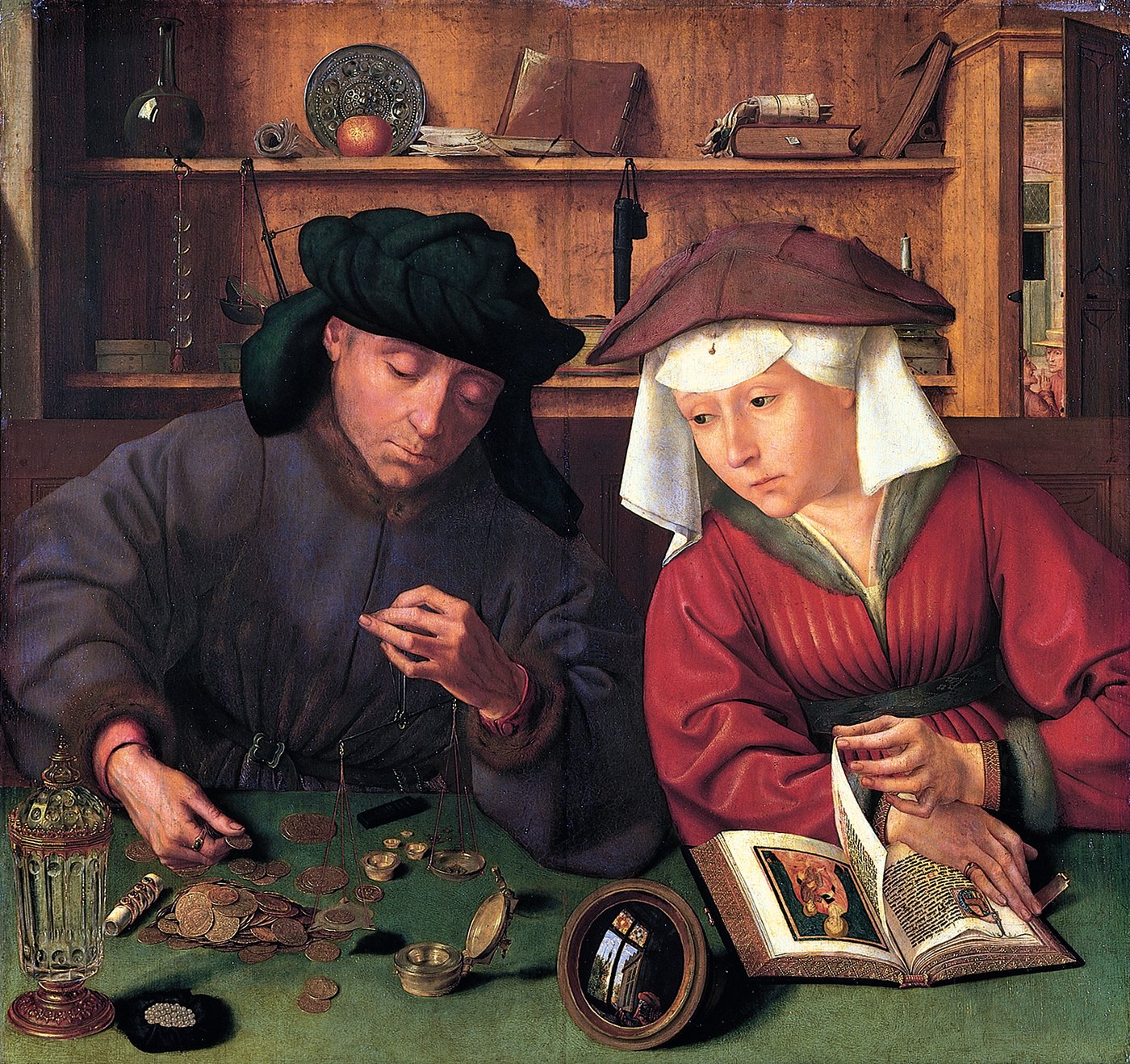
If a person works hard, lives with discipline, saves, and succeeds materially, that success can be read as a sign of divine favor. The reasoning runs almost by itself: I am wealthy because I work hard; I work hard because I have faith; my success shows that God favors me; and if God favors me, perhaps I am one of the elect. Money becomes spiritual evidence. The connection is psychologically powerful because God and money are both abstract symbols that stand for everything. God represents the whole of reality while remaining beyond any direct physical grasp. Money also represents everything, while possessing almost no meaning of its own. Each can stand in for the other. Money can become God, and God can become money. Once that substitution takes hold, the accumulation of wealth stops being merely useful and becomes a spiritual mission.
Before this transformation, wealth usually carried a social purpose. The rich were expected to spend: to host feasts, support their communities, fund religious ceremonies, give gifts, help the poor, build public spaces, and show their status through generosity. Wealth had to circulate, and a person who accumulated endlessly without sharing was seen as selfish or even morally corrupt. The Protestant ethic reversed this. Accumulation became a virtue and consumption a danger; luxury suggested corruption and pleasure suggested weakness, while saving suggested discipline and reinvestment suggested faith. The wealthy no longer needed to justify their wealth by giving it away, because wealth itself could now be evidence of moral worth. This, on the lecture's account, is the psychological birth of capitalism. Capitalism is not simply trade, which existed for thousands of years. It is not simply private property, which existed long before the modern era, nor simply markets, which every ancient society had. Capitalism emerges when accumulation becomes an end in itself, when the purpose of money becomes more money, and a person accumulates not because he needs food, shelter, status, or security, but because accumulation has become meaningful in its own right.
6Ninety-Five Theses
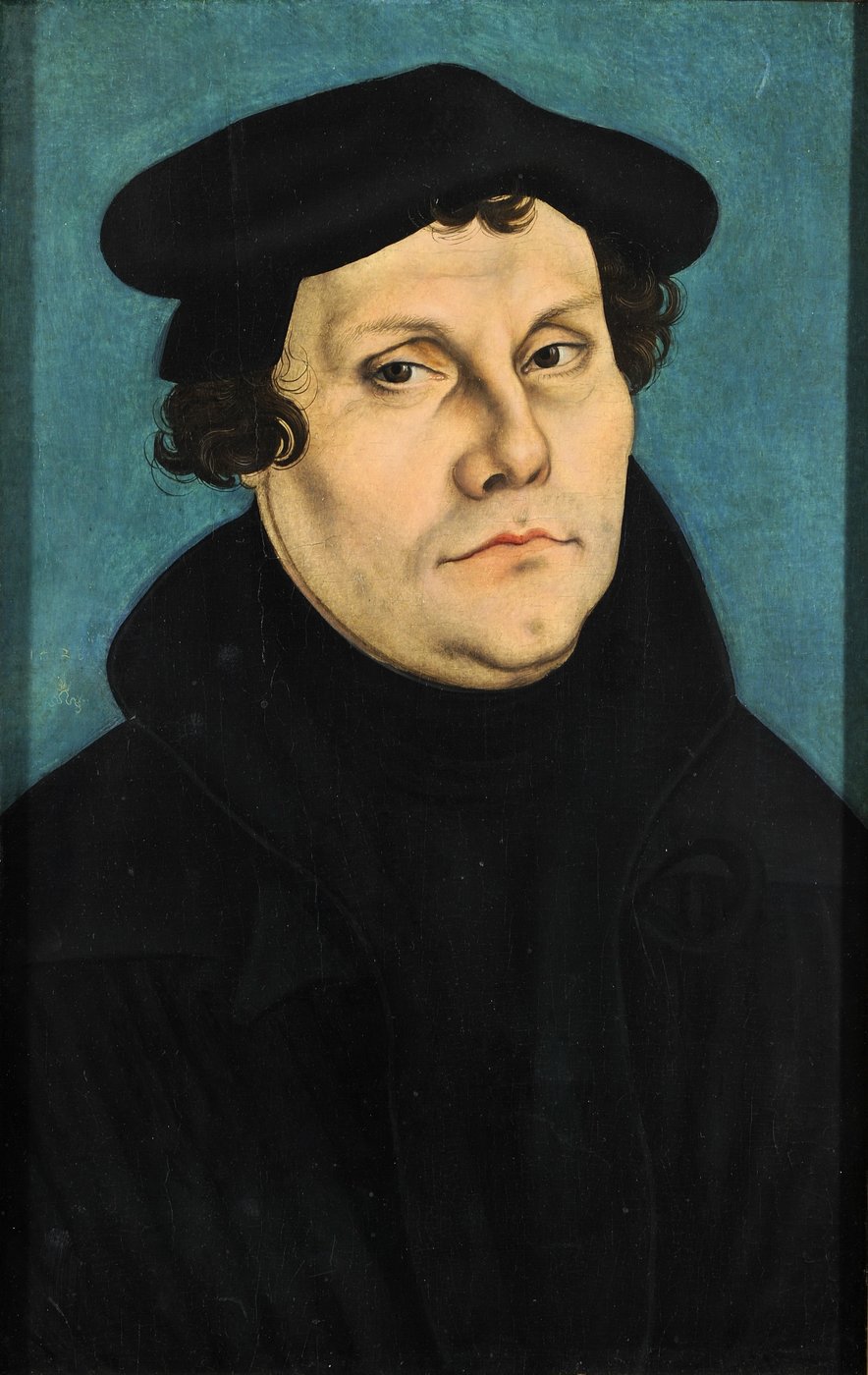
That transformation took centuries, and it began with a quarrel about money. In 1517 Martin Luther, an Augustinian friar teaching at Wittenberg, challenged the Catholic Church with his Ninety-Five Theses. The immediate issue was corruption, and above all the sale of indulgences. The papacy needed money to rebuild St. Peter's Basilica in Rome, and indulgences offered believers a way to reduce the punishment owed for sin in purgatory; preachers such as Johann Tetzel sold them across Germany with a famous jingle about the coin ringing in the coffer and the soul springing out of purgatory. Money had entered the relationship between the believer and salvation, and for Luther that was intolerable. If a Christian truly repented, divine forgiveness could not depend on purchasing a document. God could not be bribed, salvation could not be sold, and the Pope had no authority over divine grace. Luther turned the accusation straight back on Rome. His eighty-sixth thesis asked why the Pope, whose wealth was greater than that of the richest Roman of antiquity, did not build his basilica with his own money rather than with the money of poor believers.
The attack was theological, but it was also political, and that is why it survived when earlier reformers had not. Hus and others had been destroyed because they lacked protection. Luther survived because powerful princes in the Holy Roman Empire, beginning with his own ruler, Frederick the Wise of Saxony, saw opportunity in his rebellion. They wanted greater autonomy from Rome, and religious reform gave them a reason to break from the church financially and politically. Faith and power moved together. Luther challenged the church; Calvin, in Geneva, deepened the doctrine through predestination; Ulrich Zwingli pushed reform further in Zurich; and different regions developed their own interpretations. The result was not one Protestant church but an explosion of them. Lutherans followed Luther and Calvinists followed predestination. Anglicans kept many Catholic practices while replacing the Pope with the English monarch. Hussites carried forward the legacy of Jan Hus. Unitarians rejected the Trinity and the divinity of Jesus, and Anabaptists, insisting that faith must be chosen consciously, rejected infant baptism. Once the Pope lost his monopoly over interpretation, Christianity fragmented, and the diversity cut both ways: it liberated the individual, but it also produced endless disagreement, because if everyone could interpret scripture personally, everyone could found a new church.
7The Door That Would Not Close
The Reformation also released revolutionary forces far beyond the control of its founders. If all believers were equal before God, peasants began to ask, why should political hierarchy survive? Some concluded that feudalism itself was evil, and demanded equality, freedom, and a radical transformation of society. The German Peasants' War of 1524 and 1525 grew out of this atmosphere. Hundreds of thousands joined the rebellion, but they lacked organization, weapons, central leadership, and military training, and the aristocracy united to crush them; perhaps a hundred thousand were killed. Luther himself sided with the princes. Yet the door he had opened could not easily be closed again. Once people were told to read, think, and interpret for themselves, some began questioning not only priests but kings, landlords, nobles, and the entire social order, a habit of mind that would resurface in every revolution of the centuries that followed.
England took a different path. Henry VIII broke with the Pope, for reasons that had as much to do with his marriage and his treasury as with theology, and the Act of Supremacy of 1534 made the king head of the church. Catholic ritual largely remained, but authority shifted from Rome to the English Crown, and the Church of England became a national church. Across the continent, Europe gradually divided along a north-south line. England, much of Germany, the Netherlands, Scandinavia, and Switzerland became the great Protestant centers, while Spain, Italy, and much of France remained Catholic. The lecture suggests that this division may reflect something deeper than theology, while being careful to present it as a way of seeing rather than a historical certainty. Southern Europe had been shaped for centuries by Rome, a civilization that prized law, hierarchy, public duty, and respect for tradition, values that sat comfortably with Catholic orthodoxy, hierarchy, and ritual. Northern Europe retained more of the cultural inheritance of peoples never fully absorbed into the Roman world, for whom courage, loyalty, independence, exploration, and resourcefulness carried more weight, and those values fit more easily with direct access to God, equality before Him, and the solitary spiritual struggle Protestantism demanded.
8Fire and Exile
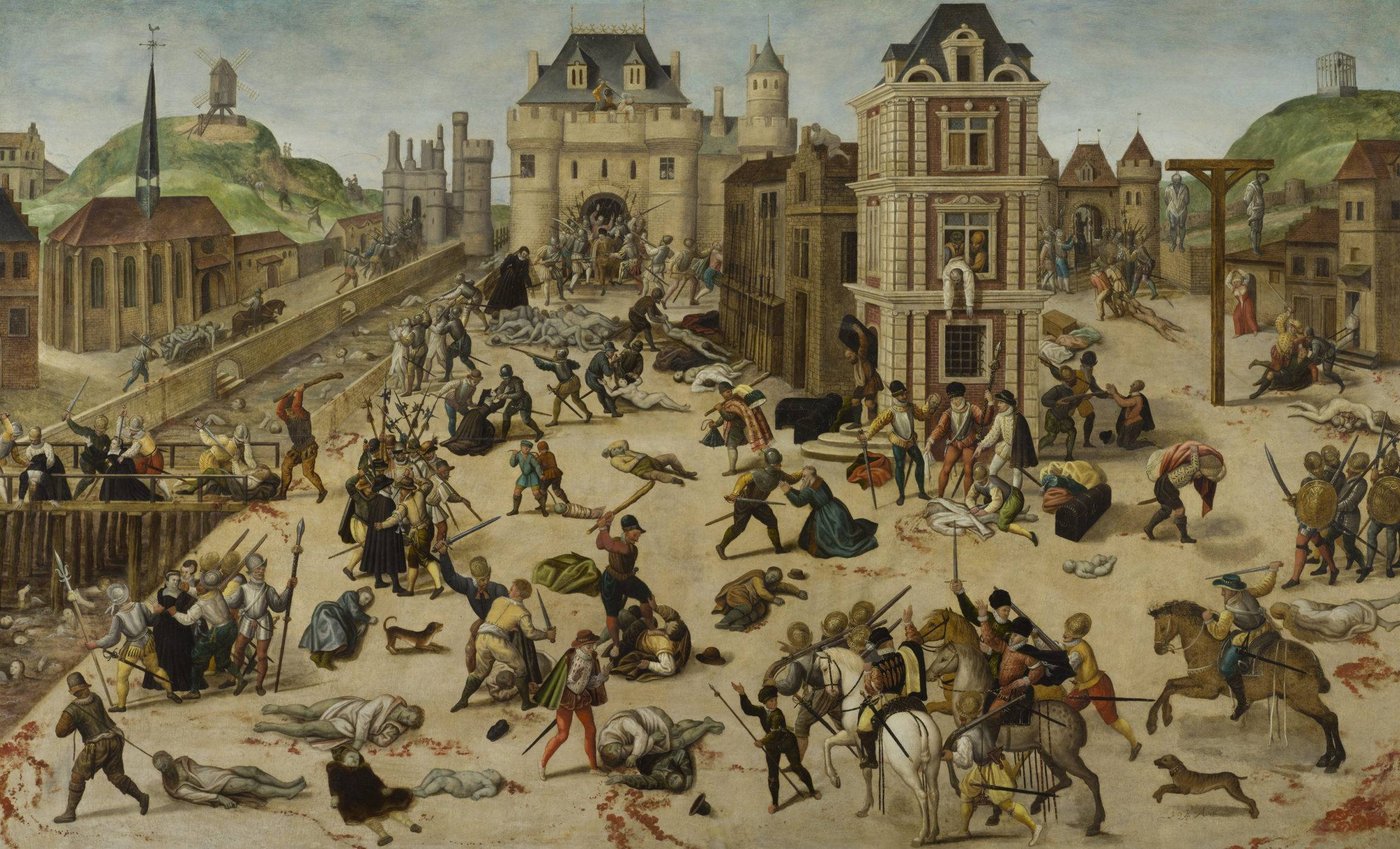
The Reformation became extraordinarily violent. In France, the Protestants known as Huguenots were concentrated especially in the south and west, and many of them were educated, prosperous, and well connected among the middle class and the nobility. Their growing influence threatened royal authority. On St. Bartholomew's Day in August 1572, a massacre that began in Paris spread across the country; thousands of Huguenots were killed, by some estimates tens of thousands. Many survivors fled to England, the Netherlands, and the German states, and an even larger exodus followed in 1685, when Louis XIV revoked the Edict of Nantes that had guaranteed Protestant worship, and perhaps two hundred thousand Huguenots left France. Their departure weakened France and strengthened its rivals. Skilled, educated, and industrious people carried their expertise in weaving, watchmaking, finance, and trade into Protestant countries, and their migration contributed directly to the economic rise of the societies that received them.
Eventually Europe descended into the Thirty Years' War, which ran from 1618 to 1648. Catholic and Protestant forces fought across the continent, and the conflict devastated entire regions; some parts of Germany lost a third or more of their population to fighting, famine, and disease. Religion was central to the war, but geopolitics shaped it just as much. Catholic France, under Cardinal Richelieu, could fund and support the Protestant armies of Sweden, because the Catholic Habsburg Empire posed a greater strategic threat to France than any heresy did. Faith and imperial power had become impossible to separate. The Peace of Westphalia that ended the war in 1648 closed the great cycle of religious warfare, reaffirmed the right of rulers to determine the religion of their own territories, and allowed the Protestant societies of the north to develop on their own terms.
9Press, Musket, Banknote
Three technologies accelerated their rise. The first was the printing press. Direct access to God required direct access to scripture, and Gutenberg's press, together with translations like Luther's German Bible, made scripture widely available. Literacy became a spiritual necessity: a Protestant had to read. That created an enormous educational advantage, because people who learned to read the Bible could read everything else too: classical texts, political works, scientific writings, and practical manuals. Self-education expanded and literacy spread. The second technology was the musket. The medieval social order had rested partly on the armored knight, a figure who required wealth, years of training, expensive equipment, horses, and aristocratic status, so that warfare itself reinforced hierarchy. Firearms changed that relationship. An ordinary person could learn to use a musket far more quickly than he could become a knight, and gunpowder weapons could pierce armor; military power became available to disciplined common people, and the aristocratic warrior lost his monopoly. The third technology was the banknote. Gold placed natural limits on wealth, since there was only so much of it, and physical coinage restricted the scale of exchange. Banknotes, pioneered in Europe by Sweden's Stockholms Banco in the 1660s and issued by the Bank of England from 1694, abstracted wealth. Once wealth became symbolic, it could expand far beyond the quantity of metal in circulation; work, saving, debt, credit, and future production could all be turned into money, and in principle accumulation became unlimited.
That last change mattered because traditional workers did not respond to higher wages by working endlessly. If a person needed one hundred dollars and could now earn it in two hours instead of eight, he might simply work two hours and go home. Traditional life had natural limits: people worked enough to live, and then they stopped. The Protestant ethic changed that psychology. Work was no longer only a means of survival; it became a calling. Saving became a virtue and accumulation became evidence, and the believer did not stop after earning enough, because there was no spiritual point at which enough had been reached. The mission was to work harder, save more, waste nothing, reinvest, and continue. John Wesley, the founder of Methodism, condensed the spirit of it into three rules in a famous sermon on the use of money: gain all you can, save all you can, give all you can. The first two rules took root far more deeply than the third, and that imbalance is the whole story. Protestants who worked hard but refused luxury produced enormous pools of savings, which flowed into banks and from there into commerce, industry, government finance, war, and empire. The Netherlands became one of the first great expressions of this system, England followed, and the United States later carried it further than either. And gradually the ethic conquered societies far beyond Protestant religion itself. People no longer needed to believe in Calvin, understand predestination, or study theology. The behavior outlived the belief: work hard, save, accumulate, measure yourself by success, treat time as money, treat idleness as failure, treat wealth as proof of worth and poverty as proof of weakness. The religious roots disappeared from consciousness, but the psychological structure remained.
10The Iron Cage
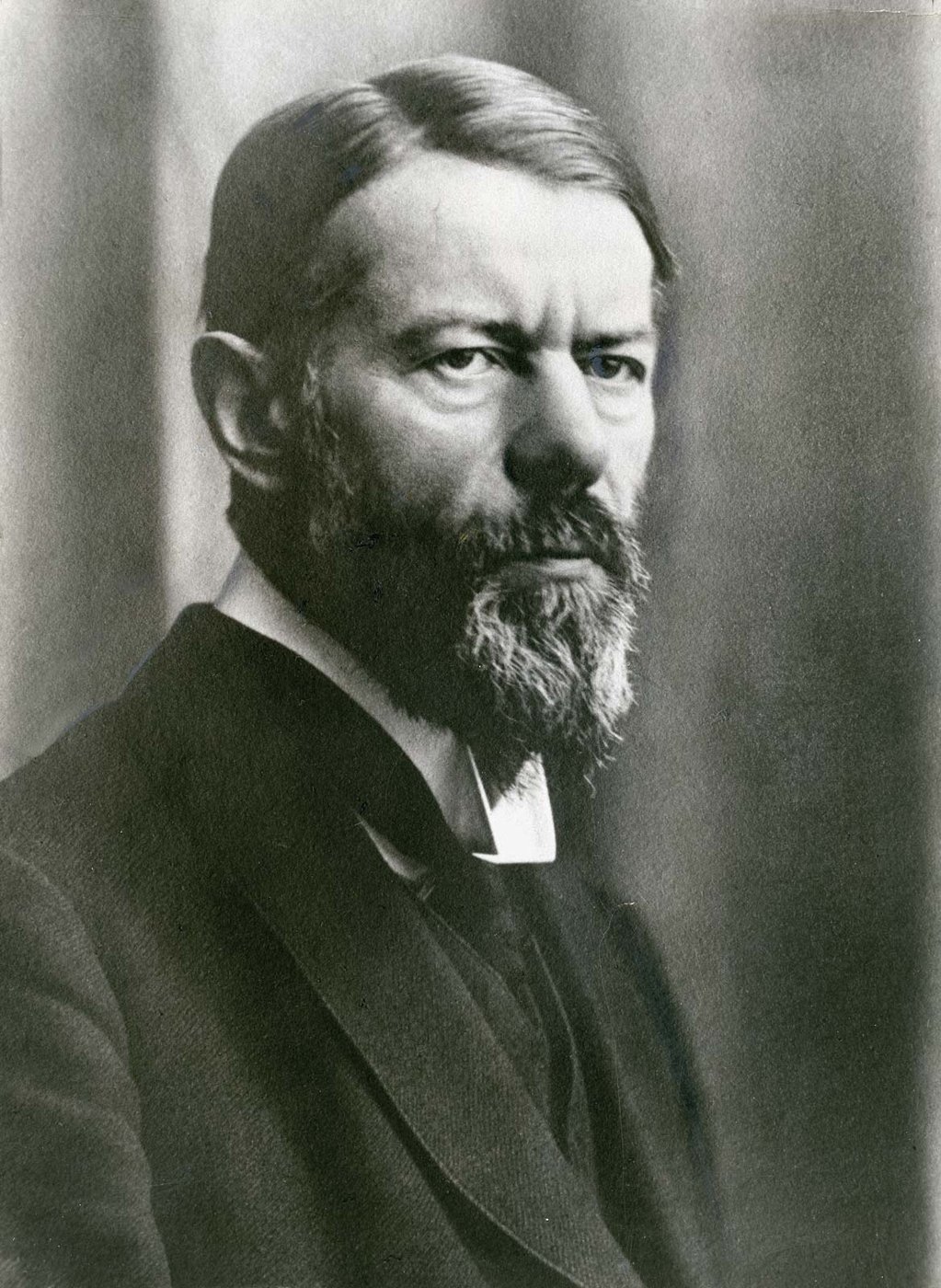
By around 1900, Protestant civilization had become globally dominant. Britain, Germany, and the United States stood among the most powerful industrial societies on earth, and capitalism, industrialization, and Protestant culture seemed to have triumphed together. At that moment three thinkers, Max Weber, Georg Simmel, and Émile Durkheim, began examining what the triumph had cost. Weber, in The Protestant Ethic and the Spirit of Capitalism, published in 1904 and 1905, traced the relationship this essay has followed. Predestination created a terrifying uncertainty; the believer had to consider himself chosen, doubt could be read as insufficient faith, and the safest response was intense activity in the world. Work dispersed doubt, success created confidence, and discipline created certainty, so that the believer proved divine favor through daily struggle. Weber called the result worldly asceticism. The believer accumulated wealth but did not enjoy it: luxury was restricted, consumption restrained, and money flowed into savings and investment. Traditional morality had limited accumulation by attaching obligations to wealth, but the Protestant ethic dissolved those limits. Acquisition became legitimate, then sacred; wealth no longer demonstrated selfishness but discipline, and the richer person could appear more favored by God.
The result was an extraordinary economic machine, and Weber saw the trap inside it. The Puritan chose to work in a calling; later generations were forced to live inside the world the Puritan created. Religious asceticism left the monastery and entered everyday life, and the entire world came to be organized through discipline, calculation, labor, and production. Factories followed that logic, and so did schools, bureaucracies, families, and time itself, until grades, examinations, salaries, productivity targets, schedules, rankings, and measurements all became extensions of the same rational order. The original believer entered this world voluntarily, because work connected him to God. His descendants were simply born into it, inheriting the machine without the faith. Weber borrowed an image from the Puritan writer Richard Baxter, who had said that concern for worldly goods should rest on the saint's shoulders like a light cloak that can be thrown aside at any moment. Fate, Weber wrote, decreed that the cloak should become an iron cage. Money was supposed to be a tool and became the prison; work was supposed to reveal grace and became compulsory; discipline was supposed to connect the believer to God and became bureaucracy; production was supposed to demonstrate a calling and became endless expansion.
Weber feared a civilization in danger of losing its soul, populated by what he called specialists without spirit: experts who know how but not why, administrators who manage systems without moral direction, workers who perform tasks without meaning, consumers who accumulate without satisfaction. Such a civilization imagines itself superior because its machines are powerful and its institutions efficient, while inside it becomes petrified, a zombie civilization whose machine keeps moving after everyone has forgotten what it was for. Weber saw several possible responses: continued emptiness, a return of old religion and theocracy, or new prophets who would channel anger at capitalism into new political movements. The twentieth century supplied the third in two forms, communism and fascism, each of which rejected parts of the capitalist order, promised meaning beyond liberal individualism, and tried to mobilize a collective purpose. Fascism was defeated in the Second World War and communism in the Cold War. Capitalism remained. The spiritual problem did not go away.
11The Price of Everything
Georg Simmel, in The Philosophy of Money, published in 1900, approached the problem through money itself. Money performs one of the greatest acts of abstraction in human history: it takes relationships, values, desires, labor, objects, time, and status and translates all of them into one symbol, until the symbol becomes more real than the things it stands for. Money tells us what matters. A priceless object is strangely hard to understand until someone puts a price on it. A career feels meaningful because of its salary, an education valuable because of the income it promises, a city desirable because of its property values, and a person successful because of his net worth. Money reaches across every individual difference and creates a shared reality where none existed before. That is why, on this account, it can replace God. God once unified the world symbolically; money now performs a similar function. People may disagree about religion, beauty, morality, politics, and truth, but everyone understands a price, and so money becomes the common language of the whole civilization.
12Alone Before God
Émile Durkheim examined another consequence, starting from a statistical puzzle he set out in his 1897 study Suicide: why were Protestants more likely to take their own lives than Catholics? The difference, he concluded, lay in social connection. Catholic life was communal and ritualized; the believer belonged to a larger structure, and faith did not have to be worked out alone. Protestantism was individualistic. The believer had to struggle personally with God, meaning, salvation, and doubt, and that struggle generated enormous energy, but it also generated loneliness. A person could now fail alone, doubt alone, suffer alone, and lose faith alone. Disconnection is dangerous because human beings need to feel valuable to a community. When someone comes to believe that no one needs him and no one would care whether he lived or died, life becomes easier to abandon. Put the three thinkers together and the pieces form a chain. Anxiety pushes people to work. Work feeds capitalism. Capitalism intensifies competition. Competition weakens social bonds. Weak social bonds create disconnection, and disconnection creates despair. The very anxiety that makes the economic system productive, the lecture concludes, can make human life unbearable.
13The Hoarder and the Billionaire
Capitalism therefore carries a paradox at its core: it needs dissatisfaction. A completely satisfied person has little reason to work endlessly. If someone is content with enough food, a modest home, family, friends, and leisure, the economic machine loses its energy. The system needs people who want more: more income, more status, more property, more achievement, more security, more recognition, with the goal always just beyond reach, and a new goal appearing the moment the old one is reached. That is why accumulation has no natural stopping point. A billionaire does not necessarily stop at one billion, and fifty billion does not bring a feeling of completion. The race itself becomes the only source of meaning, and when the race stops, emptiness appears.
The lecture offers a thought experiment to show how strange this is. Imagine a person who fills every room of a house with newspapers. Society would call it hoarding; the person would be told that anxiety had produced a disorder, and would be offered help. Now imagine another person who accumulates millions of dollars without using them. One million becomes two, two becomes ten, ten becomes one hundred, and the money sits untouched while its owner dedicates a whole life to acquiring more. Society calls this success. The psychological structure may be the same, but one form of accumulation is treated as an illness and the other is worshipped. That reveals the deepest contradiction of all: modern civilization cannot recognize its own obsession, because the obsession is the foundation the civilization stands on. The world has never been richer, its technology never more advanced, communication never easier, travel never faster, education never more accessible. Yet anxiety, depression, loneliness, and despair sit at the center of modern life. The system produces wealth while consuming meaning. It connects devices while disconnecting people, creates abundance while preserving fear, grants freedom while demanding endless work, and promises satisfaction while depending on permanent dissatisfaction.
14Three Ways to Make People Work
There is a blunter way to tell the same story, and a companion lecture tells it by starting from a question a ruler might ask: how do you get an entire society to work hard, year after year, generation after generation? Historically, the lecture answers, there have been three solutions: war, religion, and civilization. Each works for the same underlying reason. All three give people structure, meaning, and purpose, and a person with structure, meaning, and purpose works harder than a person without them. But each solution also creates a serious problem. War means killing people. Religion asks people to believe things that cannot be proven. And civilization, pushed to its logical extreme, turns into something uglier: the conviction that one's own people are simply superior to everyone else and therefore entitled to do as they please, whether the people in question are Russians, Chinese, or anyone else. That conviction leads naturally to imperialism, the claim that a superior civilization has a duty to conquer and civilize the rest of the world, which Rudyard Kipling's generation called, without irony, the white man's burden. Pushed further still, it becomes fascism, the belief that war and conquest are themselves the highest good. For most of human history, war, religion, and civilization organized society and motivated work, and they caused enormous suffering in the process.
Over time, all three grew more abstract, and the lecture's explanation is scale: a more abstract idea can hold the loyalty of a larger population, which is what a mass society requires. Religion shows the pattern most clearly. The earliest religions were polytheistic, and their gods looked and behaved very much like people: Zeus, Athena, and Hera had tempers, rivalries, and love affairs, recognizably human, only larger. Over centuries polytheism gave way to monotheism, and God became abstract, a single and distant idea stripped of the human faces the older gods had worn. A concept that abstract can unite far more believers at once, and a population bound by one shared abstraction can be organized and motivated more efficiently than one arguing over a crowded pantheon. Once societies had learned to make abstraction do that kind of work, a new abstraction became possible: money. Why center a society on war, religion, or civilization at all, the lecture asks, when you could center it on money instead? That reorganization is capitalism, and the story the earlier chapters traced through the Reformation is the story of how Europe stumbled into it. Its results were spectacular. Capitalism produced the industrial revolution, and societies organized around money grew wealthier, more productive, and more industrialized than any society organized around war or religion had ever been.
15Three Problems of Capital
But putting money at the very heart of a civilization creates problems of its own, and the lecture names three. The first is that capitalism is all-consuming. Capital exists to grow capital, and profit exists to produce more profit, regardless of the effect on society. Pursued without limit, that single instruction can consume the very things continued growth depends on, workers, communities, and ultimately a livable planet. The second problem is that money consolidates. Imagine a room in which everyone has a million dollars. What is the fastest way for them to grow their money? Pool it, combine it into one large sum, and invest it together rather than separately. Money left to itself wants to concentrate, and an economy built purely to grow capital tends, if nothing restrains it, toward fewer and fewer hands holding more and more of it, until in the limit one person holds it all.
The third problem is what the lecture calls dehumanization, or alienation. To be human is to be a complicated, many-sided creature, capable of creating and of loving. Inside a system organized around capital, a person's worth narrows to a single number: his production value, or the balance in his bank account. Everything else about him, his kindness, his curiosity, his imagination, becomes economically invisible, and over time it becomes invisible to him as well. These three problems, the lecture notes, are far from the only ones, but they are enough to explain why the most famous critic of capitalism thought it could not last.
16The Orphan in the Factory
Karl Marx, in the Communist Manifesto of 1848, diagnosed all three problems and proposed a solution: instead of putting money at the center of an industrial society, put the worker there. What made his argument revolutionary was not only the proposal but the claim that it was inevitable, a natural stage in a historical cycle of the kind Hegel had described, in which capitalism itself would generate the conditions for its own successor. To show how, the lecture asks its students to imagine their way into a single life. Imagine that your parents have died. You are sixteen, seventeen, or eighteen, with no one left to support you, so you go to work in a factory to survive. How does that feel? The students answer readily: depressing, lonely, bitter. Marx's word for it was alienation. And from alienation, Marx argued, something else grows: political consciousness. The worker starts asking why. Why is this happening to me? Why has the government abandoned me? Why has society abandoned me? What can I do about it?
The answer is to spread ideas and to organize, and organizing reveals something the isolated worker never fully saw. The capitalists own the factories and the capital, but it is the workers who do the actual work, and without them the factories cannot run. United, workers can win demands that no individual could ever win alone. That is the chain of Marx's argument: capitalism produces alienation, alienation produces political consciousness, consciousness produces solidarity, solidarity produces revolution, and revolution produces a society organized around the worker rather than around money. History did not follow the script exactly. Marx expected revolution first in the most industrialized societies, Germany above all, since Germany was far more industrial than Russia or China. Instead, communist revolutions succeeded in Russia and in China, the least industrialized of the three, and today it is common to say that Marx was simply wrong.
17The Worker at the Center
The lecture argues the opposite: think about it deeply, and Marx was right, only in a different way than he expected. After the Second World War, nearly every industrial society, including the ones where no communist revolution ever took place, adopted much of what he had argued for. They called it socialism, or social democracy, or the welfare state, rather than communism, but the underlying logic was his: the worker belonged at the heart of society. Why did they do it? Because they had come to accept that workers create real value, while money by itself creates nothing; it merely produces more money, speculatively. If the workers are the source of a society's wealth, they have to be treated accordingly. So, in the United States and across Western Europe, the worker moved to the center. Unions grew powerful enough to win political reforms, and the whole society was geared toward improving the lives of the working and middle classes. Health care improved, public schools strengthened, and universities became cheap, in some places almost free. On the lecture's account, the 1950s, 1960s, and 1970s were the high-water mark of ordinary working people in the history of industrial society.
18The Revolt of the Elite
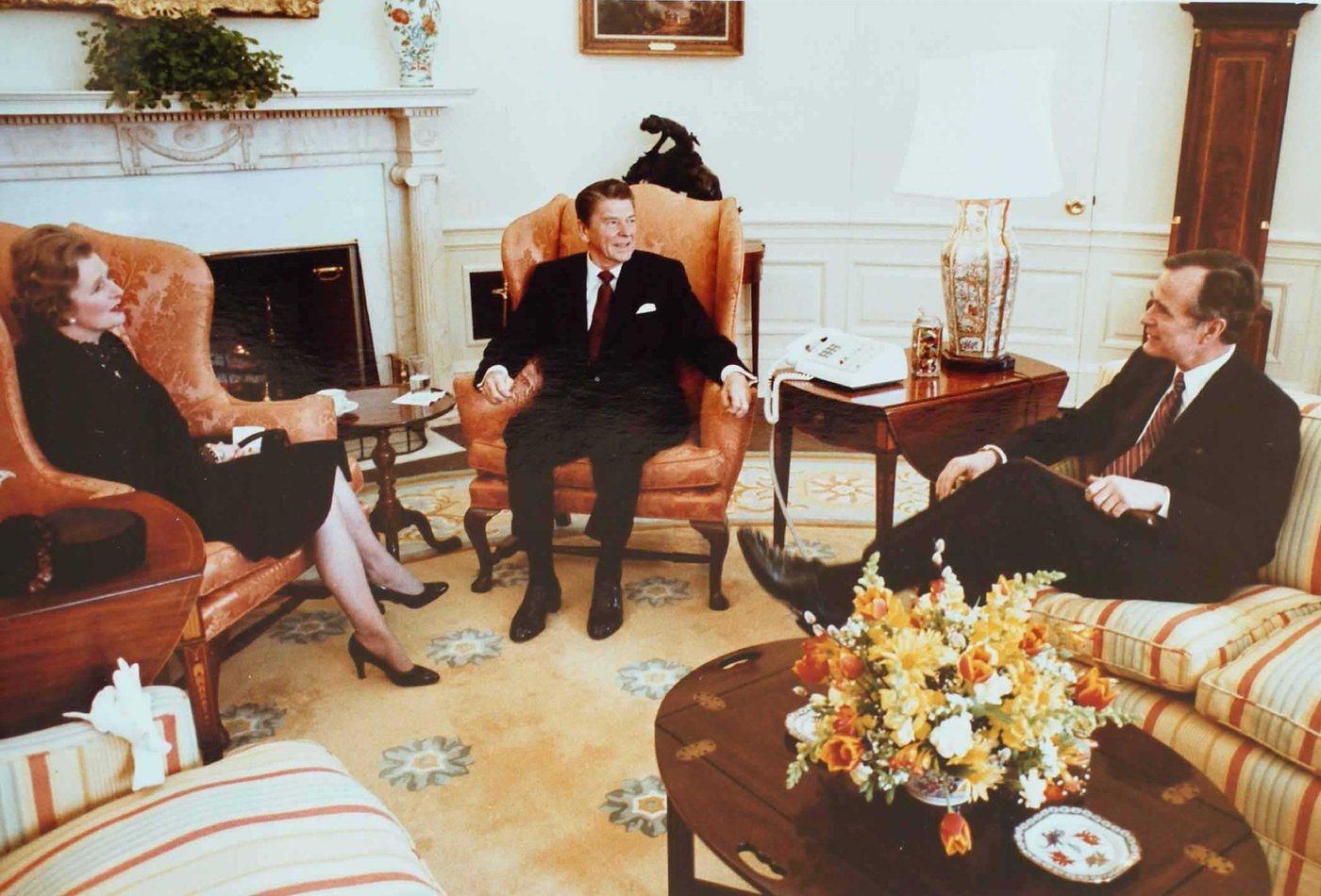
That arrangement did not last, and the lecture's explanation for why is pointed. Starting in the 1980s came what it calls the revolt of the elite. A society organized around the worker tends, almost by design, toward equality, and equality is exactly what an elite does not want; an elite wants difference, power and money concentrated in its own hands. In the United States, the revolt took the form of the Reagan revolution and the birth of neoliberalism, free-market capitalism revived; in Britain it was called Thatcherism. Its scale can be measured in a single ratio. In the 1970s, the lecture says, the average American chief executive earned around a million dollars a year, a very comfortable income and about twenty times what the company's average worker earned; today the average chief executive earns closer to twenty million dollars, some two to three hundred times the average worker's pay. The Economic Policy Institute, which has tracked the ratio at the largest American firms for decades, puts it at about 21 to 1 in 1965 and about 290 to 1 in 2023. Inequality did not simply grow after the 1980s. It exploded.
To carry out that shift, the lecture argues, the working and middle classes first had to be moved out of the center of society, and the instrument used to move them was a new organizing idea: the consumer. In the 1950s, 1960s, and 1970s, the implicit promise a government made its citizens was a good, stable job that a person could hold for an entire working life. From the 1980s on, the promise quietly changed. What governments offered instead was low prices and an endless selection of goods. It sounds like a small shift, and it was in fact a revolution in how a society organizes people politically. A worker, to defend his interests, needs political consciousness: the capacity to organize, to unify, and to act together with others in the same position, which is everything the chain from alienation to solidarity required. A consumer needs none of that.
19Five Hundred Millionaires
To show why, the lecture poses a second thought experiment, one that mirrors the first and inverts its ending. Imagine an entire school of five hundred students, and imagine that every one of them is suddenly handed a million dollars. What happens next? The first thing most people do is buy a house, a perfectly reasonable purchase. Then furniture. And then, almost immediately, something else: they photograph the house and post it online so everyone can see. Once one student's new house is visible to everyone, what do the others want? A house of their own, and a bigger one, and they post pictures of that. Soon the whole school is locked in a competition, each purchase escalating the next, everyone trying to outdo everyone else in full public view. A million dollars sounds like a fortune, but it is not enough to win a competition with no ceiling, so people begin to borrow, going into debt to keep up. And at the end of it, does anyone in that school still eat lunch together, share notes, or help one another with homework? Or has everyone come quietly to resent everyone else? That, the lecture says, is consumerism: not simply buying things, but a competition for prestige that turns five hundred people who might have organized together into five hundred rivals who can no longer stand one another, each one isolated, optimized, and unable to act in solidarity with anyone.
Consumerism also teaches a habit of mind the lecture calls economic logic: seeing the whole world, including relationships that have nothing to do with money, through the lens of capital. Meeting someone new, the question quietly shifts from who is this person to how much is this person worth; considering whom to date, the question becomes not whether someone is kind but how much money they have. The lecture turns the point on its own students. Why are you in school? The honest answer, more often than not, runs along a single line: good grades lead to a good job, a good job leads to money, and money buys the things worth posting. Is that the only reason to go to school? A generation raised inside a worker-centered society might have answered differently: school as a place to open the mind, to learn to think critically, and to build an imagination, apart from any job it might lead to. The lecture's suspicion is that this older answer has been trained out of people, one generation at a time, and that its students, like everyone else, have been taught to believe that the consumer's way of thinking is the only way there is.
20The Perfection of Slavery
If all this holds, the lecture says, then what it has described has a name: the perfection of slavery. Why perfection? Because a slave who knows he is a slave will, eventually, rebel, just as the orphaned factory worker in the first thought experiment eventually organized. A person who does not recognize his condition as a form of bondage, who has been taught to want it, to choose it, and to compete eagerly for a slightly larger version of it, has no reason to rebel at all. The lecture connects this to Francis Fukuyama's famous argument, made as the Cold War ended, that history had reached its endpoint in liberal democracy and the market. Read through the lens of consumerism, Fukuyama's end of history describes a system that finally gives the few at the top what they want while leaving everyone else unable, and unwilling, to protest it.
Here the two halves of this volume's story meet. Weber's Puritan entered the iron cage voluntarily, because work connected him to God, and his descendants were born into the cage without the faith. The consumer goes one step further: he decorates the cage, photographs it, and posts the photographs, and he would be offended to hear it called a cage at all. Is that actually how the modern world works, how school works, how work works, how an ordinary afternoon of scrolling and comparing works? That is the question the lecture leaves standing at the end of class, the one it asks its students to carry out the door unanswered, and it is the question the final chapter of this volume takes up.
21The Monastery That Covered the World
The Protestant Reformation began as a rebellion against corruption, and it gave people real gifts: literacy, individual conscience, direct access to scripture, spiritual equality, and freedom from clerical monopoly. It also laid the psychological foundations of a new economic order, link by link. Direct access created individual responsibility; responsibility created anxiety; predestination deepened the uncertainty; uncertainty created the need for signs; wealth became a sign; work became a calling; saving became virtue; accumulation became evidence; money became the universal symbol; capitalism emerged; and in time the consumer replaced both the believer and the worker. The tragedy is that the religious meaning gradually disappeared while the economic discipline remained. People still work as if work proves salvation, though many no longer believe in salvation. They accumulate as if wealth proved divine favor, though many no longer believe in God. They sacrifice their lives to a calling they often cannot name. The monastery expanded until it covered the whole world: the office became a cell, the school a factory, the city a machine, and money became God. The believer disappeared, and the discipline remained.
That leaves the civilization facing a profound question: can capitalism survive without destroying the human spirit? The system appears almost impossible to defeat, since the twentieth century's attempts to replace it produced catastrophic violence and failed. But remaining is not the same as resolving its contradictions. One possible future is the zombie society, in which people go on working, consuming, scrolling, competing, and accumulating without knowing why, while the system grows more efficient and the human spirit grows weaker. Another is a return of theocracy. When people become exhausted by freedom, anxiety, isolation, and meaninglessness, they may voluntarily return to authority, accepting hierarchy in exchange for certainty, surrendering autonomy in exchange for community, and accepting religious control because it gives life a purpose. Theocracy can be oppressive, but it offers what capitalism struggles to provide: meaning, belonging, ritual, connection, and purpose. The modern individual may therefore face a terrible choice between freedom without meaning and meaning without freedom. Mass society sharpens the dilemma, because billions of people must be fed, employed, educated, and governed, and large populations require systems, systems require standardization, and standardization limits freedom. Capitalism organizes billions through money; a theocracy could organize billions through faith; and escaping one system may simply produce another prison.
So the story bends back on itself. The Reformation liberated the individual from the Catholic Church. That liberation created anxiety, anxiety created capitalism, capitalism built the iron cage, the cage produced disconnection, and disconnection created a longing for new authority, so that the rebellion against theocracy may end by preparing its return. History moves in circles because every solution creates new problems. The Catholic Church gave people meaning but denied them direct freedom. Protestantism gave them freedom but burdened them with personal anxiety. Capitalism turned that anxiety into productive energy but emptied the world of spiritual purpose. The future depends on whether humanity can recover meaning without surrendering freedom, and build community without rebuilding tyranny. Until then the machine continues. People work, save, accumulate, compare, compete, and grow richer, and somewhere beneath all the wealth the unanswered anxiety remains.