1The Rider on the Giant
In the third Mad Max film, Beyond Thunderdome, the villain who runs the underground engine of Bartertown is not one man but two. Master Blaster is a hulking giant in an iron helmet, and riding on his back is a small, frail man who steers every step the giant takes. From a distance you see only the muscle. You have to look closely to find the one doing the steering. Alex Krainer, a former hedge fund manager turned author and commentator, uses that image to describe the Western empire. In his telling, London is the Master and the United States is the Blaster. Washington supplies the muscle and the bombs, and takes the blame. The City of London supplies the plan, and almost always claims to be neutral. Somewhere in the same picture sits Israel, which Krainer sees as neither master nor blaster but a creation of the British Empire that London never stopped steering. He did not arrive at that picture through theory, he told Pascal Lottaz of Neutrality Studies. He used to work in hedge funds and mind his own business, believing, apart from the wars in the former Yugoslavia and the attacks of September 11, that the world was evolving in generally positive directions, though he admits he always had something of a conspiratorial cast of mind. What changed his view was one man, whom he kept running into in the course of his work.
2The Fund Manager Who Praised Putin
In 2005, Krainer met Bill Browder, who was then running Hermitage Capital Management, the largest foreign-owned investment fund in Russia. Browder, Krainer recalls, was the first person he had ever heard say anything positive about Vladimir Putin. The point was not that Putin was a pleasant man or dressed well. It was that Browder's whole business model depended on him. Hermitage would buy large stakes in Russian companies whose shares were cheap because of corruption, investigate how management was stealing from them, and publish the findings in the Russian and international financial press. In case after case, Krainer says, Putin's government then stepped in: it replaced the management, closed the legal loopholes that had made the theft possible, and changed the rules, with an evident intent to clean up corruption. That surprised Krainer, because until then he had assumed, like most people in Western finance, that Putin was an errand boy for the oligarchs. Browder's story suggested the opposite: a president using a foreign fund's investigations as an instrument against the very oligarchs the West imagined him serving. Over the following decade, Browder's story changed completely, and the change is what set Krainer on the path that led to the conversation this volume reports.
3Red Notice, Read Twice
By the mid-2010s, Browder had become, in his own description, Putin's most prominent enemy in the West. His fund was expelled from Russia in 2005 and he was barred from the country; in his account, Russian officials then used his fund's companies to steal some 230 million dollars in a tax fraud, and his lawyer, Sergei Magnitsky, who exposed it, was arrested and died in pretrial detention in 2009 after being denied medical care. That account led the United States Congress to pass the Magnitsky Act in 2012, sanctioning Russian officials, and similar laws followed across the West. In 2015 Browder told the story in Red Notice, a bestseller written like a spy thriller. Krainer's former wife urged him to read it, promising it would change how he felt about Putin and Russia, and on a first reading it did exactly that. It is very well written, he concedes, and by the end you believe Browder is a hero, Putin a villain, and Russia a terrible place: the standard Western view of Russia, he says, or at least the one being sold.
But Krainer knew too much of the earlier story, and something did not fit. So he read the book again, line by line, the only book he has ever read twice, and the experience was like walking out of a shop and realizing you have been cheated. On the second reading he counted what he calls a hundred red flags and a hundred falsehoods, and he concluded that the book was part of an effort to maneuver the West toward war with Russia. Browder, in his account, was only the visible face of a much larger and more powerful network, which in his telling included Tony Blair and the HSBC bank and the people who control it, and which was probably centered on the City of London. Russian courts, it should be said, convicted Browder and the dead Magnitsky of tax evasion in absentia in 2013, a posthumous trial widely condemned in the West, and Browder rejects every charge. The two accounts could hardly be further apart, and Krainer's is very much the minority one in the West. But he thought somebody needed to unmask the network he saw, and that he might know more of the story than most.
4A Book Nobody Bought
So Krainer wrote his own book, The Killing of William Browder, and published it in 2017. By his count it sold to about three people on Amazon, since he had no idea how to promote a book. Then the historian Jeremy Kuzmarov read it and wrote a favorable review for the Huffington Post, which felt to Krainer like a look-mom-I'm-on-television moment, until the review vanished three hours after it went up. A week later, Jonathan Winer, a former adviser to John Kerry at the State Department, wrote to Amazon asking for the book to be removed, and Amazon, Krainer says, delisted it with no questions asked, five weeks after publication. A small publisher, Red Pill Press, picked it up, spent nine months checking every reference to make sure it could not be sued, and republished it under a softer title, Grand Deception. Five weeks later it was banned again, on Amazon, on Barnes and Noble, and everywhere else it went out.
The bans did what promotion could not. An anonymous book that might have found a hundred readers over the years suddenly drew attention; people wanted to know what was in it, and Krainer found himself on podcasts explaining it, which is how he entered what Lottaz calls the commentariat. He believes Browder's credibility has since been badly damaged in the eyes of many, and that the claim that powerful people were pushing the West toward war with Russia, radical when he made it in 2017, no longer sounds radical at all. Lottaz's rueful reply was that it now feels less like a warning than a forecast running about six months behind events. But why would one fund manager's book about another matter so much? Krainer's answer is that Browder's story sits on top of the largest looting operation in history.
5The Largest Looting in History
When Russia moved from communism to capitalism in the 1990s, Boris Yeltsin governed largely by decree, and according to Krainer most of those decrees were written by Western advisers working alongside a number of Russian collaborators. Trillions of dollars of Russian wealth left the country. As in every target nation, Western financial interests set up their own local oligarchs, and in Russia these were the so-called seven bankers, the semibankirshchina, men like Boris Berezovsky and Mikhail Khodorkovsky, who for a time were more powerful than the state itself. Krainer describes them as nominee managers for Western financial interests, and he names names: Edmond Safra, whose bank co-founded Browder's fund; Jacob Rothschild, whose ties to Khodorkovsky are on the public record, including an arrangement under which Khodorkovsky's controlling shares in Yukos passed to Rothschild's custody when he was arrested; and George Soros. These, he insists, are not conspiracy theories but matters of record. The terms of many such arrangements were private, so their exact nature may never be known, but the direction in which the wealth flowed is not in doubt.
The West turned against Putin, on Krainer's account, earlier than most people remember. In 2004, more than a hundred prominent Western intellectuals and public figures signed an open letter denouncing him for leading Russia back toward authoritarianism and empire. Lottaz traced the more familiar milestones: Putin's speech at the Munich Security Conference in 2007, when he warned that NATO's expansion would end in war; the war with Georgia in 2008; and the Maidan uprising in Kyiv in 2014, after which Putin became, in Western eyes, irredeemable. But Krainer traces the hostility to something more basic than any of these: the moment Putin took away the oligarchs' political power, and with it the West's control over Russia's wealth.
6The Round Table
When Putin came to power, he called the oligarchs to a large round table and laid down new rules. Whatever they had taken, they could keep; there would be no renationalization of assets. But they had to manage their companies properly, pay their taxes, treat their workers respectfully rather than as disposable labor, and, above all, stay out of politics. Business was their domain. Politics belonged to someone accountable to the Russian people. At first, Krainer says, the West believed it had brought its own man to power, as Krainer himself had once believed. Tony Blair visited Russia nine times in Putin's first two years, by Krainer's count, and in 2003 Putin was given a state visit to Britain, a rare honor for a Russian leader, riding through London in an open carriage beside the Queen.
But once Putin was sure of his footing, with the backing of the military, the intelligence services, and the courts, he began holding the oligarchs to his rules. Some sued the state, and the state won every case. Rumors spread that he planned to seize their assets, rumors Krainer reads as an invitation to the oligarchs to get rid of their president. Putin called them together a second time and repeated himself: there would be no renationalization, the rumors were false; run your companies well, pay your taxes, treat your employees decently, and stay out of politics. Nobody had gone to prison, though a few had fled to Israel. Then Khodorkovsky, whom Krainer calls Jacob Rothschild's errand boy, went head on. He built a political movement, Open Russia, and prepared to challenge Putin for the presidency. Instead he was arrested in 2003, convicted of fraud and tax evasion, and spent about ten years in prison. When he was released, he went where most of them go, to London, where he still runs Open Russia. That network, as Krainer sees it, has never stopped dreaming of taking Russia back and running it as Yeltsin did, for the benefit of Western finance, broken up if necessary into five, or twenty, or thirty weak fiefdoms controlled from abroad.
7Collateral
The prize is not only oil and gas. Russia's natural resource wealth is estimated at somewhere between seventy-five and ninety trillion dollars, more than any other country on earth. The point of political control, Krainer argues, is to turn that wealth into collateral that Western financial institutions can lend against. Every loan a bank issues is an asset on its balance sheet. Lend a Russian oil company a billion dollars, or ten billion, and the Russian people end up repaying at least double, sometimes triple or quadruple, and with the right financial architecture as much as ten times. A single tanker cargo of a million barrels of crude might be worth a hundred million dollars, and that is all it is worth; but a debt relationship, once created, keeps paying for decades. The resources, in other words, are secondary to the debt, because the debt creates a conveyor belt of cash running from Russia to London, Wall Street, and Paris. And all of it wears an air of legitimacy. We lent you money so that you could develop, the story goes, and now of course you must service your loans; to a Western public it sounds perfectly fair, a lot of propaganda goes along with it, and the story is airbrushed so that Russia appears backward and its industries hopeless without Western capital. Browder, Krainer says, was part of that machine in the 1990s. And when its owners lost their toys, they got very angry, which in his account is why they hate Vladimir Putin.
8The Adviser Who Resigned
One Western adviser stands out in that period for the opposite reason. Jeffrey Sachs, in Krainer's assessment, gave Russia advice with remarkable integrity and tried to play a constructive role, only to be overruled at every step. Sachs had already secured substantial debt relief for Poland, around half of its official debt, and had worked on Bolivia's escape from hyperinflation and debt. For Russia, he argued, the debt was unbearable and needed relief of at least half; the answer from the International Monetary Fund and the World Bank was that Russia would pay every last penny. He argued that Russia should launch its own currency at once rather than keep sharing the ruble with every former Soviet republic, an arrangement that lasted more than a year after the Soviet Union fell apart and let each republic print rubles and spend them while inflation went through the roof. He had also proposed an international fund to stabilize the ruble, as had been done for Poland's zloty, and, as Lottaz recalled from Sachs's own retelling, was all but laughed out of the White House. He was overruled each time, and in early 1994 he did the honorable thing, Krainer says, and resigned.
Others stayed on. Krainer gives a very different kind of mention to the Harvard economist David Lipton and to the Swedish economist Anders Åslund, adding that if hostility to Russia were an Olympic sport, Åslund would hold the gold medal. He points too to advisers connected to the Harvard Institute for International Development, who were investing in Russia while advising it and made enormous returns. On that last point the record supports him: the United States government sued Harvard and two of the project's leaders over their private investments in Russia while running an American aid program there, and Harvard paid more than twenty-six million dollars in 2005 to settle the case. Sachs was the outlier, Krainer concludes, and he deserves to be acknowledged for it. Lottaz drew the larger lesson: Poland's currency got Western backing and Russia's did not, a sign that from the very beginning Russia was never truly taken into the Western camp.
9The Knife and the Standing Ovation
Lottaz recorded the conversation on 29 September 2026, four days after the twenty-fifth anniversary of Putin's speech to the German Bundestag, which he delivered in fluent German and which ended in a standing ovation; it was the high point of Russian and German relations. Two weeks earlier, after the September 11 attacks, Putin had been the first foreign leader to telephone the White House with an offer of support, and Russian cooperation smoothed the American path into Afghanistan. How could Russia have been led to believe that the West was its best friend while the knife went deeper and deeper, Lottaz asked, and how did Putin eventually reverse that trajectory? Krainer's answer begins with history. Russia's leaders know they have been on the receiving end of sabotage, regime-change operations, terrorism, and full-scale invasions from the West for centuries, not only from Napoleon and Hitler but every few generations. In the Gorbachev and Yeltsin years it may still have seemed sensible to copy Western models, because Russia was on its knees and the West looked prosperous. Yeltsin famously came back from a visit to an ordinary American supermarket in 1989 marveling that its shelves held more variety than the stores reserved for the Politburo. Politicians, Krainer observes, are good at climbing bureaucratic ladders and not always careful students of economics or history.
What has looked like Russian naivety since then, he suggests, may be something else. Russia offered to cooperate with NATO, and even raised the idea of joining it, and was never let in. It offered to help build a missile shield. In December 2021 it handed NATO and the United States two detailed treaty proposals for a new European security architecture. Within days of its invasion of Ukraine in February 2022, Russian negotiators were talking with Kyiv about a settlement that, on Krainer's account, would have left Ukraine intact apart from Crimea, in exchange for autonomy for the Donbas and protection for the Russian language. And there were the Minsk agreements of 2014 and 2015, which Russia says the other side never meant to honor. The last time Western powers invaded Russia, some twenty-seven million Soviet citizens died. If the present conflict ends in catastrophe, even a nuclear exchange, Russia will have a written record of every offer it made and every agreement the other side abandoned; a country that may have to send its people to war again needs to be able to show it tried everything else first. Krainer cannot quite decide whether this is naivety or a deep, almost millennial wisdom about dealing with the West, but he leans toward wisdom.
10Why Moscow Keeps Talking
The same logic explains why Moscow still receives Jared Kushner and Steve Witkoff as peacemakers, and why, as of that September, it played along with the idea that Washington is a neutral mediator between Russia and Ukraine, even inviting talk of summits like the one in Anchorage. Commentators in the alternative media, Lottaz admits, keep asking how this is possible. Krainer's answer is strategic. The moment you take a confrontational approach, you unite your enemies against you. When Nikita Khrushchev told Western diplomats that the Soviet Union would bury them, and later pounded his shoe at the United Nations, he only convinced the West that it had no choice but to confront him. Negotiation does the opposite. It gives serious and senior people on the other side, people like Jack Matlock, one of the last American ambassadors to the Soviet Union, a reason to argue for an agreement, and it opens a split between the camp that wants a deal and the camp that wants war. Over time, Krainer suggests, Russia can even strengthen the first camp by offering business: a refinery, an aluminum smelter, a gold mine, wealth that can be shared. Lottaz, for his part, believes Matlock and others like him were entirely sincere about building a proper relationship with Russia after the Cold War; the problem, he argues, is that sincerity does not matter if the system behind it twists every bridge into a tool of the assault. And most people, Krainer adds, have forgotten that Russia and the United States were once close friends.
11The Fleets of 1863
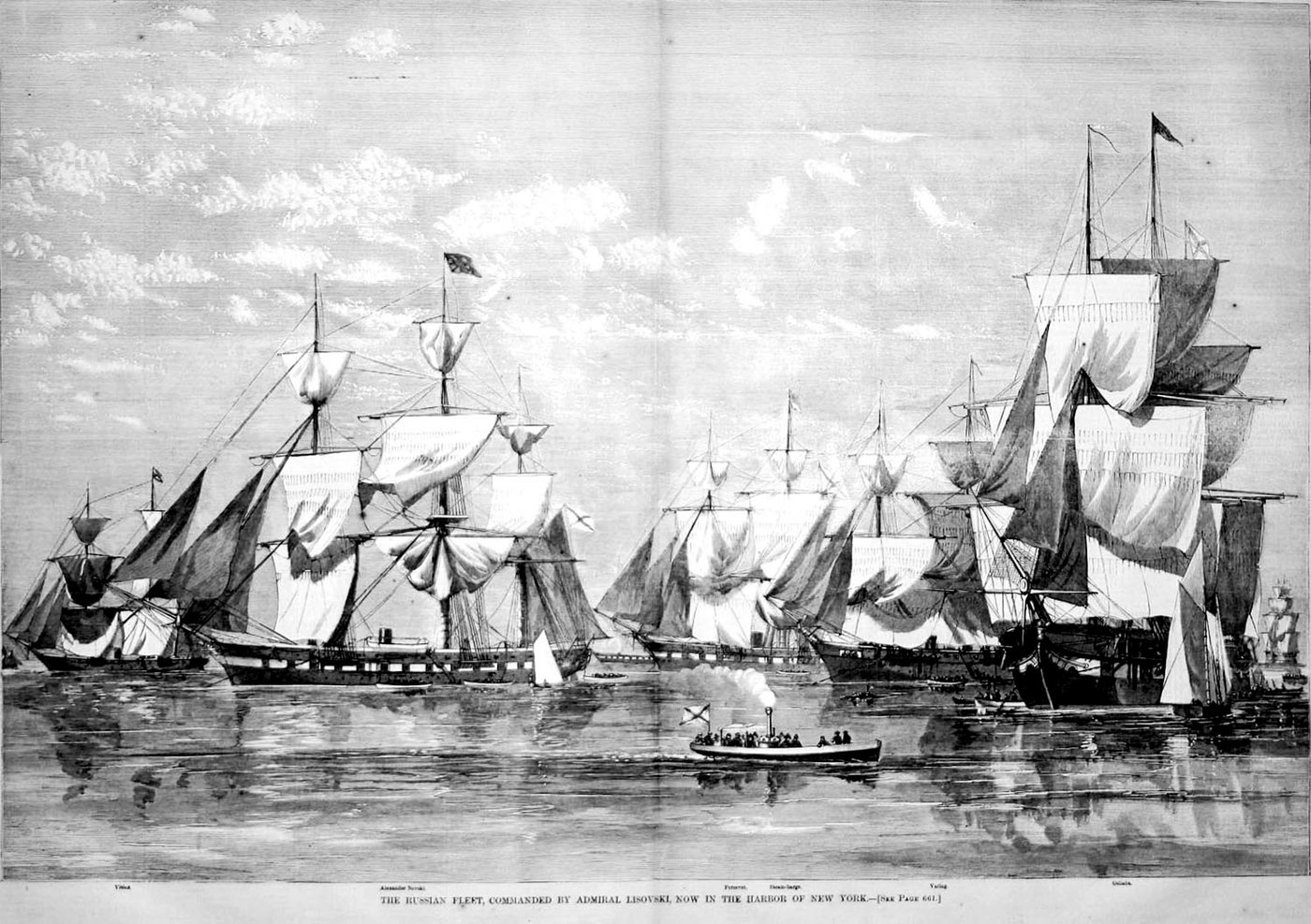
For most of American history, Krainer says, Russia and the United States were friends, and the friendship was part of American popular culture. His favorite example comes from the Civil War. In 1863, when, on his account, London and Paris hoped to see the Union broken in two, Tsar Alexander II sent his Baltic fleet to New York and his Pacific fleet to San Francisco, where they anchored for months. In Krainer's telling, the Tsar placed those fleets at Abraham Lincoln's disposal should Britain or France intervene, and without that backing the United States as we know it might not exist. The visit was real, and it was celebrated in the North as a gesture of friendship at a desperate moment. Historians, however, generally explain it differently: Russia, facing a possible war with Britain and France over its suppression of the Polish uprising of that year, moved its fleets to neutral American ports so that they would not be trapped in their home waters, and no orders placing them under Lincoln's command have ever been found. Whatever the Tsar's motives, Krainer argues that the friendship ended in the early twentieth century, after the Federal Reserve was created and, on his account, British-linked clubs began working their way into American universities, endowments, government bodies, and media, until Russia was slowly recast as the enemy. And the aim, he says, was the same in 1863 as it is toward Russia now: to break a rising power into weak clients that can be managed, played against each other, lent money, and sold weapons.
12The Alabama
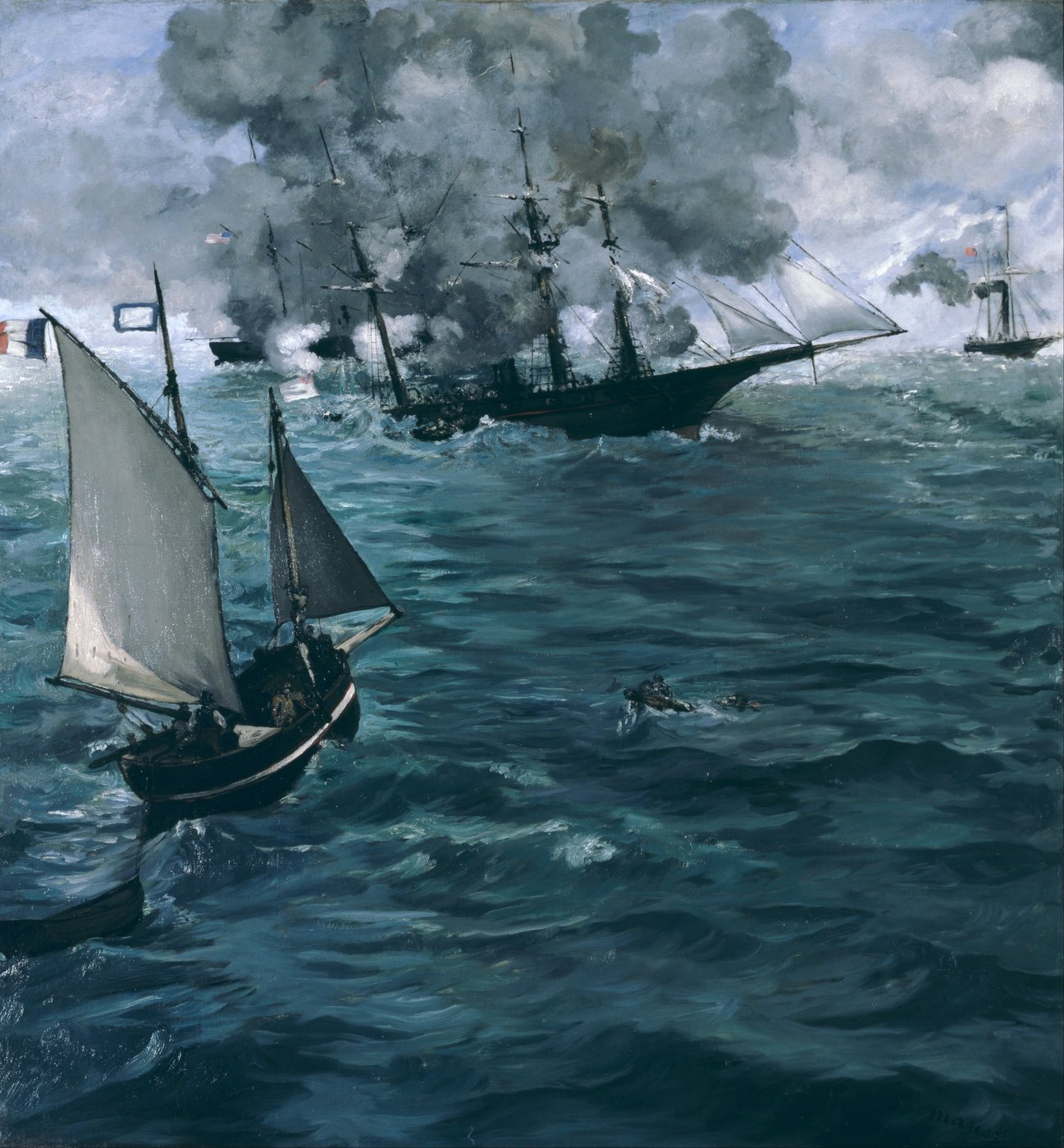
Lottaz, whose own field is neutrality, connected this to a case he knows well. During the Civil War, British shipyards built warships for the Confederacy, the most famous of them the CSS Alabama, which went on to sink scores of Union merchant ships. Britain declared itself neutral throughout and blamed private shipbuilders. After the war, the United States took Britain to international arbitration, and in 1872 a tribunal in Geneva ruled against Britain and awarded the United States fifteen and a half million dollars. The case became a landmark in the law of neutrality, establishing that a neutral state owes due diligence to prevent its territory from being used to arm a belligerent. But in Krainer's reading, Lottaz said with some astonishment, the episode now makes a different kind of sense: you hide behind a veil of neutrality while you give all the financial and private support to the underdog that is meant to challenge and break up the top dog. Krainer agreed, and went further. That, he says, has always been the method of the British Empire, and the empire, contrary to every textbook, never died.
13The Undead Empire
Krainer calls it the undead empire: a zombified form of the old British Empire that still exists and that he describes as the most pathogenic parasite on the face of the earth. It always pretends to be neutral, he says, as it does over Yemen and Iran, although over Ukraine it can no longer pretend. He wagers that wherever human blood is flowing in rivers, you will find British intelligence, the British Council, British NGOs, and British charities deeply involved, from Syria to Myanmar to Somalia. The United States enters visibly only when the time comes for brute force. The Americans arrive with the big bombs, but by then the British have often been involved for years, if not decades, and if you read the strategy papers of London think tanks such as Policy Exchange and Chatham House, he argues, you will find that what happens in these places follows almost exactly the framework drawn up in London.
The usual story, Lottaz noted, is a handover. An overextended Britain passed its empire to Washington in the 1950s and 1960s, and the 1953 coup against Mohammad Mossadegh in Iran, organized by MI6 with the CIA, was the moment the CIA learned the playbook and took it to Latin America and beyond: a tag-team, the brute across the Atlantic and the gentleman drinking tea on this side. Krainer rejects the idea of a handover. The arrangement is still a partnership, and the partner on the back is still steering. That is the master blaster combination: London is the master, and the United States is the blaster.
14Case Files
Krainer offers a series of cases. The Russiagate affair, which he calls a brazen intervention in American politics, involved, he says, people connected almost without exception to British intelligence or the Foreign Office, including Christopher Steele, the former MI6 officer behind the dossier on Trump, whose former chief at MI6 was Sir Richard Dearlove. When Volodymyr Zelensky came to power, Krainer says, he went to London and spent two hours with the head of MI6, rather than with the prime minister, an unusual priority for a newly elected president. In 2012 the bank HSBC admitted laundering hundreds of millions of dollars for Mexican drug cartels and settled for 1.9 billion dollars without any prosecution of its executives, what Krainer calls a parking ticket; a 2016 report by a committee of the United States House of Representatives later found that British officials had pressed Washington against prosecuting the bank, which he reads as the Obama administration's Justice Department, under Eric Holder, taking direction from London.
His older cases follow the same pattern. In July 1990, the American ambassador to Iraq, April Glaspie, told Saddam Hussein that the United States had no opinion on Arab-Arab conflicts such as his border dispute with Kuwait, and Washington seemed ready to stay out. On the day Iraq invaded Kuwait, Margaret Thatcher happened to be with President George H. W. Bush in Aspen, Colorado, and she is widely credited with stiffening his resolve; within days American policy had turned toward war. In the summer of 2019, after Iran shot down an American drone over the Gulf, a pressure campaign urged Trump to bomb Iran, and Krainer traces it to the British embassy under Ambassador Kim Darroch. Darroch resigned that July after his confidential cables were leaked to the press; as published, they were mostly blunt assessments of the Trump administration as inept, and Krainer reads the affair as exposing the embassy's broader role in steering Washington. The British line, he says, is always the same: just get the Americans to drop the first bomb, and the snowball rolls on by itself. He even claims that the war in the Middle East was scripted in London first, pointing to a paper of more than seventy pages published by Policy Exchange in July 2023, months before the attacks of 7 October, which he says lays out the crisis that followed, down to the point that Nicolás Maduro in Venezuela would have to be dealt with before Iran. Krainer insists he is not exaggerating, and promised to link the document so that viewers could judge for themselves; readers should do the same.
15A State Made in London?
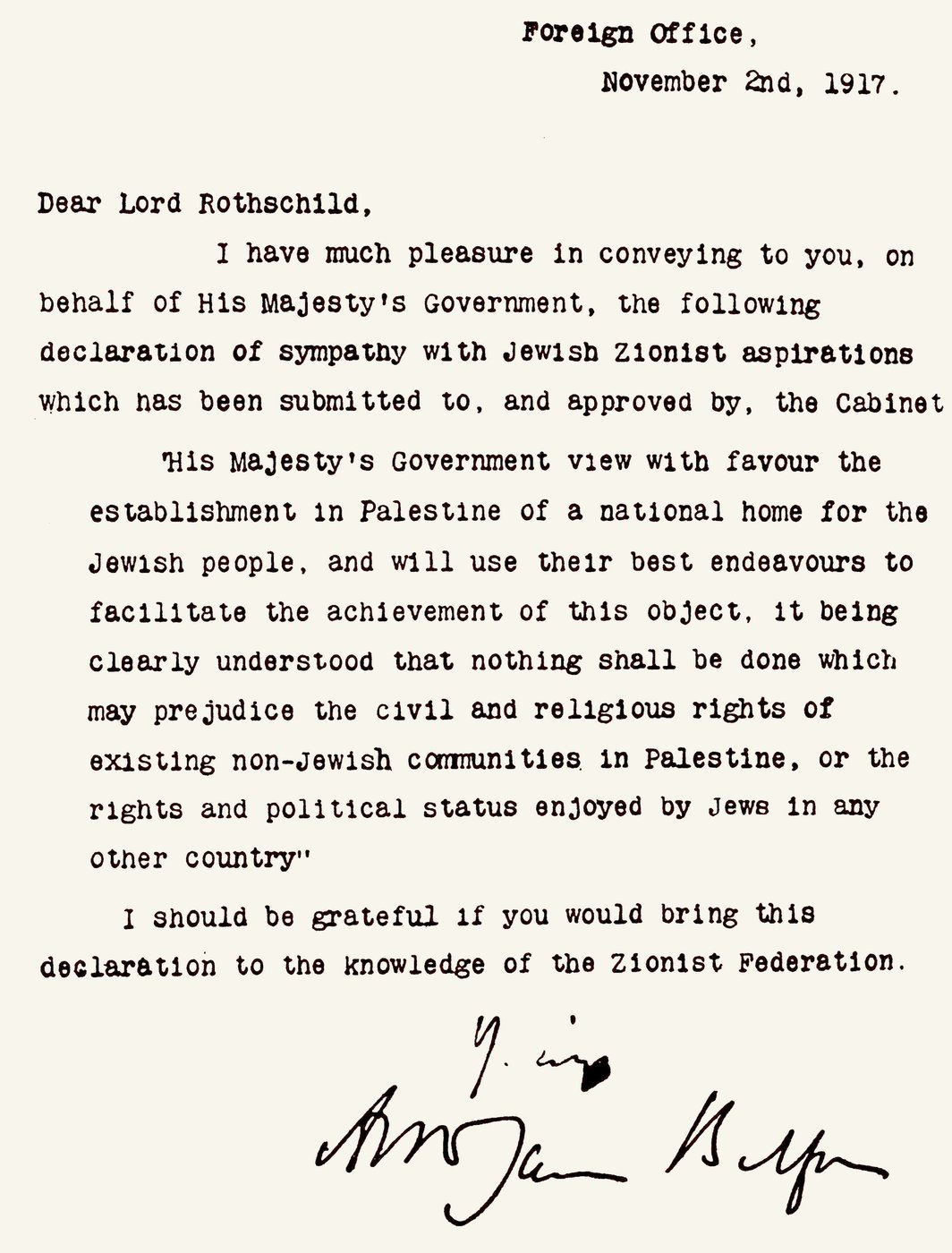
Lottaz observed that it is hard enough to untangle Washington from Tel Aviv, and that Krainer had now added a whole new layer on top. But it fits, he said, because Israel itself was a British invention. Krainer agreed and went further. The Zionist project, he argues, was a creation of the British Empire, from the Balfour Declaration of 1917 to the Mandate that followed, and the City of London never let go of its control over Israel; in this picture, Israel is closer to a client than to either master or blaster. He points to the geographer Halford Mackinder, the founder of modern geopolitics, who wrote in the aftermath of the First World War about the strategic importance of Palestine and of Jerusalem as the seat of a Jewish national home, long before the Holocaust and the Second World War. The aim, Krainer argues, was never to give Jewish people a safe home. It was to use them, cynically, to keep West Asia permanently unstable so that the financial interests of London and Wall Street could dominate the region. Historians of the Balfour Declaration do find British strategic calculation at its heart, alongside wartime propaganda aims and genuine religious and moral sympathy; Krainer's reading takes the strategic motive alone and makes it the whole story.
Hegemony there serves the same purpose, he says, as hegemony over Russia, China, Belarus, or Iran. Once you have political control, you can direct your local leaders, your Yeltsins and Zelenskys and Guaidós, to hand the contracts to Western corporations. Those corporations are clients of the Western money-center banks, which fund the development with loans, and the wealth of the region becomes one more conveyor belt running to London, Wall Street, Paris, Stockholm, and Tokyo: the nerves of what Krainer calls a giant parasite eating humanity. What Lottaz found striking is that this describes, as concrete mechanics, what Marxist scholars have long described in theory: the way capital must drive expansion and empire.
16Silver or Lead
Lottaz raised the Epstein files, in which the only figure made to do public penance was the King's brother. Krainer did not claim a full explanation, only that the royal family is itself subordinate to the imperial network and does as it is told. Lottaz's conclusion from the whole conversation was that this is not a set of Western countries competing with one another but one integrated system: the City of London, Wall Street, the White House, Switzerland, and Israel working together like a single organism, producing war and bloodletting because the system needs them. Krainer agreed. Every country, he says, is offered the choice the cartels offer: plata o plomo, silver or lead. Choose sovereignty and independence and you get the lead, a place in the crosshairs alongside Venezuela, Cuba, Yemen, Libya, Syria, Iran, North Korea, Russia, and Belarus. Choose the silver and you get the red carpet and a seat among what he calls the Epstein class, on one condition: you keep your own people in line. He points to Britain, Germany, and France, where, he says, ordinary people who raise their voices are arrested, sanctioned, or beaten by police. Lottaz added the unlucky end of the bargain: Syria, where a former al-Qaeda commander became president and the massacres that followed were described in the West as unrest.
George Soros, Krainer recalls, once told an audience at Davos that the world was living through a conflict between two systems of governance. Krainer thinks Soros described that conflict dishonestly but named it correctly. On one side is the system that uses the Epstein class as its managers. On the other are the countries that insist on their own sovereignty and independence, a list you can count on one hand, China, Russia, Iran, perhaps Cuba, perhaps North Korea, all of them in the crosshairs of a system that wants to fold the whole world into one homogenized empire, call it peace, and squeeze it dry. That is the master blaster at its largest scale, as Krainer sees it: not rival Western capitals, but one machine, a muscle you can see, a hand on the controls you mostly cannot, and strings running out to every client it has made. Look closely at any crisis, he says, and you will find the same rider on the same giant.