1The Second Livestream
Hours after the final whistle, with Spain one goal ahead of Argentina and a trophy already lifted, an emergency broadcast opens on two subjects that at first glance share nothing: a soccer match, and a war. By the end, they will turn out to share almost everything.
The occasion for urgency is not the score. It is the pace of the other story. The war in Iran, paused since a ceasefire in the spring, has resumed with a ferocity the spring version never had. The clearest evidence is a change in what the Americans are willing to admit: in March, the reported toll across six weeks of fighting was a suspiciously tidy thirteen dead. Days into this new round, the public count already stands at three, with dozens more feared in retaliatory strikes on American bases across Jordan and the wider Middle East. A government that hides its dead is a government still managing a story; a government that starts publicizing them is a government preparing its public for more.
That is the register for what follows: a map drawn in real time, checked against a scoreboard and a casualty count on the same afternoon, on the working premise that the two are not really separate stories. They are two fronts of the same war, one fought with tanks and mountains, the other fought with a ball, a stadium, and several billion pairs of eyes.
2Three Theories of a Rigged Final
Before the tournament, the working theory was that Argentina would win, and that the fix was in for them. Spain won instead, one-nil, and the theory now has to answer for itself. Three explanations present themselves, offered without a verdict as to which is correct.
The first is the simplest: the tournament was not rigged at all, the world is less deterministic than the theory assumed, and the entire framework needs revising. The second is more surgical: the fix, if it existed, operated only up to the semifinals, engineered to deliver the four highest-revenue teams, Spain, France, England, Argentina, into the final rounds, with the outcome of the final itself left to chance, because FIFA's financial interest was satisfied the moment those four names filled the bracket. The third keeps the fix intact but adds hubris as the variable that broke it: Argentina, given an easy road to the semifinals, grew complacent, and were the first team in World Cup history to manage no shot on goal in ninety minutes of a final, while Spain, tested by Portugal and France on the way there, arrived sharper and hungrier.
An intervening correction is worth recording, because it changes the texture of the argument rather than its conclusion: several factual claims in the original theory turned out to be wrong, among them an overstated case for match-fixing bias, when the betting markets alone, Spain favored at roughly fifty-nine to forty-one, already explained the gap in class between the two sides. The claim under construction was never that Argentina would win. It was narrower and stranger: that if Argentina had won, if the officiating had visibly favored them, and if Lionel Messi had scored the decisive goal, then Messi would become president of Argentina within five to ten years, and Argentina would become a hub of transnational capital. Spain's win does not test that claim. It merely postpones the test to the next opportunity Messi gets to convert athletic stardom into political capital, an opportunity that, on this reading, is coming regardless of who lifted the trophy.
3Above the Nation State
A follow-up question pushes the Argentina material toward a bigger claim: if transnational capital really is flowing outward from Europe toward North America, does that not set Europe and the United States on a collision course, especially with Washington now working so closely with Israel? The answer rejects the premise that nations are the real players at all. People prioritize the nation-state, so the argument runs, because they have been taught to; transnational capital is not a participant in that game but something that sits above it, controlling the nation-state rather than being contained by it, warping geopolitics to its own advantage regardless of which flag is flying.
Western Europe, on this account, has been a vassal of the United States since the Second World War, and nothing about the present moment changes that, least of all the anger currently directed at Washington over Trump's tariffs, over Greenland, over talk of Canada and, in time, the Falklands. Anger is not the same as divergence, and the test is not what Europe says but what it does: fund the war in Ukraine, raise NATO defense spending, prepare the population for conscription, precisely what Washington has asked for. If Europe and America were truly at odds, the argument continues, Europe's rational move would be to rebuild its old relationship with Russia and China, the way West Germany once turned cheap Russian energy into expensive manufactured exports sold into the Chinese market. Instead Europe has a trade war with China and a real war with Russia, choosing the side of the very power it claims to resent. That is not independence. It is obedience with a grievance attached.
4The Investor's Criteria
Set the match aside and ask a different question: if transnational capital treats countries the way a venture capitalist treats startups, which country does the money actually want?
The exercise runs on three criteria. First, growth potential, not where the world is already looking, but where value is still untapped. The United States is saturated; China is aging, export-dependent, and newly exposed to a fracturing global economy. Argentina, by contrast, is thinly populated, resource-rich, and largely undeveloped, the kind of asset a serious investor buys before anyone else notices it. Second, security, a place where the investment cannot simply be seized by a rival power, which rules out Ukraine, where Russian advances threaten to erase capital already committed, the way it is currently threatening BlackRock's loans against Ukrainian resource collateral. Argentina, bordered by two oceans, with no plausible military rival and a merely ceremonial soccer rivalry with Brazil, scores well here too. Third, and most important: the capacity to capture the political system outright. A functioning monarchy is hard to buy; a stable democracy with strong institutions is hard to buy; a corrupt oligarchy inside a democratic shell is the ideal target, because its politics can be purchased piece by piece.
Run the same three criteria over Australia, Canada, and Ukraine, and each fails at least one test, Ukraine on security, Canada on the fact that it is already a satellite of the City of London, Australia on the friction of dealing with an assertive, litigious population unlikely to be quietly steered. Argentina alone clears all three bars. It is not merely attractive. On this account, it is close to unique: virgin territory, still outside the older Anglosphere network of resource colonies, still available to be claimed fresh.
5Building a Resource Colony
A resource colony, however, needs more than land and permissive politics. It needs labor and industrial ambition, and Argentina's population, by this reckoning, has neither, a population comfortable enough with a modest, unhurried life that it has no appetite for large-scale extraction or manufacturing, and the ones who do want more simply emigrate, the way Canadians increasingly do.
The proposed fix is population replacement through mass immigration, and the specific pairing on offer is telling: Zionist capital supplying security and financing, Indian labor supplying the workforce. The security piece is already visible in smaller ways, reports of thousands of Israeli reservists visiting Argentina annually on tourist visas, hosted by a wealthy rancher who reportedly brings some ten thousand of them for a summer retreat each year, alongside a growing web of trade agreements between the two countries. The labor piece follows India's own stated strategy for national enrichment: unable to replicate China's manufacturing path, because India is a democracy without the state capacity to relocate its population by decree and without China's logistics network, India instead exports its young workforce abroad, embedding immigration clauses inside its trade deals, visible already in the migration flows into Australia, Canada, and, most recently, Japan. Argentina, on this reading, is simply the next receiving country, offered a combination, Indian energy married to Zionist capital, pitched as unbeatable, and the mechanism for achieving it is neither invasion nor coup. It is paperwork: trade agreements, visa concessions, and patient capital, arriving a delegation at a time.
6Milei, Chabad, and the Puppet Theory
Javier Milei's rise fits a pattern that keeps recurring: a figure with no conventional political base, an economist, a television pundit known for outrageous commentary and a fierce libertarian streak, emerges abruptly into national leadership, carried less by any organization than by a promise to be a wrecking ball against a sclerotic bureaucracy, chainsaw held aloft as the literal prop for the pledge.
What distinguishes Milei's ascent is a religious thread. He is closely associated with the Chabad Lubavitch movement, and his first foreign visit as head of state was not to a neighboring capital but to the grave of the Lubavitcher Rebbe in Queens, New York, reportedly the most visited Jewish holy site outside Israel, and a site venerated within parts of the movement as belonging to a figure some regard as the Messiah. The same network runs through Jared Kushner and, by extension, into Donald Trump's inner circle, and reportedly into ties with Vladimir Putin as well, enough overlapping threads, or so the claim goes, to describe an alignment of interest rather than a proven conspiracy: not a manufactured career so much as an opportunist noticed and then invested in, the way transnational capital, holding what amounts to unlimited financing, costs itself nothing by befriending a rising figure early and modestly, and profits enormously if that figure wins. The same logic is said to explain Trump's own 1980s tabloid ascent, and is offered as a working prediction for what may happen next with Messi: not necessarily a manufactured career, but a promising asset, noticed, and then quietly financed. Whatever its origin, the claim closes on a flatter note: regardless of how he arrived, Milei now governs as an instrument of the interests that adopted him.
7The Falklands Reopened
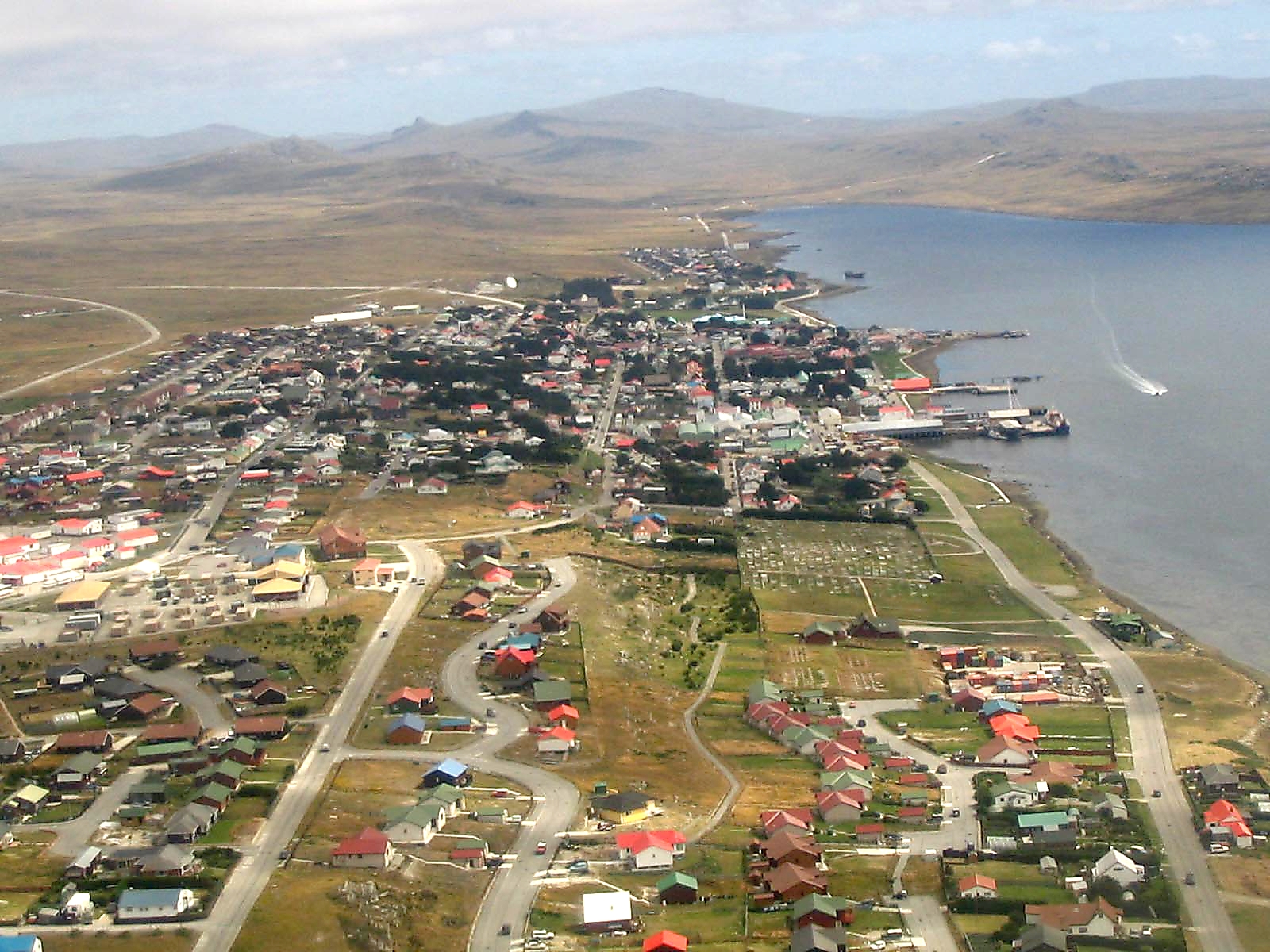
After Argentina's semifinal win over England, its players unfurled a banner declaring the Malvinas, Argentina's name for the Falkland Islands, eternally Argentine, a plain breach of FIFA's ban on political statements at matches, met by a White House statement defending it as free speech. On this account, that exchange is not incidental. It is the opening move of a live geopolitical claim.
The logic runs through a wider American project: extending a revived Monroe Doctrine, a declared claim to primacy across the whole Western Hemisphere, into three theaters simultaneously: the Falklands, the Caribbean, and Canada, each aimed at prying Britain and its former dominions loose from a hemisphere Washington now wants exclusively for itself. Britain, distracted and diminished at home, controls islands it can no longer reasonably defend at this distance, and a nationalist Argentina, still smarting, the argument goes, from a war fought and lost in 1982, is the natural proxy to reopen the claim.
There is a wrinkle: polling shows a majority of Argentines hold an unfavorable view of Israel, one of only a handful of countries worldwide where Israeli favorability runs net negative among the general population even as it may run positive among elites. The proposed remedy is to let the Falklands provide the fix, a renewed territorial claim, US and Israeli backing behind it, and popular sentiment shifting accordingly, on the theory that gratitude for help winning back contested territory outweighs whatever reservations the public holds about who is helping.
8Nazis, Aryans, and Argentina's Old Bargain
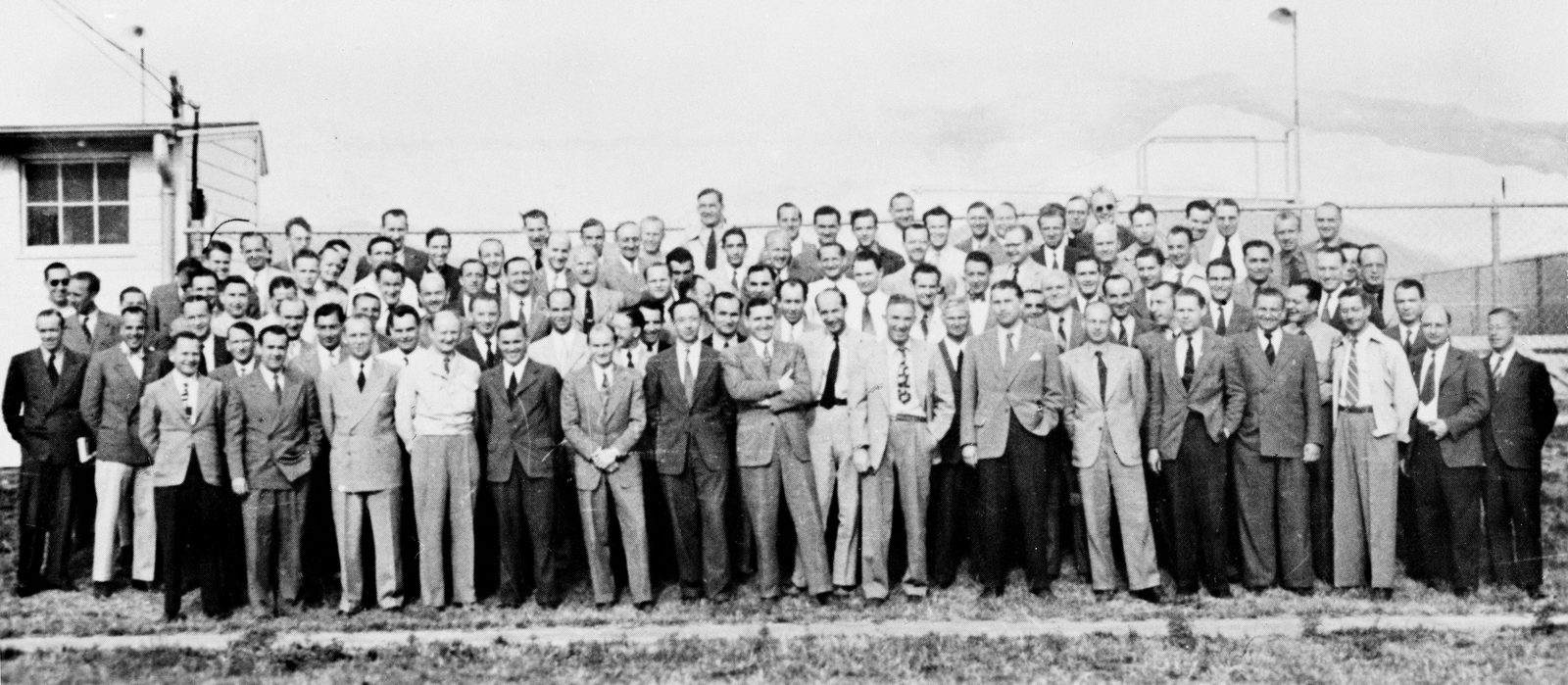
The pattern has a precedent, one usually treated as settled history rather than live controversy: as the Second World War turned against Germany, both the Vatican and the Argentine government helped funnel fleeing Nazi officials into the country, a mirror of what the United States did openly under Operation Paperclip and what the Soviet Union did under its own name, recruiting German scientists and administrators for their technical expertise, most visibly in the rocketry that powered the postwar space race on both sides of the Cold War. Argentina's motive, in this telling, ran beyond ideology: German expertise in finance, administration, and political organization was itself the asset being imported.
The legacy is still visible today in Argentina's demographic makeup and self-image, a country that takes conspicuous pride both in its European, Aryan self-conception and in its historical sympathy for the losing side of that war, a detail worth holding alongside the newer plan to remake the country yet again with a different imported workforce and a different foreign patron.
9The Scapegoat Economy
A student's question about medieval Jewish history draws out one of the essay's more provocative arguments, offered here as one reading among possible readings, not the only one.
The claim begins with a puzzle: why would a persecuted minority, generation after generation, decline to rise against its persecutors even when annihilation seemed to be the alternative anyway. The answer proposed is structural rather than theological. In medieval Europe, two powers governed: feudal nobility and the Catholic Church. For the nobility, Jewish communities solved practical problems no one else could, a loyal managerial class bound to the lord by the very fact of their vulnerability elsewhere, a trade network reaching into the Islamic caliphate that Christian merchants could not access directly, and a source of credit, since usury was forbidden to Christians but permitted to Jews. For the Church, on this reading, Jewish communities served a different function, described by Augustine: a visible "other" against which Christian identity could be defined and reinforced. Anti-Judaism was cultivated, but cultivated carefully, a controlled hostility rather than an open license, useful right up until the moments of real social crisis (famine, plague, popular uprising), at which point the same authorities who had tolerated the arrangement would redirect popular anger onto the Jewish community, sometimes through expulsion, as the release valve of last resort.
The harder question, why the community's own religious leadership tolerated this rather than encouraging conversion, which would have ended the persecution, the essay answers by naming an incentive: mass conversion would have dissolved the rabbinate's own dynastic authority, power that passed, aristocracy-like, from father to son. The persecution itself, framed to the community as divine will, suffering as the price of eventual redemption and the coming of the Messiah, thus served the material interest of a religious elite as much as any external oppressor's interest, a claim the essay states without resolving, and flags explicitly as the darker, more cynical of the available explanations. Attached to it is a warning about the present: an arrangement in which a minority's fortunes are tolerated only as long as they serve the ruling elite's convenience is not confined to the medieval period, and the same dynamic, protection today, scapegoat tomorrow, at the first sign of real economic crisis, is offered as a pattern worth watching rather than a closed chapter of history.
10Kabbalah and the Vision of Giving
Set against that darker material is a gentler thread, drawn out in response to a question about the Kabbalah and its populist offshoots. The Torah and its accompanying texts, so the story has it, exist partly as an accessible substitute for a primary tradition, the Kabbalah itself, originally too esoteric, too coded, to reach most people directly, in much the same way Dante's Divine Comedy rewards a reader in proportion to what they already bring to it.
Two modern popularizations of the tradition are distinguished: one, associated with a "Shabbat" campaign, aimed at mass participation in physical ritual as a mechanism of collective urgency; the other, an Ashlagian vision, aimed instead at mass education, correcting individual ego so that a global society organized around giving rather than accumulation becomes possible, a vision summarized in the line that one should receive only in order to give. The broader Kabbalistic claim underneath both is that humanity was originally whole, has fragmented itself across history for reasons now obscured, and that the deepest work available to any person is to prioritize spirit over body, to resist the far easier pull of food, sex, and material comfort in favor of teaching, generosity, and kindness, because the true contest between heaven and hell, on this reading, is not fought in the world. It is fought inside the self.
11The Twins Who Founded the World
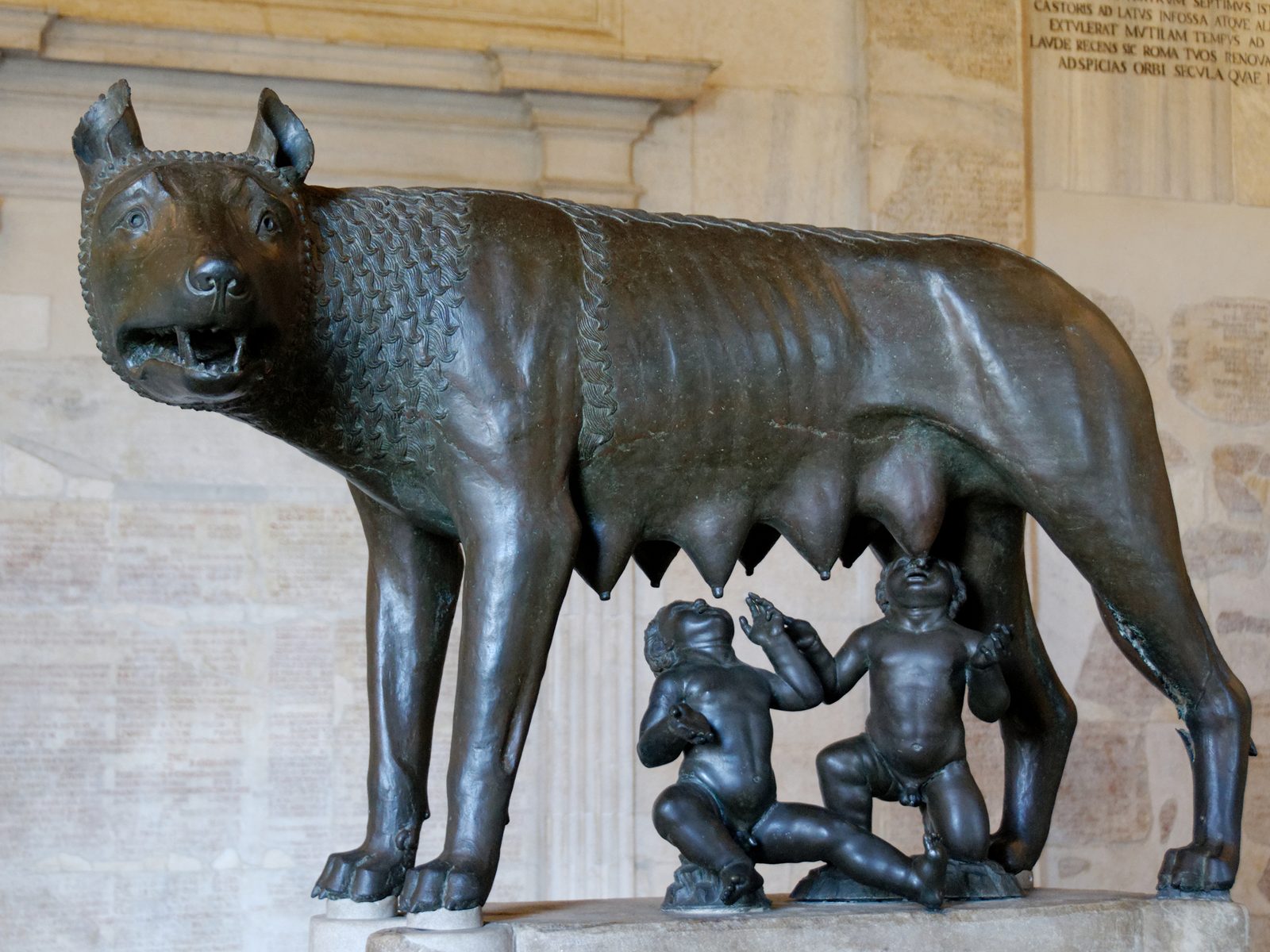
Underneath both the political program and the spiritual one sits a claim about where the idea of an ending, an apocalypse, a final battle, actually comes from, and the claim is that it is not a human universal at all. It is an inheritance, traceable to a specific source: the Proto-Indo-European cultures, whose founding myths are unusual in human religious history for making violence, not harmony, the creative act of the universe. The template recurs across the descendant traditions: two brothers, twins, one of whom must kill the other to found the world, Romulus over Remus at Rome's founding is one late echo of a much older story, and a cosmos that begins in violence is one that, by its own logic, must also end in violence. The Abrahamic traditions inherit this template and carry it forward into full eschatology: a definite end, a final judgment, a last battle.
Set against it is an older, more widespread alternative: animistic and mother-goddess traditions, in which the world is understood as balance and harmony rather than conquest, humanity as part of nature rather than set above it, traditions that, not coincidentally, produce no comparable doomsday literature, because a cosmos built on balance has no logical need to end in fire. The practical consequence is a kind of natural selection among worldviews: cultures organized around eschatology tend to produce more violent adherents, and violent adherents tend, across history, to accumulate disproportionate power, not because violence is destiny, but because a belief that the end is coming, and that you are chosen to hasten or survive it, is an unusually effective way to mobilize people toward conquest.
12Manufacturing the Crash
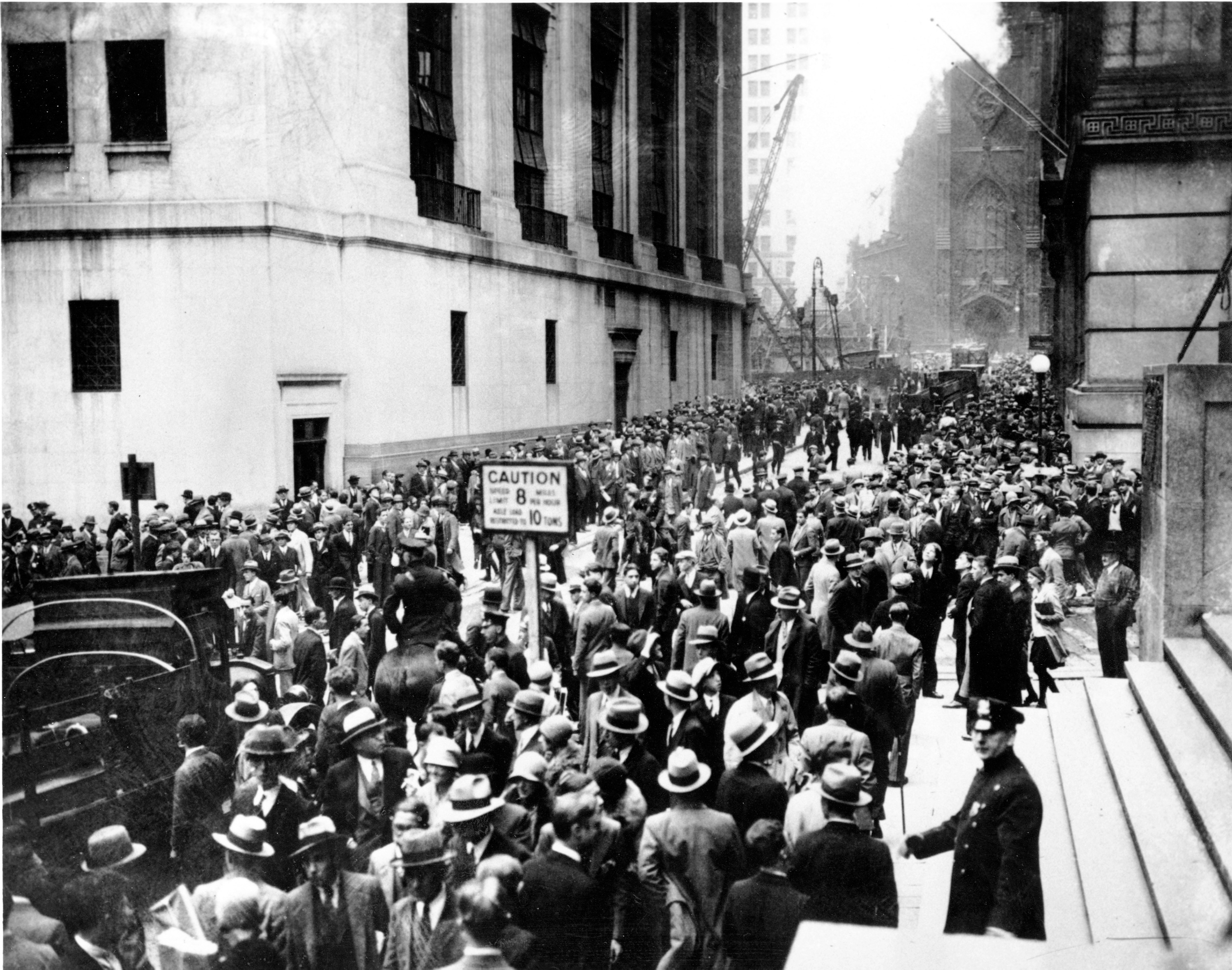
A separate line of questioning turns to the stock market, and specifically to the artificial-intelligence boom, treated here as a live case study in a broader claim: that major financial collapses are not accidents of an overheated market but engineered events, staged to transfer wealth from retail investors to institutional ones and then to justify a government bailout on favorable terms.
The evidence offered is not a document but a pattern of signaling. A prominent financial journalist, closely embedded with America's leading CEOs, publishes a book centered on the 1929 crash at precisely this moment. A second journalist, well regarded for his sustained case that the leading AI labs cannot be profitable and never will be, receives heavy promotion from the same outlets that otherwise function, as the argument tells it, as friendly press for the oligarchy it accuses. The Bank for International Settlements, the central bank to the world's central banks, publishes findings linking the war in Iran and its disruption of global supply chains to a coming reckoning for the AI sector. And separately, industry leaders openly float the idea that the American government should simply take an equity stake in the leading AI companies. Individually, each is unremarkable. Together, or so the claim goes, they read as a rehearsal: signal the coming collapse widely enough in advance, so that when it happens, no one can call it deliberate, and once it happens, consolidate the surviving winners (much as a handful of firms emerged as monopolies from the dot-com crash), engineer eminent-domain cover and public subsidy for the water- and power-hungry data centers such firms depend on, and transfer the risk taken by millions of small investors onto the balance sheet of the state. As with the subprime crisis, in which one hedge fund manager alone reportedly cleared twenty billion dollars betting against the mortgage market as it collapsed, the real money in a manufactured crash is made by whoever is positioned to short it, a dynamic the essay extends, with visible hesitation about the timeline, to South Korea's recent stock market surge following a short-selling ban, and to real-estate speculation in Canada and Australia: each treated less as a sign of prosperity than as a symptom of a society's underlying anxiety, translating desperation into gambling because gambling is the only lever still available to ordinary people.
13Wealth Is Attention
The thread connecting the soccer match, the war, and the market runs through a single idea, offered as the essay's central thesis: that transnational capital's deepest trick is convincing people that money is wealth, when the actual scarce resource, the one capital is actually competing for, is attention.
On this account, a spectacle like the World Cup exists to keep humanity organized around the nation-state as the fundamental unit of the world game, because as long as people experience themselves primarily as citizens of competing nations, capital that has already positioned itself inside both sides of every rivalry, inside the United States and inside China simultaneously, say, can manufacture the appearance of great-power competition while quietly drawing profit and loyalty from both, a parasite feeding two hosts it has convinced are enemies. The point of the spectacle is not to convince anyone of anything specific. It is to divert attention from where the actual decisions are being made, and to keep populations anxious, tribal, and fixated on rivalry rather than aware of what is actually being extracted from them while they watch.
The same complacency shows up closer to home, in how the emptied-out husks of once-serious institutions are being filled. A wave of acquisitions has put former entertainment executives in charge of CBS and Viacom, with CNN reportedly next, the strategy being to install a handful of loyalists, Barry Weiss chief among them, on the theory that the young and the rest of the world may already be lost causes but the older domestic audience can still be held. It is not, on its own terms, a foolish strategy. It simply runs into execution: reporters describe a newsroom kept at arm's length, decisions made behind closed doors, competence mattering less than loyalty. Captured institutions, on this account, are still institutions capable of failing, and an empire that wins the fight for the microphone can still lose the fight for anyone's attention.
The essay's stated counter to this is not political organizing in the conventional sense. It is a claim about the nature of the self: that everyone carries the capacity to generate real wealth simply by directing attention and energy toward what matters, that humanity is fundamentally interconnected rather than fundamentally tribal, and that this interconnection ultimately traces back to a shared participation in something larger, God, present within each person rather than external to them. Transnational capital's interest, the argument runs, lies precisely in keeping people from recognizing any of this: afraid, anxious, focused on rivalry with one another, and persuaded that money is the only thing worth wanting. Reclaiming attention, noticing what one actually cares about, and directing energy there instead of at the spectacle, is presented as the beginning of the only resistance available.
14The Ground Invasion That Cannot Work
Turn from theory to the map, and the claim sharpens into logistics. A ground invasion of Iran, the theory holds, is being planned along three axes: Kurdish forces sent in from Iraq, Baluch fighters sent in from Pakistan, and American forces contesting control of the Strait of Hormuz directly against the Revolutionary Guard. The stated American objective is not really conquest. It is to draw the Guard into the open so it can be destroyed from the air, a public-relations war as much as a military one, at a moment when the optics of the campaign have been poor.
The plan's central flaw is that neither the Kurds nor the Baluch have any real incentive to die for it: American money and weapons will be accepted, and little else will follow. The comparison offered is historical rather than speculative, Germany's rapid conquest of France in 1940, made possible by paved roads and functioning fuel infrastructure, against the same army's catastrophic bogging-down a year later in the Soviet Union, where neither existed. Layer mountains and desert heat on top of that Eastern Front problem, equipment failure, disorientation, no viable forward operating bases, and the difficulty compounds again. The American military, built for short, decisive campaigns like the two-week conventional victory in Iraq in 2003, has no doctrine suited to a long mountain war, and a full-scale invasion, on this account, cannot plausibly launch before the weather cools in November or December, making the intervening months a period of staged ceasefires and diplomatic theater rather than genuine de-escalation.
A cynical postscript, offered half as joke and half as diagnosis, makes the same point about incentive from a different angle: buy oil stock, bomb Iran, watch the price spike, sell into the spike, declare peace talks, watch the price fall, buy again, a cycle that, true or not as literal strategy, captures a broader argument that runs through the whole war: that those making the decisions bear none of the consequences of being wrong, a first in the history of empire, by this reckoning, in which a military bureaucracy can lose war after war, Vietnam, Iraq, Afghanistan, without any of its leadership ever paying a personal price, and continues to be professionally and politically rewarded for compliance regardless of outcome.
15Choke Points and the Eschatological Turn
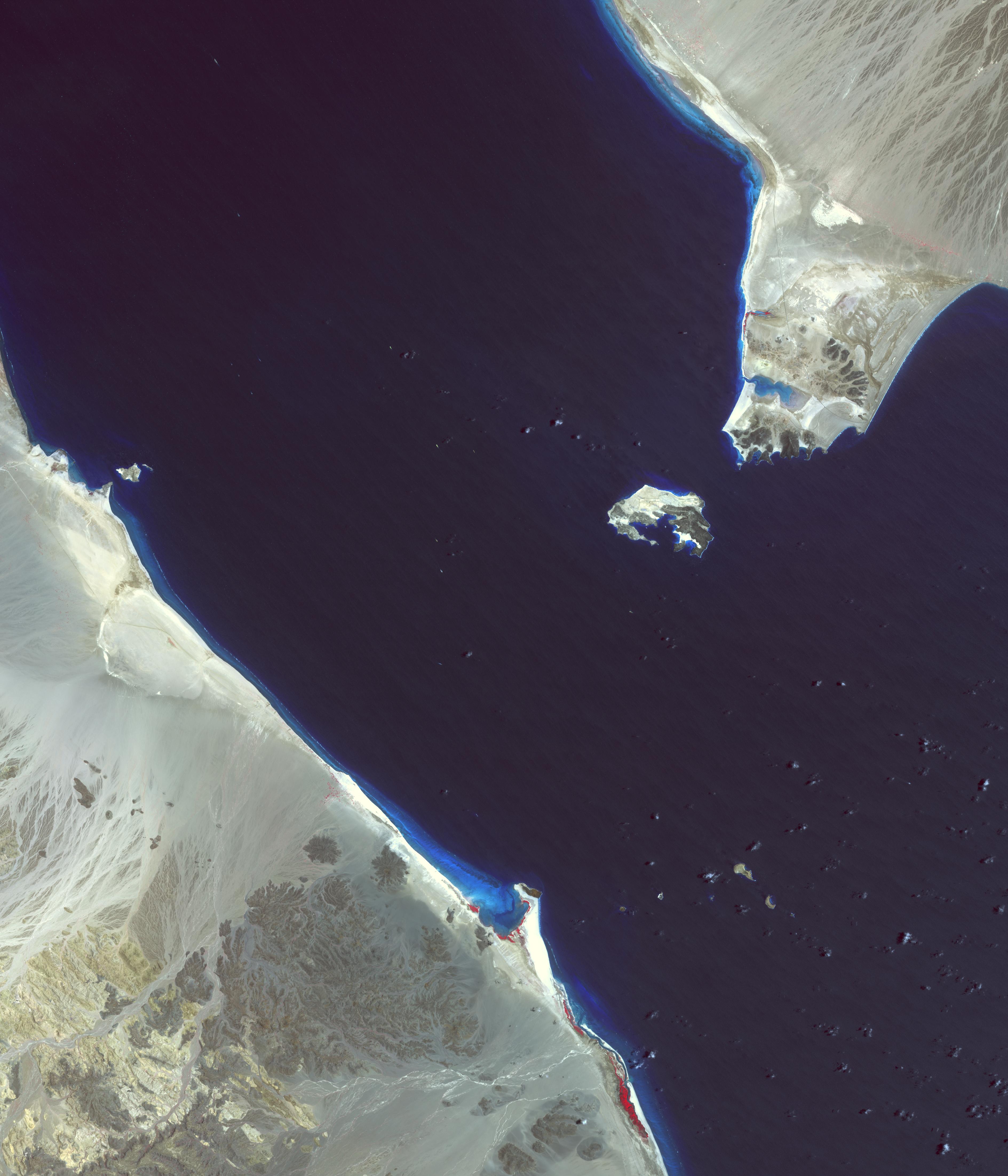
The war's reach extends well past Iran's borders through two maritime choke points: the Strait of Hormuz, held by the Revolutionary Guard, and the Bab-el-Mandeb Strait, held by the Houthis, both easily closed by forces dug into mountainous, hard-to-dislodge terrain, and both capable of throttling global trade in fuel and desalinated water simultaneously, with medicine and food supply chains from the region drying up alongside them, a slower-moving crisis largely absent from public attention.
Oman, historically the trusted mediator between Iran and the United States, is losing that status as Iran comes to view the entire Gulf Cooperation Council as aligned with the American-Israeli axis; Bahrain, with a Shia majority ruled by a Sunni minority under an unpopular elite, is named as the likeliest next flashpoint. A failed ceasefire earlier in the year, the theory runs, actually strengthened Iran's military hardliners over its diplomats, because the Guard's leadership had opposed the ceasefire from the start, deferring to civilian judgment against its own institutional instinct, and the deal's collapse now validates the hardliners' original skepticism, pushing the conflict toward what the essay calls its eschatological register: a fight understood by its participants not as a negotiable dispute but as a contest with cosmic stakes, some in the American military reportedly framing the war as hastening a Second Coming, hardline Iranian factions framing it as hastening the return of the Twelfth Imam, and Israeli hardliners framing it as advancing a Greater Israel project, three separate apocalyptic visions, on this account, that are not necessarily in competition with one another and could in principle all be pursued at once. The wider Islamic world's reluctance to rally to Iran's defense is attributed less to old Sunni-Shia and Arab-Persian rivalries, real as those are, than to the number of nominally Sunni governments already functionally aligned with Washington, an alignment the essay suggests could reverse overnight if the Al-Aqsa Mosque in Jerusalem were ever destroyed, an outcome treated as a live possibility rather than a remote one, and one capable of triggering political upheaval across the entire Muslim world.
Underneath the strategy sits a psychological mechanism worth naming on its own: once a political rival is framed not as an adversary but as absolute evil, negotiation stops being a betrayal of tactics and becomes a betrayal of principle. On this account, that is precisely how the conflict's architects have come to see their opponents, Hamas, Hezbollah, and the Palestinian population folded together into a single undifferentiated enemy, which is also why de-escalation keeps failing to hold. You cannot split the difference with something you have already decided is evil; you can only, eventually, try to eliminate it.
16The China Brake
A separate question, tracing the same war through a different ledger, starts with Donald Trump's campaign donors: fossil-fuel executives who reportedly wrote seven-figure checks in anticipation of oil spiking toward two hundred dollars a barrel, a spike that, so far, has not arrived. The question that follows is obvious enough to ask outright: is the war being timed to a payout, oil driven up by the crisis and then shorted on the way back down, with the profits landing on the same desks that fund the war's loudest cheerleaders?
The answer redirects the premise more than it confirms it. Whatever anxiety once existed about a price spike panicking the American public has, by this account, been overtaken by a larger risk: not that oil prices rise, but that global demand for oil collapses outright if the war drags the wider economy down with it. And the reason prices have not already spiked has little to do with restraint in Washington. It is a single actor doing the restraining: China, an export economy dependent enough on stable global demand that a collapse would be existential for Beijing in a way it isn't for Washington or Moscow, working quietly to keep the market from cracking even as its rivals destabilize everything around it.
The exchange ends on an admission worth noting, because it cuts against the essay's own habit of finding a hidden hand behind every crisis. Whatever coordinated manipulation may once have been plausible is no longer, on this account, the right way to read the moment: too much anger, too much emotion, an American military chasing revenge for months of humiliation, a war machine now simply out of anyone's particular control. Not a conspiracy any longer. A dumpster fire, and, the point is made in passing, one already straining supplies of food, medicine, and clean water across the region well before it reaches the headlines.
17The Great Game Moves East
Beyond the Gulf, the war's gravity extends into Central Asia, where three powers, China, Russia, and the United States, already compete for basing rights and infrastructure leverage across states like Kazakhstan and Tajikistan, states whose own strategy has long been to extract benefit from all three without formally choosing a side. That balancing act, by most reckonings, becomes unsustainable as the Iran conflict intensifies, with the coming decade likely to bring a wave of coups, color revolutions, and political assassinations as the three powers press client states to commit.
A hypothetical posed directly, what happens if the American campaign in Iran actually succeeds, receives an answer that runs through Moscow rather than Tehran: a stabilized, American-aligned Iran would free Washington to concentrate entirely on Ukraine, closing off Russia's entire southern flank. Facing that, the claim runs, Russia's rational move is to open a second front elsewhere, specifically North Korea, a nuclear-armed state with artillery capable of threatening Seoul and missiles that reach Japan, forcing American strategic attention to split regardless of how well Iran goes. Russia, by this logic, cannot afford to withdraw from Ukraine under any circumstance, since withdrawal would trigger total economic isolation; nor is the Russia-China alliance the load-bearing partnership it appears to be, evidence offered is China's continued refusal to sign the Power of Siberia 2 pipeline deal, which would lock the two economies together in a mutual energy dependency neither side, as this version has it, actually wants. Iran, in that reading, is less a client Russia is defending out of loyalty than the last position standing between Moscow and total strategic isolation, which is precisely why, if it falls, the next move is not retreat, but a new front somewhere else entirely.
Not every gesture in this rivalry is what it appears to be, either. A sharply worded speech aimed at China, delivered around the same time as all of this, reads on this account as theater in the most literal sense: not a genuine escalation but a pretext, useful for building the case that foreign interference justifies tighter federal control over state elections. The real target of the speech is the midterms and the years beyond them, not Beijing, a reminder that even the rivalry between great powers can double as cover for a much smaller, much more domestic ambition.
18The Pushback
An account like this one accumulates believers more easily than it accumulates challengers, which makes the one direct challenge in the whole discussion worth recording in full rather than smoothing over. It arrives late, near the end, from a viewer identifying as Russian, aimed at what she names as a romanticizing bias toward Russia and its leadership running through the whole project. Her evidence is not abstract. The claim that the war has made Russians happier reads, from where she sits, as simply false: real soldiers, real sons and husbands, are dying in a war whose costs have reached ordinary families in ways no one there can any longer avoid seeing. Her second point cuts at the essay's own recurring character, a Russian president repeatedly described as a strategic genius at a moment when his economy is in visible crisis, his oil refineries under sustained attack, and a military once ranked among the world's strongest now, by her account, humiliated. Watching the country for decades leaves her with a blunter verdict: a leader with no vision beyond personal enrichment, unremarkable next to most rulers anywhere, for whom Ukraine is not proof of strategy but the one deviation from an otherwise ordinary record.
The response concedes more than it defends. The war is not going well for Russia; the strikes on its oil infrastructure will do real and lasting damage; the unhappiness she describes is real and deserves to be taken at face value rather than argued away. But the core claim holds anyway: Putin, so the essay maintains, still knows what he is doing, still thinks in decades rather than news cycles, still the one leader whose next move can actually be predicted in advance, North Korea's entry onto the stage, offered earlier as a forecast, is presented again here as the evidence. And on one point the disagreement gives way to something closer to common ground: whatever else is true of him, Putin loves his country and loves his people, in a manner his critics may reasonably call monstrous but that the essay insists is nonetheless sincere.
Whether that concession resolves the disagreement or simply names it is left open on purpose. A map that cannot survive contact with someone who has actually lived inside the territory it describes is not much of a map, and the honest way to handle a challenge like this one is to let it stand next to the claim it challenges, rather than edit it out of the final draft.
19Rome's Inversion, and the Quiet End of East Asia
A recurring question underneath the geopolitics is how a ruling class maintains itself once its legitimacy has thinned, and the answer offered borrows from Rome: govern by inverting love into hate, manufacturing conflict, especially between left and right, over questions where, the argument holds, most ordinary people privately agree far more than mass media lets them notice, because engagement, not truth, is what the machinery is built to produce. The suggested countermeasure is not organizing in the conventional sense but a kind of deliberate re-humanizing: seeking common ground rather than division, and treating love, in the most literal sense, as the actual antidote to a system that profits from fear.
That same diagnosis is applied closer to home, to East Asia's own trajectory, described as a civilization in quiet collapse: societies that leapt from feudalism through industrial capitalism into full consumerism within a single generation, arriving at a hollowed-out materialism, a status economy of luxury goods and cosmetic surgery layered over what the essay calls a genuinely godless society, one in which even sincere criticism aimed at fixing it is received as the ranting of a troublemaker rather than a diagnosis worth investigating. The clearest evidence offered is demographic rather than anecdotal: fertility collapsing well below replacement across China, Japan, and South Korea, illustrated by a small personal anecdote, of eight university roommates from the same graduating class, only one, years later, had had children at all. Consumerism, in an earlier formulation the essay treats as definitive, is not liberation but "the perfection of slavery", and a society that has stopped believing children are worth having, on this account, has already answered the question of whether it believes in its own future.
20The Assignment
Closing questions turn, as they often do, to what an individual is actually supposed to do with all of this, and the answer given is neither despair nor activism in the usual sense. It begins with an honest account of the emotional sequence: anger first, at the incompetence and callousness on display; then a heavier depression, on recognizing how total the system actually is; and finally, unexpectedly, a kind of liberation in simply knowing, better to die understanding what happened than to die in comfortable ignorance, and better still to discover, in the process, that the impulse to understand is shared by far more people than it first appears to be, which is itself treated as a source of real hope.
There is a generational dimension to this that deserves its own honest accounting. For a younger audience processing all of this in real time, the material lands differently, not as abstraction but as classmates, friends, the people one actually knows, with conscription ages that could plausibly rise to catch even the audience's own cohort eventually. Feeling swept into a story this large is not weakness; it is an accurate reading of the situation. The offered response is not to wait for permission or a plan handed down from above, but to pick whatever lane is already yours, writing, teaching, comedy, protest, quiet conversation, and work it, on the theory that the only real alternative to this kind of participation is spectatorship, and spectatorship is exactly what the theater was counting on.
From there the instruction is concrete and modest: reclaim your attention from the spectacle, because attention is the one form of wealth genuinely under an individual's own control. Read, walk, teach, teaching defined generously enough to include an ordinary conversation with a neighbor, or helping a young person pick up a book again. Practice small, unglamorous acts of generosity and kindness on the theory that they compound in ways no one can fully trace. And find others doing the same, because the metaphor offered for the moment is not a battle to be won alone but a crowded, dangerous sea best crossed by lashing whatever life preservers are available into one raft, together.
The World Cup will be forgotten within a news cycle or two. The war will not resolve as quickly as anyone in charge of it currently hopes. But the assignment does not change with the news: notice what deserves your attention, give it there instead of to the spectacle, and remember that you were never as alone, or as powerless, as the theater wanted you to feel.