1Why Jesus?
Human history is crowded with extraordinary figures: Alexander the Great, Julius Caesar, Socrates, Zoroaster, Homer, and countless rulers, philosophers, poets, prophets, and conquerors who shaped whole civilizations. Jesus is different from all of them in one respect that matters more than any other. Around two billion people believe not simply that he was wise, or admirable, or historically important, but that he is God, and they worship him. The question this volume follows is why. Why did this man become more important than emperors, philosophers, generals, and poets? Why did his memory outlive the Roman Empire that executed him, and why did his image spread across every continent? Why do people who never met him, living two thousand years after his death, still feel personally connected to him? The previous volume in this series traced how a historian might reconstruct the man and the religion that came after him. This one asks what he actually taught, why that teaching moved so many people, and why it frightened Rome, and it finds its answers in a text that was lost for more than fifteen centuries.
To begin, four things must be held apart: Christianity, the historical Jesus, the biblical Jesus, and the reconstructed teaching of Jesus that the lecture proposes. Christianity contains many denominations that disagree about a great deal, but most of them share three central beliefs. The first is that Jesus is the Son of God, and at the same time God himself, and king, which raises at once the question of how one can be the Son of God and also God. The second is that Jesus died for human sin: humanity was expelled from Eden because Adam and Eve disobeyed God, and Jesus came to earth and sacrificed himself so that humanity could be redeemed. The third is that he will return; he died, rose, and ascended to heaven, and one day he will come again for the Last Judgment, when some will enter heaven, others will be condemned, and heaven will come to earth. This is where Christianity becomes most controversial, because it does not simply teach people to be good. It teaches that belief in Jesus is central to salvation, which gives the religion its missionary character: if others do not accept Jesus, their souls may be in danger, so the believer has every reason to spread the faith. The religion also rests heavily on mystery and miracle. How does the Son of God die, how does his death remove sin, how does resurrection work, and why must he return? Often the answer is: do not demand a mechanism; believe. The questions remain anyway, and they lead to the one that drives the lecture: given all this complexity, why have so many people loved Jesus?
2Four Things We Know
The historical record, as the lecture reads it, supports four points with confidence. Jesus was born around 4 BCE and came from Galilee, a region at the crossroads of trade, empire, migration, and ideas, where Rome, Judaism, Greek thought, and Persian influence all moved through the same landscape; Jerusalem, a few days' walk south, remained the religious center, its Temple rebuilt under Persian rule and later renovated on a grand scale by Herod. He was associated with John the Baptist, an apocalyptic preacher who taught that history was approaching its crisis, that God was coming to judge the world and destroy evil, and that people must prepare through repentance and the purifying water of baptism; Jesus began as one of John's followers and then built a following and a message of his own, which implies that his teaching differed from John's. He was crucified by the Romans, a punishment reserved for slaves, bandits, pirates, rebels, and others considered dangerous to Roman order, which suggests that Rome regarded him as a threat of some kind. And he had a brother, James, known as James the Just, who led the movement after his death. That fourth point is easily overlooked and matters enormously. It means the movement did not vanish when Jesus died. There was a continuing community, centered in Jerusalem, with leadership and followers, associated with the poor; later sources call its heirs the Ebionites, from a Hebrew word meaning "the poor ones."
The biblical account, assembled from the four gospels that do not always agree with one another, tells a much fuller story, the one this series retold in its previous volume: the Son of God takes human form to redeem a disobedient humanity, heals and teaches, clashes with a priesthood devoted to the law, the Sabbath, and the commandments of Moses, is betrayed by Judas and handed to Pontius Pilate, who seems reluctant but yields to the crowd, and is crucified, rises on the third day, and sends his followers out to carry the good news to Jew and Gentile alike, promising to return. That story became the foundation of Christianity. It also raises problems the lecture refuses to pass over. What does it mean for God to have a son, when all human beings are in some sense children of God? How can the Son also be the Father? Why does Jesus have to die, and by what mechanism does one execution cancel the disobedience of the whole human race? And who, in the end, was responsible for his death?
3Who Killed Jesus?
That last question has had the most terrible consequences. For nearly two thousand years, the gospels were read as placing the blame on the Jewish authorities, and Christians used that reading to justify persecution: the Jews, it was said, killed the Lord and rejected the savior. The lecture rejects that explanation and offers three arguments against it. The first, sketched in the previous volume, is that first-century Judaism had no single authority to make such a decision. The Sadducees, tied to the priestly aristocracy and the Temple; the Pharisees, who emphasized the law and from whose tradition rabbinic Judaism would grow; and the ascetic, apocalyptic Essenes, to whose world John the Baptist seems to have belonged, disagreed intensely and sometimes hated one another, but argument was part of Jewish religious culture, and disagreement did not mean execution. The fact that Jesus quarreled with priests would not by itself explain why anyone would demand that Rome crucify him. The second argument concerns communal boundaries. Jewish communities kept customs that set them apart from outsiders, the Sabbath, marriage rules, internal economic arrangements, and the lecture proposes one more unwritten rule alongside them: Jews could argue among themselves as fiercely as they liked, but handing a fellow Jew over to the occupying power would violate the solidarity that held the community together.
The third argument is James. If the teaching of Jesus had been so intolerable to the Jewish authorities that they demanded his execution, why could his brother go on leading the same movement in Jerusalem, in plain sight of the Temple, for some thirty years? The lecture presents this as strong evidence against the traditional account, and the later history of James sharpens rather than weakens the point. According to Josephus, James was eventually stoned in 62 CE on the orders of a high priest named Ananus, who seized a moment when no Roman governor was in the province; but fair-minded citizens of Jerusalem protested, and Ananus was deposed for what he had done after only three months in office. The killing of the leader of the Jesus movement was treated by many Jews as an outrage, not as the community's will. The lecture's conclusion is that Rome killed Jesus for Roman reasons. The crucifixion was Roman, the power was Roman, and the punishment was Roman, and the Romans were fully capable of killing anyone they regarded as a threat. That leaves the three questions the rest of the lecture sets out to answer: what did Jesus actually believe, why did his message become so popular, and why did Rome want him dead?
4The Source and the Spark
The answer begins with a pattern the lecture finds across the great prophets, poets, philosophers, and religious traditions before Jesus. Homer, Zoroaster, and Plato use different names, the divine, the Good, God, the universe, the Monad, but behind all of them stands a single source. The source emanates reality, and everything comes from it. The human body is material, a product of physical nature and evolution, but consciousness is something different: the soul is a divine spark that comes from the source. Human life is therefore a temporary experience. After death, the spark returns toward the source, and the process may continue through cycle after cycle until the spark is more fully reunited with the divine. The lecture links this pattern to Buddhism and Hinduism, to Zoroastrianism, to Platonic thought, and to other major traditions, and it presents Jesus as teaching the same essential truth for his own particular age.
But if Jesus taught what other prophets had already taught, why did he become unique? The lecture's answer is a single word: Rome. The previous volume used the story of Achilles and Priam to show how the Christian story releases a person from guilt he cannot lift himself. The ancient problem, in Homer's world, is guilt: human beings do good and evil, and the task is to forgive. Under Rome the problem changed scale. The empire was an extraordinarily brutal system. Slavery was everywhere, conquest triumphed through violence, and the powerful seemed always to win. The good person might be enslaved while the brutal person grew rich; the conqueror ruled and the innocent suffered. How could a slave make sense of such a world? If goodness is real, why does evil rule?
5The World Is a Corpse
The answer the lecture attributes to Jesus is radical: the Romans win because the world itself is false. This world is a corpse, a dead and lower reality, and those who most completely embrace hatred, domination, greed, and death can succeed in it precisely because it is not the highest world. Roman victory is therefore a deeper defeat; the Romans have conquered the material world by becoming spiritually trapped inside it. The slave appears defeated and may still carry the light, while the emperor appears victorious and may be haunted. That changes the meaning of power entirely. The rich and powerful oppress, and the natural response of the oppressed is hatred. Jesus asks for something else: imagination and empathy. Look into the mind of the oppressor. Perhaps the person who dominates others is tormented; perhaps he cannot sleep, hates himself, is never left alone by his demons, and has wealth but no peace. The poor may suffer materially while the powerful suffer spiritually.
From there comes the command that seems almost impossible: love your enemy, and forgive him. Not because the evil act is good, and not because oppression should be celebrated, but because hatred reproduces the same prison it rebels against. The enemy is Achilles after he has killed Hector: tormented, lost, and without purpose, and only mercy can break the cycle. Priam does not defeat Achilles with greater violence. He reaches the human being still buried inside the warrior. This, the lecture argues, is the heart of the message: look into your own heart, look into the heart of your enemy, release your hatred, forgive, and love. That is how the world is saved.
6A Religion for Slaves
Jesus became popular, on this account, because his message reminded ordinary people who they were. A slave could be told that he was property, a poor woman that she had no value, and the empire placed Romans at the top and slaves at the bottom. Jesus reversed the hierarchy. There is a spark inside you, he taught; you are connected to the source of everything. Your body may be enslaved, but your spirit is not, and love, forgiveness, and compassion are what make the spark burn. Once the world is seen as false, the master can no longer completely control the person who sees it. That is a spiritual liberation, and it is also a political one, which is why Rome had reason to fear it. Roman order depended on hierarchy, and here was a teacher saying that the slave might stand spiritually above the Roman, that the master might be imprisoned by his own evil, and that the slave could become free through compassion. A religion that teaches slaves they possess an authority higher than Rome's is politically dangerous. A slave who no longer fears death is difficult to control, and a person who believes the true world lies beyond the empire may refuse to obey it.
Rome, the lecture argues, therefore had every reason to kill Jesus: he was a rebel, not against a particular governor or tax, but against the spiritual foundations of Roman hierarchy itself. The lecture then goes a step further, and this is a claim to hold as interpretation rather than established history: it proposes that the later biblical story was shaped in a way that softened Roman responsibility for the crucifixion and placed the blame elsewhere, because Christianity, in its developed form, was not simply the creation of Jesus. It was reorganized, later, through Roman power. Before following that transformation, though, the lecture turns to the teachings themselves, and to the text it believes preserves them best.
7The Democratization of the Divine
Great books, the lecture says, can awaken consciousness. The Iliad and the Odyssey can do it, and so can Dante; great poetry can become a portal to the divine. But there is a problem with portals that require years of education to open. Most people cannot read difficult poetry. The Iliad demands training, the Divine Comedy demands training, and philosophy demands training. What happens to the ordinary person? Jesus, in this reading, becomes the solution. His life could be remembered, his sayings repeated, his stories carried by word of mouth. A slave could remember them, and so could a poor farmer or anyone without schooling. Where access to the divine had depended on difficult poetry or philosophy, now an ordinary person could hold it in a single saying, a story, an image, or a command: love your enemy; blessed are the poor; the kingdom is within you; let your light shine. Jesus became the democratization of the divine, and that portability helps explain how fast and how far his message spread.

Where is that message preserved most faithfully? In 1945, farmers digging near the town of Nag Hammadi in Upper Egypt found a sealed jar holding twelve leather-bound books and part of a thirteenth, a library of texts that had been lost or suppressed for more than fifteen hundred years. The Nag Hammadi library showed that early Christianity was not one unified religion but a field of competing communities that understood Jesus in very different ways, and that the tradition which became Catholic orthodoxy was only one of them; the lecture attributes its eventual victory to Roman imperial power. Among the recovered writings was the Gospel of Thomas, a collection of 114 sayings attributed to Jesus, and the lecture treats it as the closest surviving record of what he actually taught. Its very first saying sets the tone: whoever discovers the interpretation of these sayings will not taste death. This does not mean the body lives forever. The body dies; the soul does not. The divine spark returns. Death is terrifying only to the person who identifies completely with the body, and once the spark is recognized, death loses its final power.
8Seek, Be Troubled, Be Astonished
The second saying in Thomas lays out a path. Let the one who seeks not stop seeking until he finds, it says; when he finds, he will be troubled; when he is troubled, he will be astonished; and he will come to rule over all things. The lecture connects this to Plato's Allegory of the Cave. Prisoners sit chained in a cave, watching shadows on the wall and taking them for reality. One of them breaks free, and the journey toward the light is painful: his eyes hurt, the truth confuses him, and at first he may want nothing more than to return to the familiar darkness. If he persists, his vision changes, reality becomes visible, and he understands that what he once believed was the world was only a prison. The path to truth, in other words, brings disturbance before it brings liberation. Seek, become troubled, become astonished, and then see. This is not a comfortable promise. It suggests that anyone who feels unsettled by what they are learning may be on the right road, and that comfort is often a sign of having stopped too early, still facing the wall, content with the shadows because they are familiar and because everyone else is watching them too.
9The Kingdom Inside You
The third saying in Thomas mocks religious authorities who claim that the kingdom lies somewhere else. If your leaders tell you the kingdom is in the sky, it says, then the birds will get there before you; if they tell you it is in the sea, the fish will get there first. Rather, the kingdom is inside you and outside you. When you know yourselves, you will be known, and you will understand that you are the children of the living Father. The lecture finds two radical claims in this. The first is that truth cannot simply be handed down. A teacher can guide and a prophet can speak, but the individual must discover the truth personally; the prisoner has to leave the cave on his own legs, and no one else can see for him. The divine spark is within you, and so organized religion cannot replace inner knowledge.
The second claim follows from the first. The lecture rejects the idea that Jesus would ever say, simply, follow me and you are saved, believe in my name and everything is finished. Thomas, it argues, says the opposite: do not surrender the responsibility; look within, because the kingdom is there. And Jesus does not claim here to be the only son of God. The saying speaks of human beings, plural, as children of the living Father, which makes the divine relationship universal. The lecture also notes that Thomas does not center Adam and Eve, Moses, David, or the familiar framework of biblical history at all. The deepest truth, on this reading, is not an institution's scripture. It is the spark. The saying the previous volume dwelt on, about making the two into one, the inside like the outside and male and female a single one, belongs to the same vision: the world teaches separation, male and female, Chinese and American, black and white, rich and poor, master and slave, while beneath every category lies the same source, the same spark, the same consciousness. Zoroastrian thought already had names for the two directions a soul can move in this struggle, asha, harmony and truth, against druj, division and the lie, and the lecture hears Jesus describing the same movement in a different language for a different age. When the disciples ask in another saying where Jesus is, so that they can seek the same place, the answer turns back to them: there is light within a person of light, and it lights up the whole world. The point is not imitation. Be yourself, find the light inside you, and let it shine.
10Drunk but Not Thirsty
Another saying describes Jesus standing in the middle of the world and finding everyone drunk, and none of them thirsty; they came into the world empty, and they intend to leave it empty, and his soul aches for them because they are blind in their hearts. The lecture reads this as a critique of materialism. Human beings arrive with nothing and die with nothing, and yet they spend their lives chasing money, property, status, power, and objects that cannot be carried one step past death. The world behaves as if it were intoxicated, full of people drunk on appearances but with no thirst at all for truth. The lecture notes how closely this echoes Rumi, the thirteenth-century Persian poet, and explains the echo in its own terms: poets and prophets who never met can speak alike because they are drawing on the same source.
The saying that follows in Thomas turns the same insight toward the oldest question in philosophy. If the flesh came into being because of spirit, it says, that is a wonder; but if spirit came into being because of the body, that is a wonder of wonders. The lecture takes this as a claim that spirit comes first. Consciousness appears far greater than the body that seems to house it. The body is limited and occupies a small place, while the mind imagines universes and contains memory, possibility, art, love, mathematics, and imagination. How could so limited a physical structure produce such abundance? To the lecture, the disproportion itself is evidence that the spark precedes the clay.
11The Keys of Knowledge
Thomas is also blunt about religious authority. The Pharisees and the scribes, one saying declares, have taken the keys of knowledge and hidden them; they have not entered, and they have not allowed those who wished to enter to do so. Be as wise as serpents and as innocent as doves. The argument is direct: hierarchy does not produce truth, and a priest who claims exclusive authority may actually block the way to it. The serpent in that saying matters, the lecture points out, because the serpent in Genesis is the one who encourages Eve to eat from the tree of knowledge. Thomas quietly reverses the traditional interpretation. Seeking knowledge is natural, and if a god forbids the search for truth, perhaps that god is not the true one. The true God, in this reading, is pure love, compassion, and forgiveness, and if the desire for knowledge makes a person more fulfilled and more connected to the truth, then knowledge should be pursued even when authority says no.
Another saying declares that whoever has come to understand the world has found a corpse, and whoever has found a corpse, the world is not worthy of him. The lecture reads this politically. The Roman Empire looked magnificent: it ruled the Mediterranean, commanded vast armies, and built cities of marble. Jesus called the whole world a corpse, already dead. Once a person sees the empire that way, obedience becomes much harder, because the empire has lost its psychological power over him. That is why the message was dangerous. Someone who refuses to believe that the empire is ultimate can no longer be ruled in quite the same way.
12The Lost Sheep and the Empty Feast
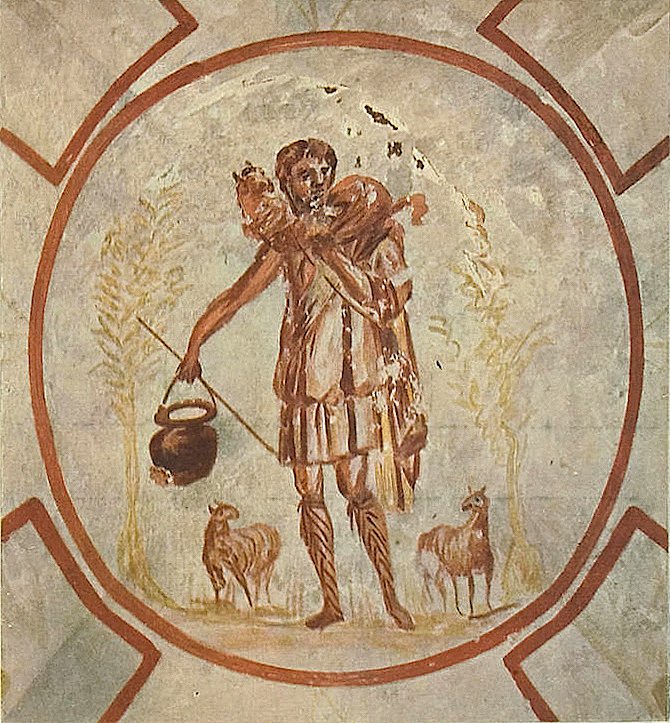
Thomas also contains its own version of a parable familiar from the canonical gospels. A shepherd has a hundred sheep, and the largest of them goes astray. He leaves the ninety-nine and searches for the one until he finds it, and then, having toiled, he says to it: I love you more than the ninety-nine. The lecture draws an unusual lesson from the story. The true God, it suggests, does not merely reward obedience; God values exploration, creativity, and searching. The person who leaves the path may discover something new, while the person who never questions anything contributes nothing that was not already there, and the universe is made brighter through imagination. The obedient sheep may stay safe. The seeker creates, and the lost sheep can matter more precisely because it ventured.
Another parable in Thomas describes a man preparing a dinner for guests. He sends his servant out with the invitations, and one by one the guests decline. One has merchants coming to repay him money that evening; another has just bought a house; another must arrange a friend's wedding; another has bought a farm and must go to collect the rent. So the master tells his servant to go out into the streets and bring in whoever he finds, and the saying ends with a hard sentence: buyers and merchants will not enter the places of my Father. The lecture reads it as a direct criticism of material obsession. The divine has prepared a feast, and the rich are too busy making money, too busy with their property, too busy with their transactions to come. The poor appear to lose in this world, but it may be the rich who miss the greater reality. That reverses one of the deepest habits of the modern world, which tends to assume that wealth proves superiority and treats its billionaires as a kind of aristocracy of merit. The teaching attributed to Jesus suggests that the billionaire may be spiritually impoverished, and the poor person nearer to the feast.
13Many Lifetimes
A serious objection follows. Human beings are shaped from birth by their parents, their schools, and their society, which teach them that money matters, grades matter, and status matters. If everyone is influenced in this way, how can a person know what the spark inside him actually wants? The lecture's answer is bravery. Be true to yourself; the truth is already felt within. The popularity of Jesus is itself offered as evidence: so many people respond to his message because something inside them recognizes it. Listen to the heart, even though it is difficult and most people will fail. And the search can be experimental. Try things, and watch what happens inside you. Love someone and receive love; teach; create; help. A good teacher can feel the spark glow when a student finally understands, and a generous person can feel it when helping someone else. Try, experience, and discover what makes the light brighter.
Failure is not final, in the lecture's account, because traditions of rebirth provide time. Perhaps a person does not understand in one lifetime, or in ten, or fifty, or a thousand; eventually the soul learns. The lecture develops this into a theory of repeated lives in which life resembles a game and death is a reset. A person fails, dies, returns, and tries again. The essential principle is free will: no one forces the individual, and each soul chooses. After death, the soul passes to another plane of existence for reflection and then receives another opportunity, and the process may take thousands of years, or millions, in an infinite universe. What matters is that the individual must learn personally. A teacher can present an idea, and Jesus can speak, but each person must see for himself, which is exactly what makes the teaching so hard. People do not want individual responsibility. Freedom is frightening.
14The Grand Inquisitor
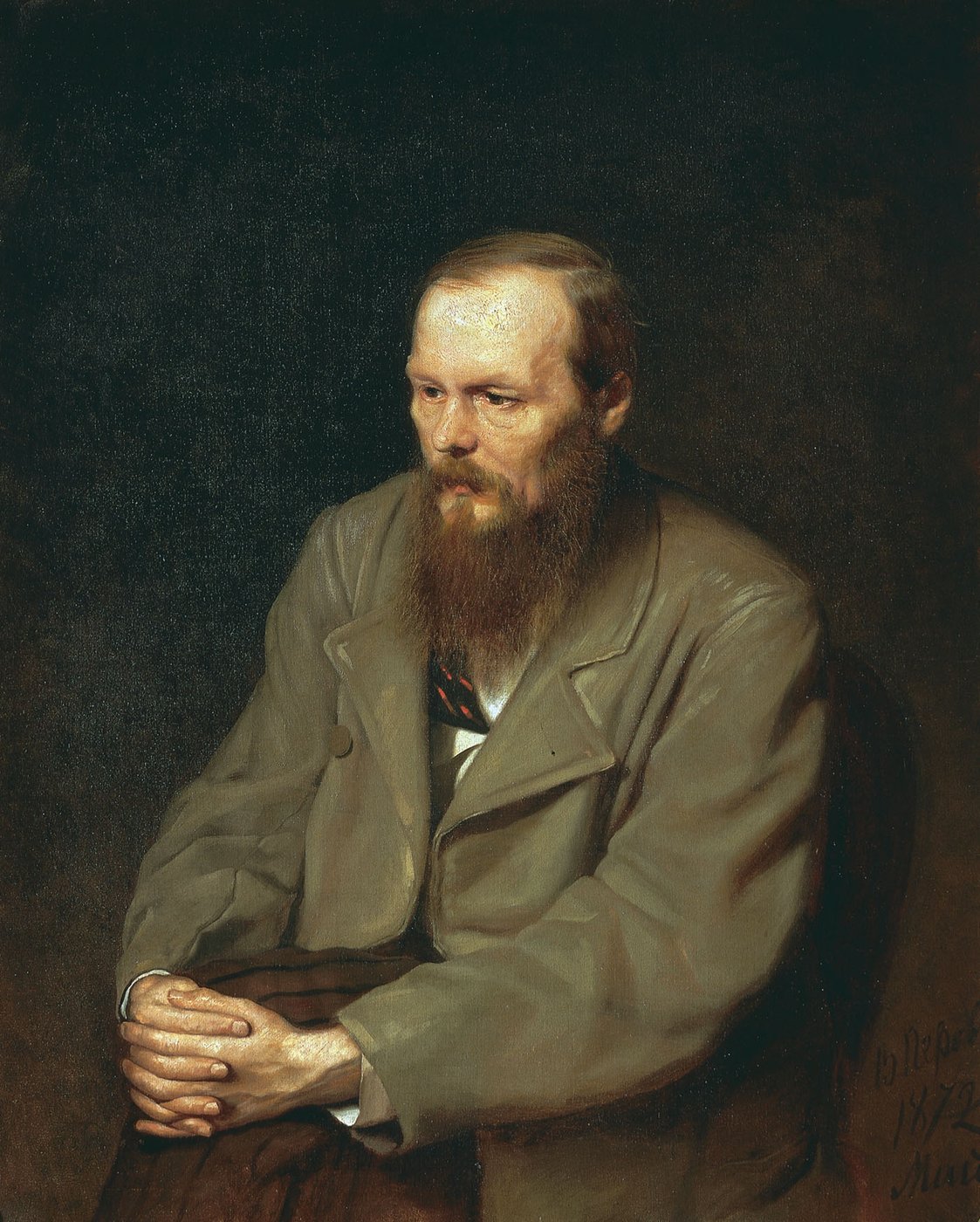
That fear leads the lecture to Dostoevsky. The teaching of the divine spark creates a serious problem. A few thousand people may love the idea of radical freedom, but what about millions of ordinary people who do not want to spend their lives searching for ultimate truth, who want stability, a normal life, entertainment, routine? Jesus tells them the spark is within, and that they are responsible for awakening it. That responsibility is heavy: you must ignore social pressure, think for yourself, choose, and risk being wrong, and all of it produces anxiety. In The Brothers Karamazov, published in 1880, Ivan Karamazov tells his brother a story he has invented, set in sixteenth-century Seville at the height of the Inquisition. Jesus returns to earth. The people recognize him at once; he heals the sick, and they rejoice. And the Grand Inquisitor, an old cardinal, has him arrested. The institution that claims to worship Jesus sees the actual Jesus as a threat. That night the Inquisitor visits him in his cell and explains why. Jesus gave humanity an unbearable gift, freedom. Instead of taking freedom away, he increased it; he forced every person to decide between good and evil for himself, because he wanted love to be given freely. But people do not want to decide everything. Even small decisions create anxiety, what to eat, where to go, what to believe, and people often want someone else to decide for them. The Inquisitor charges that Jesus did not truly love humanity, because he demanded too much: perhaps a few thousand strong souls can bear his gift, but what of the weak, and why should they be condemned for failing to carry what only the strong can carry? Did he come only for the elect?
The church, the Inquisitor says, has corrected the work of Jesus. It offers humanity three things in place of freedom: miracle, mystery, and authority. People can follow blindly and set the terrible burden down, and they are relieved to do it. The Inquisitor even claims this as a form of love: recognizing human weakness, lightening the load, and letting people remain children. In the lecture's interpretation, which follows Dostoevsky's own logic, this is the moment the church outwardly worships Jesus while inwardly adopting the logic of the devil, because the devil stands for order imposed from outside. Children are immature and hurt themselves, so a strict father imposes law; most people will never become fully independent, so someone must command them; the church becomes the shepherd and the people its sheep, and if a life fails, the responsibility can be placed somewhere outside the self, on the devil, the church, authority, the system.
When the Inquisitor finishes, he waits for his prisoner's answer. Jesus says nothing. He approaches the old man and kisses him on his bloodless lips. The Inquisitor shudders, opens the door, and tells him to go and never come back. The kiss glows in the old man's heart, Dostoevsky writes, but he holds to his idea. For the lecture, that is the whole answer. Jesus does not defeat evil through argument. He forgives, and he loves. The Inquisitor may be among the worst men in the world, but the spark is still there, buried under reason, power, cruelty, and authority, and love can make it glow again even when it changes none of the old man's beliefs. And to the Inquisitor's claim that people cannot handle freedom, the lecture answers with time. The soul is eternal and God is patient. Perhaps people will not understand in fifty years, or in one lifetime; give them a million years. Eventually a person may discover that servitude is unbearable, that endless entertainment is empty, and that passive consumption does not satisfy; that watching a screen is poorer than living directly. That discovery cannot be imposed. God waits.
15Why He Had to Die
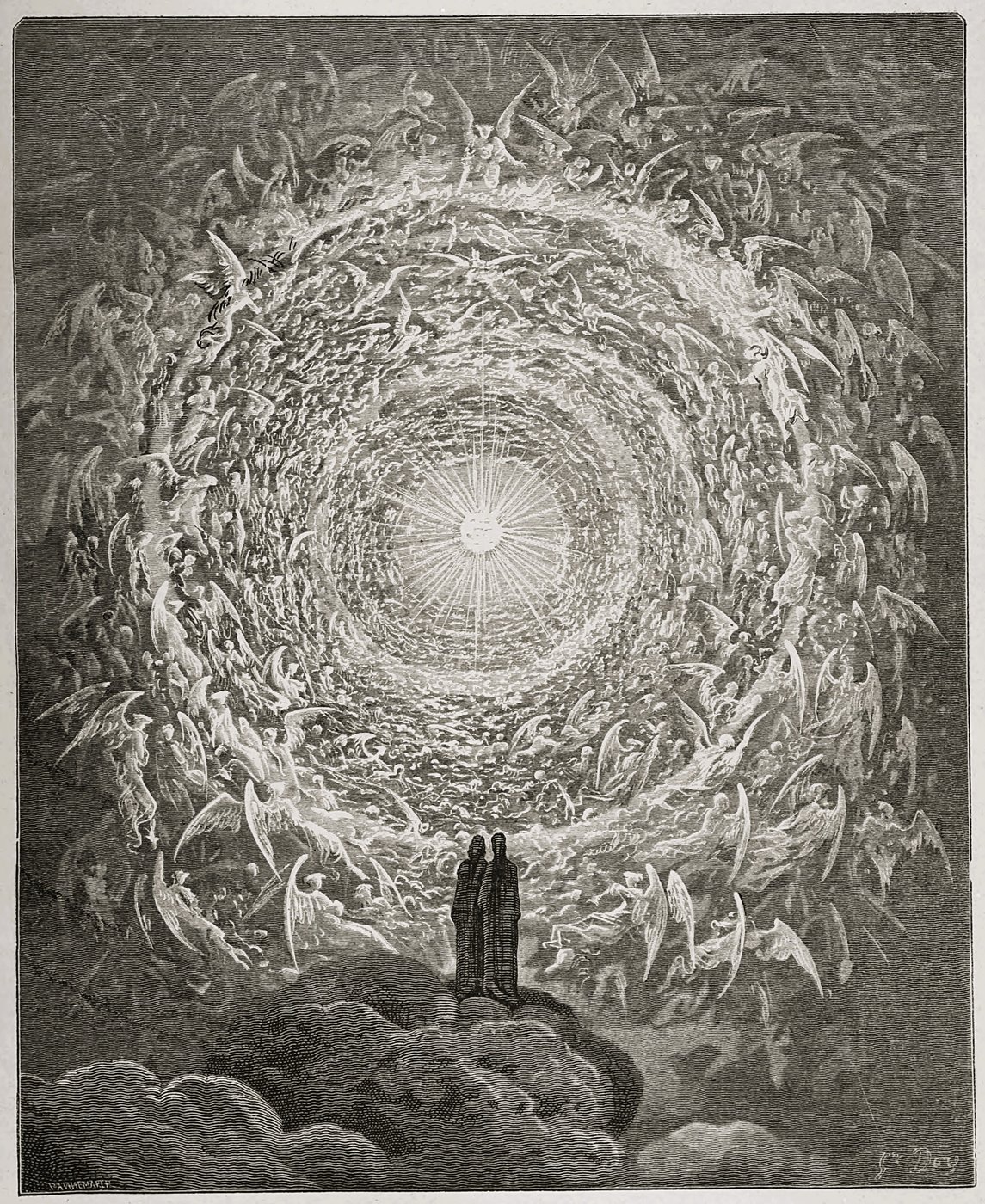
The lecture then returns, through Dante, to the question the previous volume left open: why did Jesus have to die at all? In Dante's age, the most common explanation was the ransom theory. Human beings had sinned and become slaves of Satan; Jesus struck a bargain and gave himself to Satan in exchange for them; but Jesus could not truly stay dead, and so the bargain defeated the devil, and humanity, freed from one master, became the servant of another, owing its worship to Christ. Dante, the lecture argues, rejects this. God did not free humanity from slavery so that humanity could be enslaved to God. God came to make human beings free. In the fifth canto of the Paradiso, Beatrice tells Dante that the greatest gift God gave in creating, the gift most like His own goodness and the one He prizes most, was the freedom of the will. If God is love, then God must trust, because true love cannot demand complete control. The lecture compares it to parenthood: a parent who truly loves a child must let the child live, choose, and make mistakes, protecting against real danger without letting fear become a prison. Love requires trust, and so freedom is the deepest principle of the universe.
Why, then, did redemption require a death? In the seventh canto, Beatrice explains that humanity, having tried to make itself equal to God, could never humble itself enough to make up for that pride, so only two paths remained: humanity repays God, or God forgives humanity. Repayment is impossible, since a limited being cannot repay an infinite offense. But simple forgiveness creates another problem, because if God simply declares that everything is fine, humanity may learn nothing. Redemption must both forgive and teach. The lecture illustrates this with a parable of its own. A father has a daughter named Eve, and also a dog. He tells Eve he loves her; she asks whether he loves her more than the dog; he answers that love is infinite and that he loves them both. Eve grows uncertain, and to prove his love she kills the dog. Now the father faces a paradox. If he punishes her, she may conclude he loved the dog more; if he does not, she learns that her act has no consequence. So he punishes himself, taking the suffering on his own body while Eve watches, and two things happen at once: she sees that her father loves her, and she feels remorse, because she never wants to see him suffer like that again. That, for the lecture, is the logic of the crucifixion. God becomes human and takes the suffering on Himself, and humanity, watching, is moved to remorse; the goal is not payment but transformation.
The lecture insists this holds even for real evil, even for someone who kills a child. Forgiveness does not abolish justice, and a murderer may still go to prison; but without the possibility of forgiveness, society becomes an endless cycle of vengeance, you kill my daughter and I kill yours, and the world cannot go on. Hatred harms the one who hates, separating him from the divine, and in a world without forgiveness no one becomes happy. Why, then, does a perfect God's world decay and die? Because God made the laws of the game, and the laws are perfect, while the things inside the game move through cycles of life and death, creation and destruction, so that mistakes, learning, and growth become possible; death is a reset, and the soul has time. The lecture closes this part of the argument with a passage it reaches through a popular reading of Leonardo's Last Supper, a claim that the verse numbers of Lamentations 3:31 to 33 are hidden in the painting. Whatever one makes of that claim, the passage itself says what the lecture means: "For the Lord will not cast off for ever: but though he cause grief, yet will he have compassion according to the multitude of his mercies." No one is abandoned forever.
16The Sermon Read From Within
Why should anyone believe that Thomas preserves the real teaching of Jesus? The lecture gives three reasons, and it is candid that they are aesthetic and intuitive rather than philological. The first is the voice of the sayings: poetic, unique, and beautiful, and genuine poetry, the lecture argues, carries the spark in a way that is hard to fabricate. The second is alignment: the sayings echo the pattern found in the other great prophets and poets, the source, the spark, the false world, the search for truth. The third is recognition: later thinkers such as Dante and Dostoevsky seem to rediscover the same truths independently, which the lecture takes as a sign that they drew on the same source. Specialists date Thomas and judge its relationship to the canonical gospels in very different ways, and readers should weigh the lecture's case knowing that. But the lecture then makes a second, more striking point: the same teaching can be found inside the canonical Bible itself, in the Sermon on the Mount, once it is read from within.
The Beatitudes bless the poor in spirit, those who mourn, the meek, those who hunger and thirst for righteousness, the merciful, the pure in heart, the peacemakers, and the persecuted. Every one of them reverses worldly hierarchy: wealth does not determine value, power does not determine spiritual rank, the slave may be nearer the kingdom and the poor more virtuous than the conqueror. What matters is the spark. No one lights a lamp to put it under a bowl, the sermon continues; you are the light of the world, so let your light shine, because every person contains light and has the power to change the universe by doing good. Love your enemies and pray for those who persecute you, for the sun rises on the evil and the good alike and the rain falls on the just and the unjust; if you love only those who love you, what have you achieved? Even the enemy becomes an opportunity, since without evil no one could consciously choose good, and the command is not passive weakness but spiritual transformation.
Do not store up treasures on earth, where moth and rust destroy and thieves break in, but in heaven, for where your treasure is, there your heart will be also; money and property cannot follow you through death, but the condition of the spark does. The eye is the lamp of the body, and if your eye is healthy your whole body is full of light, which the lecture reads as a teaching that perception shapes reality and that the way a person sees the world reflects the state of the spark inside, adding, in its own idiom, that what you look for and do is what returns to you. No one can serve two masters; you cannot serve God and money. Here the lecture is at its most uncompromising: money, status, fame, and power are the material world wearing different masks, each demanding the total loyalty the spark requires, and a person must choose between triumphing materially and triumphing spiritually, because the two paths often conflict. And finally, not everyone who says to me "Lord, Lord" will enter the kingdom. On that day many will say they prophesied in his name and drove out demons in his name and did mighty works in his name, and he will tell them he never knew them. The lecture calls this devastating for institutional Christianity. Later Christianity says belief in Jesus saves. The teaching attributed to Jesus says his name is not enough: do not hide behind my name, do not simply follow me; follow the truth, follow the heart. A person can use the name of Jesus while doing evil, and the name itself does not save.
17Freedom or Authority
One last question concerns memory. If life repeats, and death destroys the brain, a person cannot remember his previous mistakes, so how can the soul learn? The lecture's answer is the spark. Memory does not survive in the same form, but the condition of the spark does. It can glow brighter or grow dim; a brighter spark rises toward a higher plane, nearer the Monad, nearer God, and a dimmer one falls lower. The next life may hold no explicit memory of past names, riches, or events, but the soul carries the spiritual result forward, and the process may take fifty lifetimes, or a thousand, or a million, some souls understanding quickly and others slowly, with the choice always remaining theirs. That yields the final principle: when death comes, money is forgotten, status is forgotten, and possessions disappear, and what remains is the goodness or the evil a person has done, the brightness of the spark.
Jesus, in this reconstruction, did not come to create another hierarchy or to tell humanity to surrender its responsibility. He came to remind people that there is a divine spark within them; that the slave is not merely a slave and the poor are not worthless; that the empire is a corpse, and the rich may be imprisoned by the world they dominate; that hatred chains the victim to the enemy, and forgiveness breaks the chain. He came to say that truth cannot be handed down by priests, that the kingdom is within, that the seeker must seek and the light must shine, that the enemy must be loved, that money cannot become God, that freedom is frightening but necessary, that mistakes are part of growth, that death is not the end, and that the soul has time. And so the central conflict of the lecture remains unresolved. Jesus offers freedom, and human beings often want authority. He offers responsibility, and they often want obedience. Jesus says look within, and institutions say look to us; Jesus says the spark is yours, and power says the spark must be controlled. From that conflict, the lecture argues, comes the next chapter of the story: the rise of the Catholic Church, and the transformation of a teaching about inner freedom into an organized religion of authority.